


Key Features
- Variety: White Clover, a low-growing perennial clover commonly grown in lawns and garden areas.
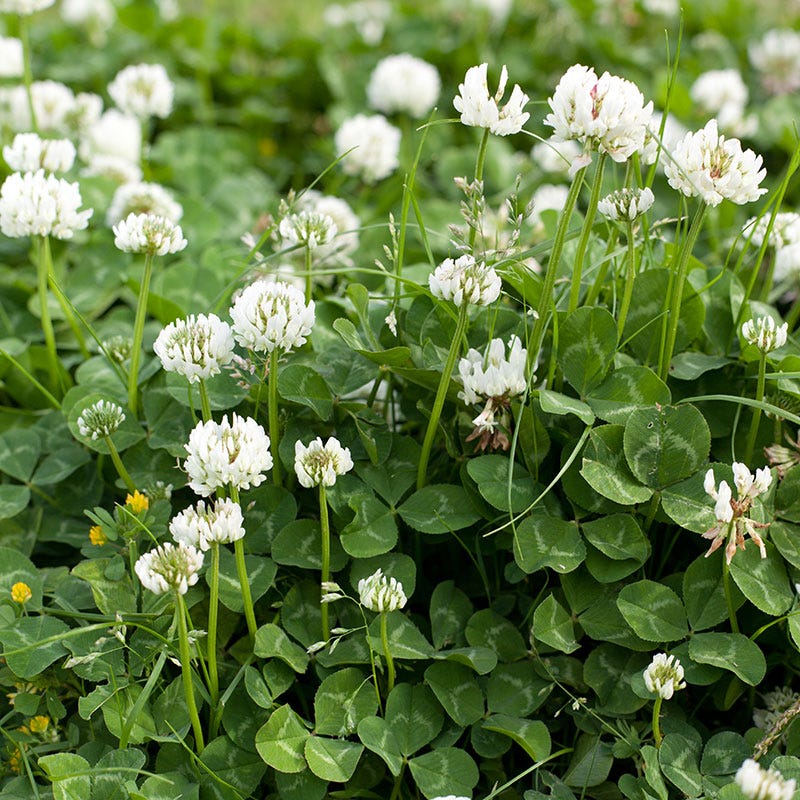
- Flower Color: Produces small, rounded clusters of attractive white flowers.
- Plant Characteristics: Forms a spreading, dense groundcover with trifoliate green leaves.
- Garden Uses: Suitable for lawns, pathways, meadow-style plantings, groundcover, and pollinator-friendly spaces.
- Unique Feature: As a legume, white clover can form a beneficial association with nitrogen-fixing bacteria in the soil.
Growing Benefits
- Creates a soft, green groundcover with a naturally spreading growth habit.
- White blooms add gentle seasonal interest to lawns and garden spaces.
- Helps support bees and other flower-visiting pollinators.
- Works well in mixed lawn and meadow-style garden plantings.
- Adaptable to a range of garden soils when moisture and drainage are suitable.
Seed Specifications
- Common Name: White Clover
- Botanical Name: Trifolium repens
- Plant Type: Perennial herbaceous legume
- Colors: Green foliage with white to pink-tinged flower heads
- Height: Generally low-growing, around four to eight inches tall
- Sunlight: Full sun to partial shade
- Soil: Moist, well-drained soil; tolerates a range of soil types
- Water: Keep evenly moist during establishment; water as needed afterward
- Germination Time: Usually about seven to fourteen days under favorable conditions
- Sowing Depth: Approximately one-eighth inch deep or lightly covered
- Spacing: Broadcast thinly or allow several inches between established plants
- Growing Zones: Generally suited to USDA Zones three through ten
- Flowering/Maturity: Flowers mainly from spring through summer, with blooming potentially continuing under favorable conditions
- Uses: Lawns, groundcover, meadows, pathways, garden borders, and pollinator-friendly plantings
Growing Tips
- Sow seeds on finely prepared soil and press them gently into the surface.
- Keep the seedbed consistently moist until seedlings become established.
- Choose a location with full sun or partial shade for healthy growth.
- Avoid burying the tiny seeds deeply, as shallow sowing encourages better emergence.
Seed Storage
Store unused seeds in a cool, dry, dark location away from moisture and direct sunlight. Keep them in a tightly sealed seed packet or airtight container. Label the container with the variety and storage date, and avoid areas exposed to heat or humidity.
Unique Facts About Seeds
- White clover is a member of the Fabaceae, or pea, family.
- Its botanical name, Trifolium repens, refers to its creeping growth habit.
- The plant has three-part leaves, although occasional leaves may naturally develop more leaflets.
- White clover is a legume that can participate in nitrogen fixation through its relationship with soil bacteria.