


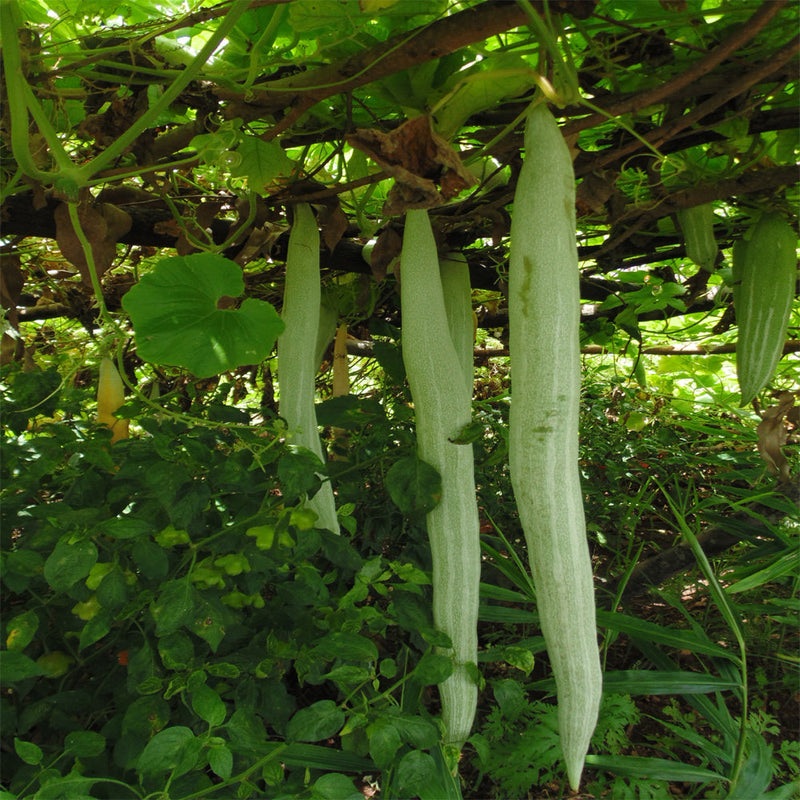
Key Features
- Produces long, slender snake gourds with a fresh green appearance
- Vigorous climbing vine ideal for trellises, fences, and vertical gardens
- Warm-season vegetable suitable for home gardens and kitchen gardens
- Useful for fresh cooking, curries, stir-fries, soups, and traditional dishes
- Attractive vine with white flowers that adds ornamental interest to the garden
Growing Benefits
- Grow fresh snake gourds at home during the warm growing season
- Vertical growth helps make efficient use of garden space
- Trellising keeps developing fruits off the ground and easier to harvest
- A rewarding choice for gardeners interested in Asian vegetables
- Suitable for garden beds, large containers, and sturdy trellises
Seed Specifications
- Common Name: Snake Gourd; Chichinda; Serpent Gourd
- Botanical Name: Trichosanthes cucumerina; Plant Type: Warm-season annual vine; Colors: Green fruits with white flowers
- Height: Vigorous climbing vine that can reach several feet when supported; Sunlight: Full sun
- Soil & Water: Fertile, well-draining soil rich in organic matter; keep soil consistently moist without waterlogging; Germination Time: Typically about one to three weeks under suitable warm conditions
- Sowing, Spacing & Growing: Sow about one inch deep and provide ample room for vigorous vines; Growing Zones: Best suited to warm climates and grown as an annual in cooler areas; Maturity: Generally develops harvestable fruits during the warm growing season; Uses: Culinary gardens, trellises, fences, containers, curries, stir-fries, soups, and other cooked dishes
Growing Tips
- Soak seeds in warm water before sowing to help soften the seed coat and encourage more uniform germination.
- Provide a sturdy trellis or support early because snake gourd vines are vigorous climbers.
- Keep the soil evenly moist, especially during flowering and fruit development.
- Harvest young, tender gourds regularly for better eating quality and continued production.
Seed Storage
Store unused seeds in a cool, dry, dark place away from moisture and heat. Keep them in a sealed, moisture-resistant container or their original packet. Avoid storing seeds in areas exposed to humidity or direct sunlight.
Unique Facts About Seeds
- Snake gourd belongs to the cucumber family, Cucurbitaceae, which also includes cucumbers, melons, pumpkins, and squash.
- The plant produces distinctive white flowers that are often especially noticeable in the evening.
- Snake gourd gets its common name from its unusually long, slender fruits that can curve as they develop.
- The young fruits are commonly harvested and cooked as a vegetable in many Asian cuisines.