


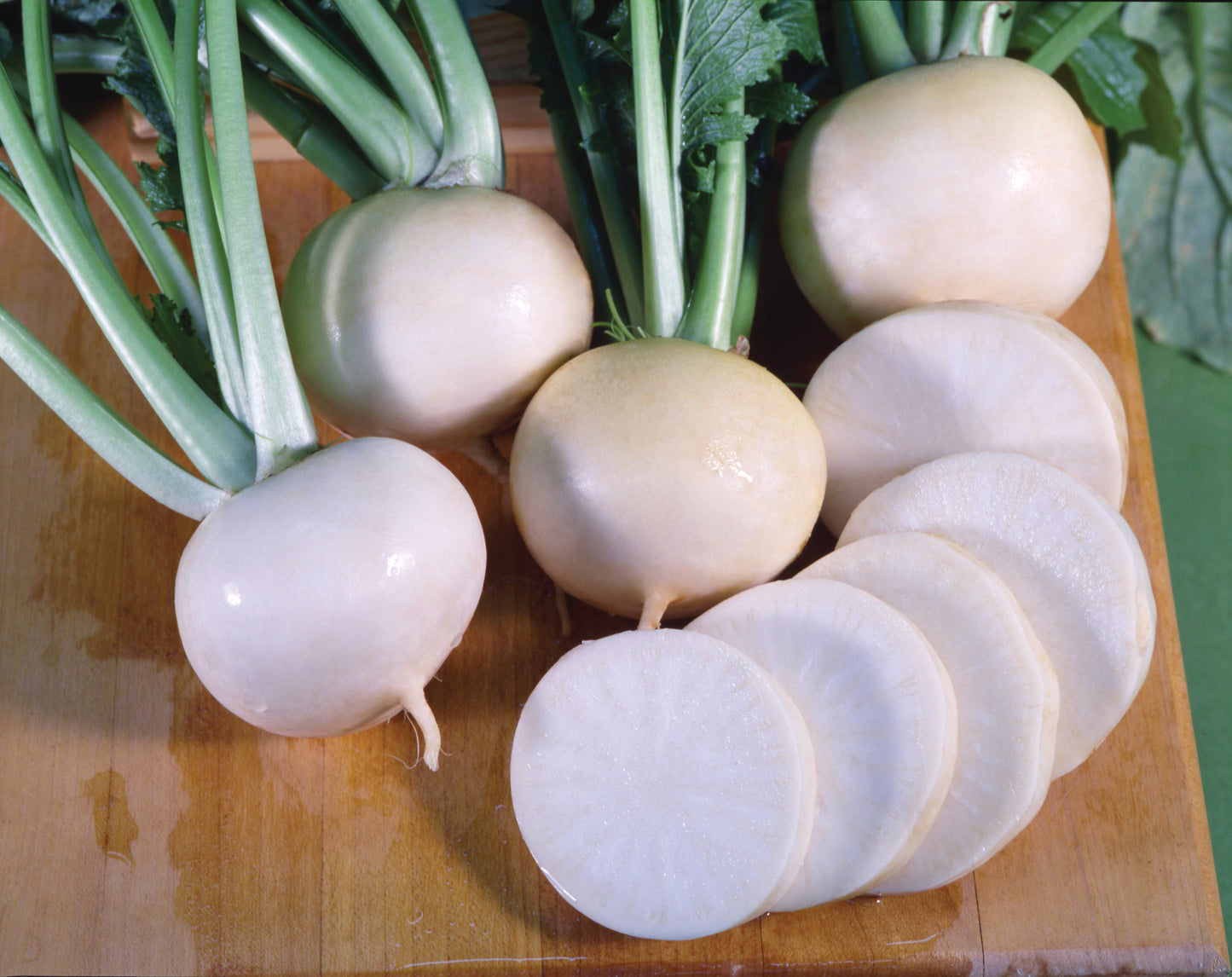
Key Features
- Produces distinctive rutabaga roots with pale or white-colored flesh
- Cool-season root vegetable with rounded, sturdy underground roots
- Suitable for vegetable gardens, raised beds, and home garden plots
- Edible roots offer a versatile option for roasting, mashing, soups, and stews
- Foliage can also be enjoyed as a leafy vegetable when harvested young
Growing Benefits
- Adds an interesting root crop to a productive home vegetable garden
- Well suited to cool-weather gardening and extended growing seasons
- Provides both edible roots and nutritious leafy greens
- Easy to incorporate into raised beds and traditional garden rows
- Offers a rewarding harvest for gardeners who enjoy traditional vegetables
Seed Specifications
- Common Name: Rutabaga, Swede, Swedish Turnip
- Botanical Name: Brassica napus var. napobrassica
- Plant Type: Cool-season biennial root vegetable, usually grown as an annual
- Colors: White to cream flesh with roots commonly showing purple, green, or white upper coloring
- Height: Approximately two feet including foliage
- Sunlight: Full sun
- Soil: Fertile, well-drained, loose soil rich in organic matter
- Water: Consistent moisture without waterlogging
- Germination Time: Approximately one to two weeks under favorable conditions
- Sowing Depth: About one-half inch deep
- Spacing: Thin seedlings to several inches apart, with wider spacing for larger roots
- Growing Zones: Generally suitable for USDA Zones three through nine
- Flowering/Maturity: Primarily grown for roots; typically reaches harvest maturity in about three months
- Uses: Fresh eating, roasting, mashing, soups, stews, and leafy greens
Growing Tips
- Sow seeds in cool weather because rutabagas develop best in moderate temperatures.
- Keep the soil evenly moist during germination and root development.
- Thin seedlings early to provide enough room for roots to expand properly.
- Harvest roots when they reach a useful size and before prolonged severe heat.
Seed Storage
Store unused seeds in a cool, dry, dark location. Keep them sealed in an airtight container or original packet away from moisture, heat, and direct sunlight. Label the container with the seed variety and storage date.
Unique Facts About Seeds
- Rutabaga belongs to the brassica family, which also includes cabbage, broccoli, and kale.
- The plant is believed to have originated as a cross between turnip and cabbage.
- Rutabaga is known as “swede” in many parts of the United Kingdom and other regions.
- Both the swollen root and young leaves can be used as food.