


Key Features
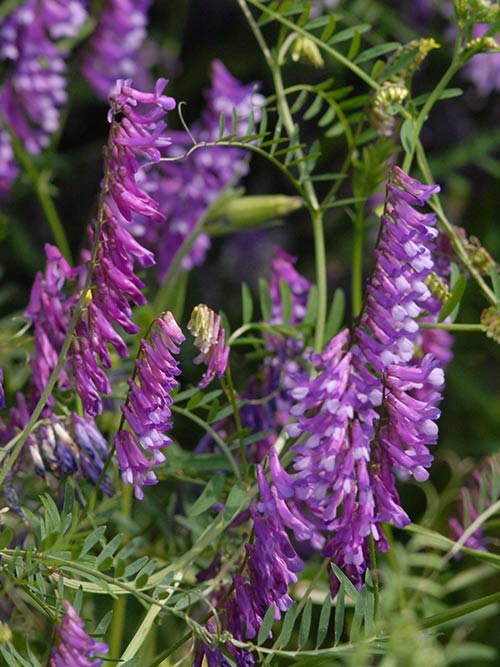
- Produces attractive purple to violet pea-like flowers.
- Hairy vetch is a vigorous, cool-season legume with trailing growth.
- Useful as a cover crop, soil-building plant, and wildlife-friendly garden addition.
- Adds seasonal color while helping protect bare soil.
- Suitable for meadows, garden borders, field edges, and naturalized areas.
Growing Benefits
- Helps cover and protect exposed soil during cool seasons.
- Adds beautiful purple-violet blooms to outdoor spaces.
- Can contribute nitrogen to the soil through its legume-root relationship.
- Provides valuable habitat and forage for pollinators and other beneficial insects.
- Works well in larger garden areas, meadows, and cover-crop plantings.
Seed Specifications
- Common Name: Purple Hairy Vetch, Hairy Vetch
- Botanical Name: Vicia villosa
- Plant Type: Annual or winter annual legume, depending on climate
- Colors: Purple to violet flowers
- Height: Approximately two to four feet when supported or growing upright
- Sunlight: Full sun to partial shade
- Soil: Well-drained soil; adaptable to a range of soil types
- Water: Moderate moisture; water regularly during establishment
- Germination Time: Generally about seven to fourteen days under suitable conditions
- Sowing Depth: Approximately one-half to one inch deep
- Spacing: Broadcast or space approximately two to six inches apart for garden sowing
- Growing Zones: Generally adaptable across USDA Zones three through ten
- Flowering/Maturity: Typically flowers in late spring to early summer after cool-season growth
- Uses: Cover crop, soil improvement, meadow planting, erosion control, wildlife habitat, and ornamental garden use
4 Growing Tips
- Sow seeds in well-prepared soil and cover them lightly.
- Choose a sunny location with good drainage for stronger growth.
- Keep the soil evenly moist while seeds are establishing.
- Provide support or allow plants to trail naturally as they mature.
Seed Storage
Store unused seeds in a cool, dry, dark place away from moisture and heat. Keep them in a sealed, moisture-resistant container and label the container with the seed name and storage date. Avoid storing seeds in humid areas.
Unique Facts About Seeds
- Hairy vetch belongs to the pea family, Fabaceae.
- Like other legumes, it forms relationships with soil bacteria that can help fix atmospheric nitrogen.
- Its purple-violet flowers are followed by elongated seed pods containing the seeds.
- Hairy vetch is widely used as a winter cover crop because of its vigorous growth and ability to provide ground cover.