


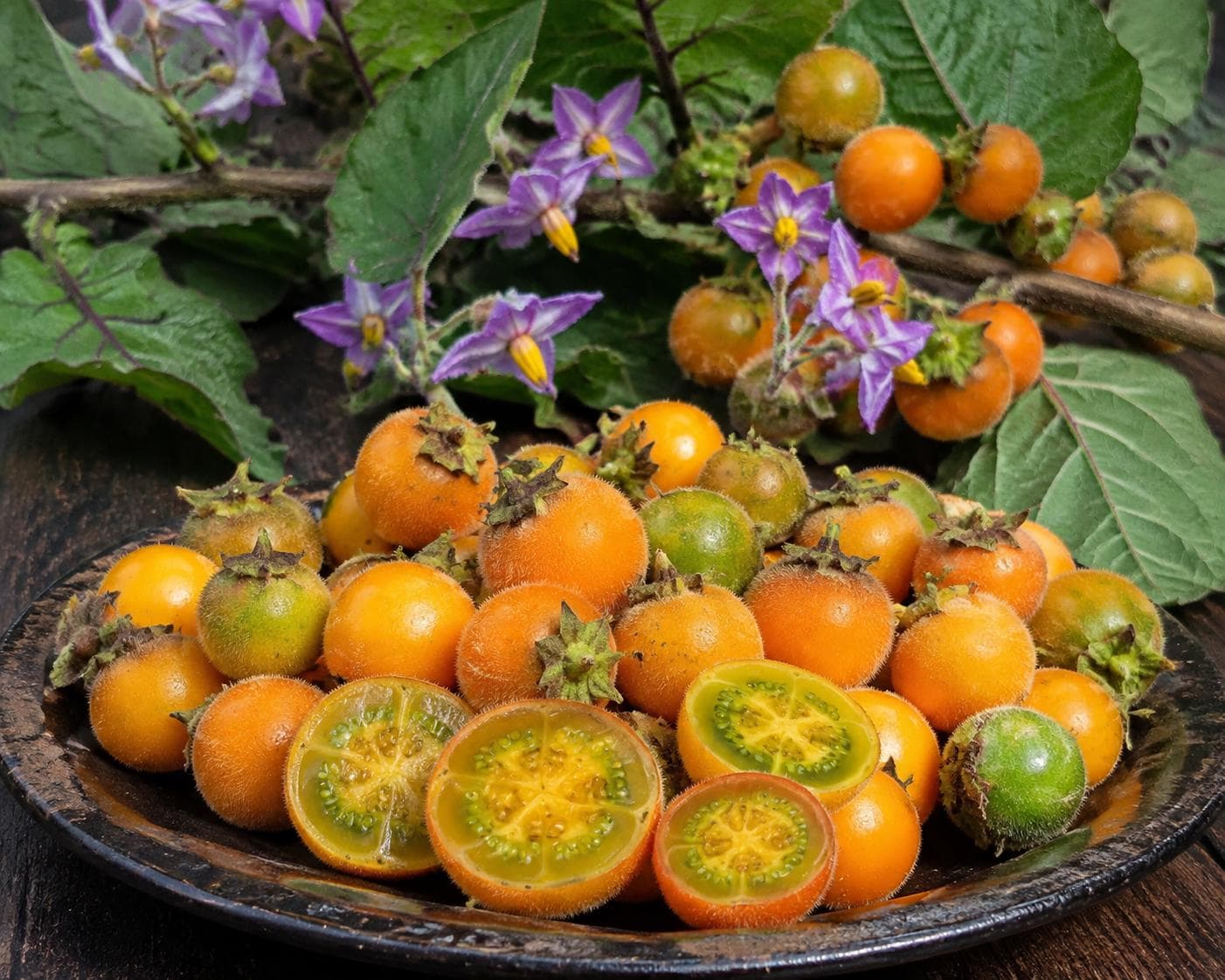
Key Features
- Produces distinctive orange-skinned naranjilla fruits with juicy green flesh.
- Tropical perennial shrub with large, velvety, purple-tinged foliage.
- White to pale flowers develop before the characteristic rounded fruits.
- Excellent choice for warm-climate gardens, patios, and protected growing spaces.
- Fruits are traditionally used for fresh juice, beverages, preserves, and desserts.
Growing Benefits
- Adds an unusual tropical fruit plant to home gardens.
- Attractive foliage provides ornamental interest throughout the growing season.
- Offers the opportunity to grow a less-common South American fruit at home.
- Useful for gardeners interested in edible landscaping and specialty fruit crops.
- Can be grown from seed and transplanted once seedlings are established.
Seed Specifications
- Common Name: Orange Naranjilla, Naranjilla, Lulo, Quito Orange
- Botanical Name: Solanum quitoense
- Plant Type: Tender, short-lived perennial shrub
- Colors: Orange fruit, green flesh, green foliage with purple tones, white to pale flowers
- Height: Approximately five to eight feet under favorable conditions
- Sunlight: Partial shade to filtered light; protect from intense heat and strong direct sun
- Soil: Fertile, moisture-retentive, well-drained soil
- Water: Keep soil consistently moist but avoid waterlogging
- Germination Time: Typically several weeks under suitable warm conditions
- Sowing Depth: Cover seeds lightly with a thin layer of growing medium
- Spacing: Allow approximately six to eight feet between established plants
- Growing Zones: Best suited to warm tropical and subtropical climates; frost sensitive
- Flowering/Maturity: Flowers are followed by fruit; seed-grown plants may begin fruiting after roughly ten to thirteen months in favorable conditions
- Uses: Fresh juice, beverages, preserves, sauces, desserts, and edible landscaping
Growing Tips
- Start seeds in a warm, sheltered location using a clean, well-draining seed-starting medium.
- Keep the growing medium evenly moist without allowing excess water to accumulate.
- Provide filtered sunlight or partial shade, particularly in hot climates.
- Protect young plants from frost, strong winds, and prolonged extreme heat.
Seed Storage
Store unused seeds in a cool, dry, dark place away from humidity and direct sunlight. Keep them in a sealed, moisture-resistant container and avoid frequent exposure to heat or moisture.
Unique Facts About Seeds
- Naranjilla is also called lulo and Quito orange, reflecting its South American origins.
- The ripe fruit typically has orange skin while the flesh is characteristically green.
- Naranjilla belongs to the Solanaceae family, alongside tomatoes, peppers, and eggplants.
- The plant has large, hairy foliage, and some forms have spines while cultivated types may be spineless.