


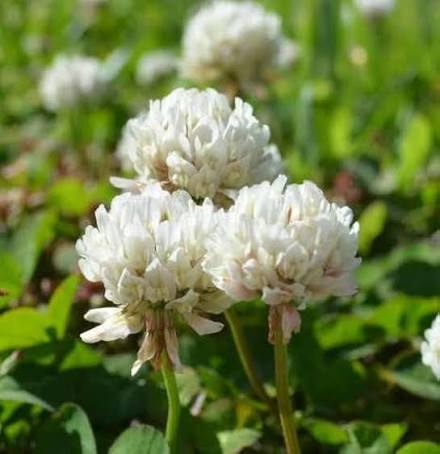
Key Features
- Produces attractive green foliage with rounded clover-like leaves.
- Low-growing habit makes it useful for ground cover, lawns, borders, and naturalized areas.
- Tolerates partial shade and adapts to a range of garden conditions.
- Clover flowers can attract bees and other beneficial pollinating insects.
- Useful for cottage gardens, meadow areas, lawns, and pollinator-friendly landscapes.
Growing Benefits
- Adds soft green texture to lawns and garden spaces.
- Provides habitat and forage for pollinating insects.
- Can help enrich soil through its association with nitrogen-fixing bacteria.
- Suitable for naturalized plantings and low-maintenance garden areas.
- Spreads readily under suitable growing conditions to create ground coverage.
Seed Specifications
- Common Name: White Clover
- Botanical Name: Trifolium repens
- Plant Type: Perennial herbaceous ground cover
- Colors: Green foliage with white to pale pink flowers
- Height: Approximately four to eight inches
- Sunlight: Full sun to partial shade
- Soil: Well-drained, moderately fertile soil
- Water: Moderate; prefers evenly moist soil during establishment
- Germination Time: Approximately seven to fourteen days under favorable conditions
- Sowing Depth: Surface sow or cover very lightly
- Spacing: Approximately four to six inches for established plants
- Growing Zones: USDA Zones three through ten
- Flowering/Maturity: Generally flowers from spring through fall under suitable conditions
- Uses: Lawns, ground cover, meadows, cottage gardens, borders, pollinator gardens, and naturalized landscapes
Growing Tips
- Scatter seeds over prepared soil and press them gently into the surface.
- Keep the soil consistently moist during germination and early establishment.
- Choose full sun to partial shade based on the growing conditions of your site.
- Avoid burying the small seeds deeply, as they benefit from light exposure during germination.
Seed Storage
Store unused seeds in a cool, dry, dark place. Keep them sealed in their original packet or an airtight container away from moisture, heat, and direct sunlight.
Unique Facts About Seeds
- White clover belongs to the Fabaceae family, which includes peas and beans.
- Clover roots form associations with nitrogen-fixing bacteria that can convert atmospheric nitrogen into forms plants can use.
- White clover is a low-growing perennial that can spread by creeping stems called stolons.
- Its small flower heads are commonly visited by bees and other pollinating insects.