


Key Features
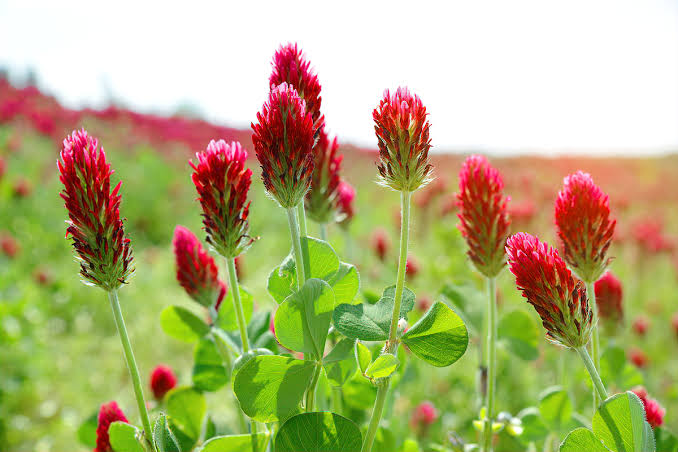
- Crimson red, cone-shaped flower heads with a distinctive ornamental appearance
- Upright annual clover with attractive green foliage and soft, rounded leaflets
- Excellent choice for cottage gardens, meadow plantings, borders, and naturalized areas
- Flowers provide a useful nectar source for bees and other pollinating insects
- Can also be grown as a cover crop and green manure in suitable garden settings
Growing Benefits
- Adds rich crimson color and vertical interest to garden spaces
- Easy-to-grow option for gardeners seeking a charming flowering cover crop
- Supports pollinator-friendly garden environments during flowering
- Helps provide ground cover while contributing organic matter when incorporated
- Well suited to meadow-style, cottage, and informal garden designs
Seed Specifications
- Common Name: Crimson Clover
- Botanical Name: Trifolium incarnatum
- Plant Type: Annual flowering legume
- Colors: Crimson red flowers; green foliage
- Height: Approximately twelve to thirty-six inches
- Sunlight: Full sun to partial shade
- Soil: Well-drained, moderately fertile soil
- Water: Moderate; keep soil evenly moist during establishment
- Germination Time: Generally about seven to fourteen days
- Sowing Depth: About one-quarter inch deep
- Spacing: Approximately six to twelve inches apart
- Growing Zones: Generally suitable for USDA Zones six through nine; performance varies by climate
- Flowering/Maturity: Typically blooms in spring to early summer, depending on sowing time and climate
- Uses: Flower gardens, meadows, pollinator gardens, borders, cover crops, and green manure
Growing Tips
- Choose a sunny location with well-draining soil for vigorous growth.
- Sow seeds shallowly and cover them lightly with fine soil.
- Keep the planting area consistently moist while seeds are germinating.
- Allow flowers to develop fully, then cut plants back when using them as a cover crop.
Seed Storage
Store unused seeds in a cool, dry, and dark location. Keep them in a tightly sealed, moisture-resistant container away from heat and humidity. Label the container with the seed variety and storage date.
Unique Facts About Seeds
- Crimson clover is a true clover species belonging to the legume family, Fabaceae.
- Its botanical name, Trifolium incarnatum, refers to the plant's characteristic deep red flower color.
- The plant is widely valued as a cover crop because it can form a substantial ground cover and contribute nitrogen through its relationship with soil bacteria.
- Its elongated crimson flower heads are particularly attractive in spring meadow and cottage-garden plantings.