


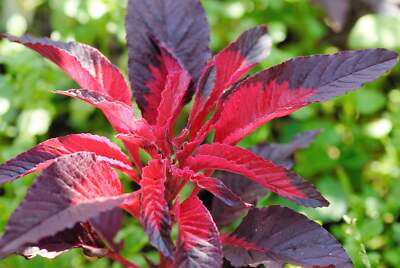
Key Features
- Colorful Foliage: Produces striking foliage in combinations of green, red, purple, pink, yellow, and gold.
- Distinctive Growth: Upright annual plant valued primarily for its vibrant ornamental leaves rather than showy flowers.
- Warm-Season Favorite: Performs well in warm conditions and can tolerate heat, drought, and less-than-ideal soil once established.
- Garden Versatility: Excellent for flower beds, borders, cottage gardens, containers, and informal landscapes.
- Interesting Blooms: Develops small flower clusters and spikes among the colorful foliage during the warmer growing season.
Growing Benefits
- Adds dramatic color and texture to sunny garden spaces.
- Grows as a relatively low-maintenance annual in suitable conditions.
- Works beautifully as a colorful foliage accent plant.
- Suitable for beds, borders, containers, and cottage-style gardens.
- Can provide edible leaves and seeds when grown and prepared appropriately.
Seed Specifications
- Common Name: Amaranthus Tricolor, Joseph's Coat, Three-Colored Amaranth
- Botanical Name: Amaranthus tricolor
- Plant Type: Annual herbaceous plant
- Colors: Green, red, burgundy, purple, pink, yellow, gold, and multicolored foliage; small greenish to reddish flower clusters
- Height: Approximately one and a half to five feet, depending on variety and growing conditions
- Sunlight: Full sun to partial shade; brighter light generally encourages stronger foliage coloration
- Soil: Moderately fertile, moist but well-drained soil
- Water: Regular moisture during establishment; avoid constantly wet soil
- Germination Time: Generally several days to a couple of weeks under favorable conditions
- Sowing Depth: Sow shallowly and cover lightly with fine soil
- Spacing: Approximately twelve to twenty-four inches apart
- Growing Zones: Commonly grown as a warm-season annual across USDA Zones two through eleven
- Flowering/Maturity: Summer to fall flowering; foliage develops before small flower clusters appear
- Uses: Ornamental foliage, flower beds, borders, containers, cottage gardens, edible greens, and culinary use in suitable varieties
Growing Tips
- Sow seeds directly where they will grow because young seedlings can be sensitive to root disturbance.
- Keep the seedbed evenly moist during germination without allowing water to accumulate.
- Provide plenty of sunlight for stronger growth and more vivid foliage coloration.
- Thin crowded seedlings early to give mature plants sufficient room for airflow and development.
Seed Storage
Keep unused seeds completely dry and store them in an airtight container in a cool, dark location. Protect them from humidity, heat, and direct sunlight. Avoid storing seeds in damp areas.
Unique Facts About Seeds
- The species name tricolor refers to its characteristic multicolored appearance.
- Amaranthus tricolor is also known as Joseph's Coat, Chinese spinach, and Three-Colored Amaranth.
- Unlike many ornamental amaranths grown mainly for their flower structures, this species is especially valued for its colorful foliage.
- The plant is native to tropical Asia and is cultivated in various regions as both an ornamental plant and leafy vegetable.