




Key Features
-
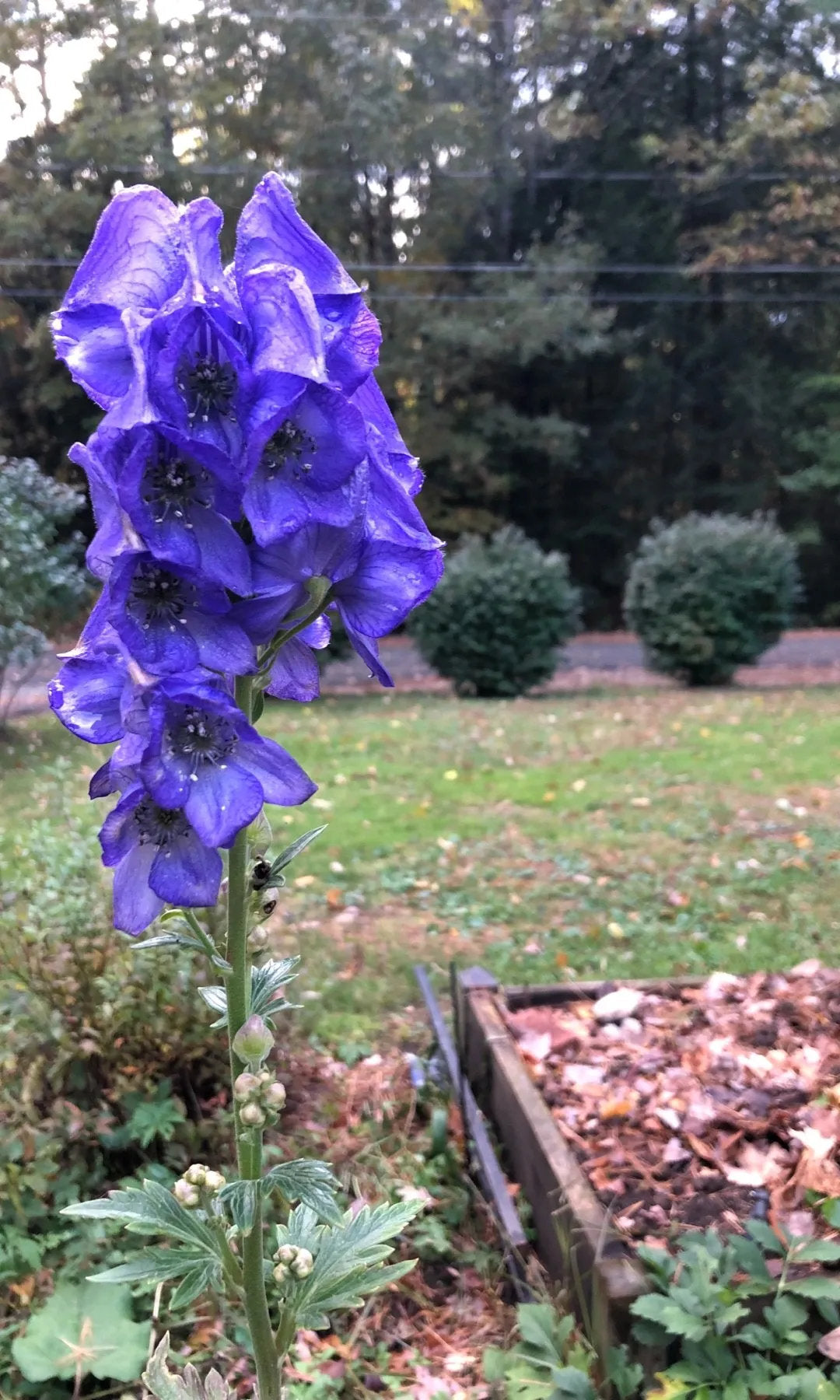
Plant Variety: Chinese Aconite, also known as Carmichael’s Monkshood.
-
Flower Color: Typically produces deep blue to violet flowers.
-
Plant Characteristics: Upright perennial with divided green foliage and distinctive hood-shaped blossoms.
-
Garden Uses: Suitable for ornamental borders and cottage-style gardens where growing conditions are appropriate.
-
Unique Appearance: Tall flower spikes bring vertical interest and rich color to late-season gardens.
Important safety warning: All parts of Aconitum carmichaelii are highly poisonous if swallowed. Handle carefully, wear gloves, and keep seeds and plants away from children and pets.
Growing Benefits
-
Adds rich blue-violet color to cottage gardens and perennial borders.
-
Creates vertical interest with tall stems and distinctive hood-shaped flowers.
-
Provides late-season blooms when many summer flowers begin to fade.
-
Complements shade-tolerant perennials in cool, moisture-retentive garden settings.
-
Offers an unusual ornamental plant for experienced gardeners seeking distinctive flowers.
Seed Specifications
-
Common Name: Chinese Aconite, Carmichael’s Monkshood, Chinese Monkshood
-
Botanical Name: Aconitum carmichaelii
-
Plant Type: Herbaceous perennial
-
Colors: Blue-violet to deep purple flowers; dark green foliage.
-
Height: Commonly around four to six feet, depending on growing conditions and variety.
-
Sunlight: Partial shade; full sun may work in cooler climates with consistently moist soil.
-
Soil: Fertile, humus-rich, moisture-retentive but well-drained soil.
-
Water: Regular moisture; avoid allowing the soil to dry out completely.
-
Germination Time: Variable and potentially slow because seeds may require warm and cold stratification.
-
Sowing Depth: Cover lightly with fine seed-starting medium.
-
Spacing: Allow approximately two feet between established plants, adjusting for variety and mature size.
-
Growing Zones: Generally suited to cooler temperate climates; hardiness depends on the cultivar and local conditions.
-
Flowering/Maturity: Typically flowers in late summer to autumn; seed-grown plants may take several growing seasons to flower.
-
Uses: Ornamental borders, cottage gardens, woodland-style plantings, and cut-flower displays where safe handling is possible.
All parts of this plant are highly poisonous. Wear protective gloves when handling seeds or plants, avoid touching your face, and keep them away from children and pets.
Growing Tips
-
Wear gloves when handling seeds, seedlings, and mature plants because all parts are poisonous.
-
Maintain consistent soil moisture while ensuring excess water drains freely.
-
Provide partial shade and protect plants from excessive heat in warm climates.
-
Be patient with germination, as seeds may need alternating warm and cold conditions.
Seed Storage
Store seeds in a clearly labeled, sealed packet in a cool, dry place away from direct sunlight and humidity. Keep them inaccessible to children and pets because the seeds are toxic. Follow the supplier’s storage recommendations for best results.
Unique Facts About Chinese Aconite Seeds
-
Distinctive flower shape: The flowers have helmet-like upper sepals, giving the plant its common name, monkshood.
-
Late-season beauty: Blue-violet flower spikes typically appear in late summer or autumn, bringing color to perennial borders.
-
Cold treatment may help: Seeds often benefit from a period of warm conditioning followed by cold stratification to overcome dormancy.
-
Highly toxic plant: The plant contains potent alkaloids, and all parts can cause serious poisoning if ingested