


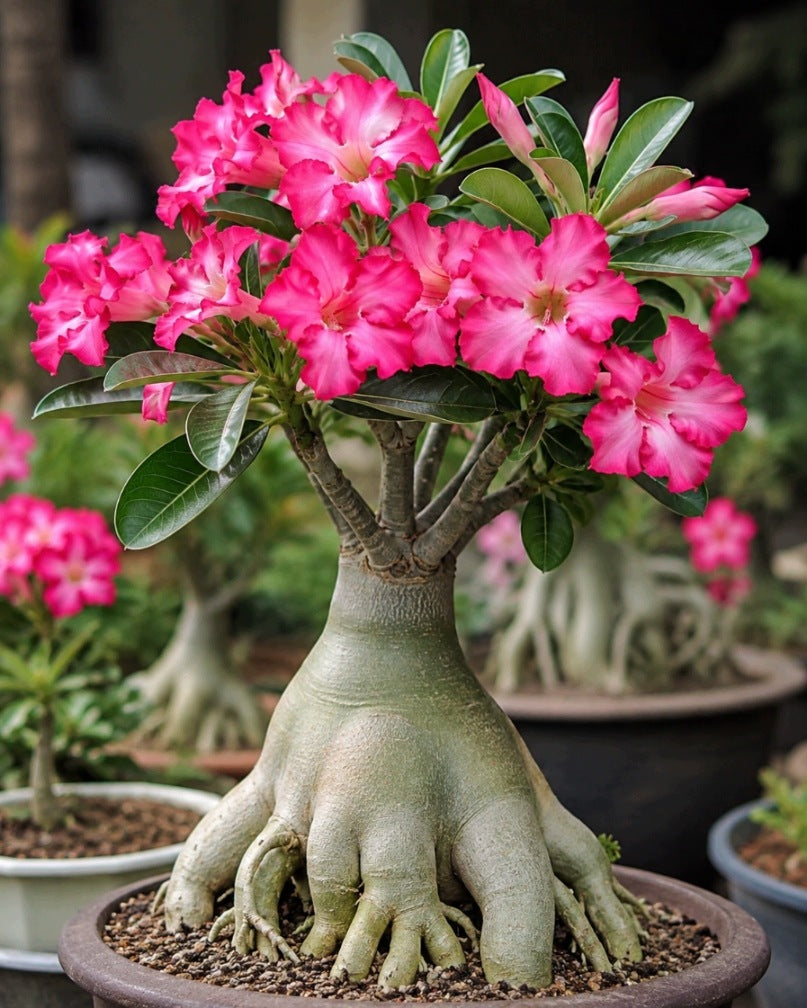

Key Features
-
Plant Variety: Adenium obesum, commonly known as Desert Rose.
-
Flower Colors: Flowers may appear in shades of pink, red, white, and mixed colors, depending on the variety.
-
Distinctive Appearance: Features a thick, sculptural stem base and glossy green leaves.
-
Garden Uses: Suitable for sunny gardens, patios, balconies, and ornamental pots in warm climates.
-
Drought Adaptation: Stores water in its swollen stem, helping it tolerate dry periods once established.
Growing Benefits
-
Adds striking tropical beauty to sunny outdoor spaces and patios.
-
Produces colorful flowers that brighten ornamental plant collections.
-
Develops a sculptural shape that makes an attractive decorative feature.
-
Grows well in containers where warmth and sunlight are available.
-
Offers an enjoyable growing project for succulent and exotic plant enthusiasts.
Seed Specifications
-
Common Name: Desert Rose
-
Botanical Name: Adenium obesum
-
Plant Type: Tropical succulent shrub
-
Colors: Flower colors vary by variety; foliage is generally green.
-
Height: Can reach several feet tall in suitable conditions, depending on climate and cultivation.
Growing Tips
-
Soak fresh seeds briefly in clean, lukewarm water before sowing if desired.
-
Use a well-draining seed-starting mix to help prevent rot.
-
Keep the growing medium lightly moist during germination, never waterlogged.
-
Provide bright light and gradually introduce young plants to stronger direct sunlight.
Seed Storage
Store seeds in a cool, dry, dark place in an airtight container. Protect them from moisture and excessive heat. For best results, sow relatively fresh seeds because viability can decline during storage.
Unique Facts About Desert Rose Seeds
-
Swollen stem base: Desert Rose develops a thickened caudex that stores water and gives mature plants their distinctive appearance.
-
Tropical appearance: Despite its succulent growth habit, it produces showy flowers that resemble those of ornamental tropical shrubs.
-
Seed-grown variation: Plants grown from seed can differ in flower color, shape, and other characteristics, even when seeds come from similar-looking parents.
-
Toxic sap: The plant contains toxic compounds in its sap, so handle cut stems carefully and keep seeds and plant parts away from children and pets.