


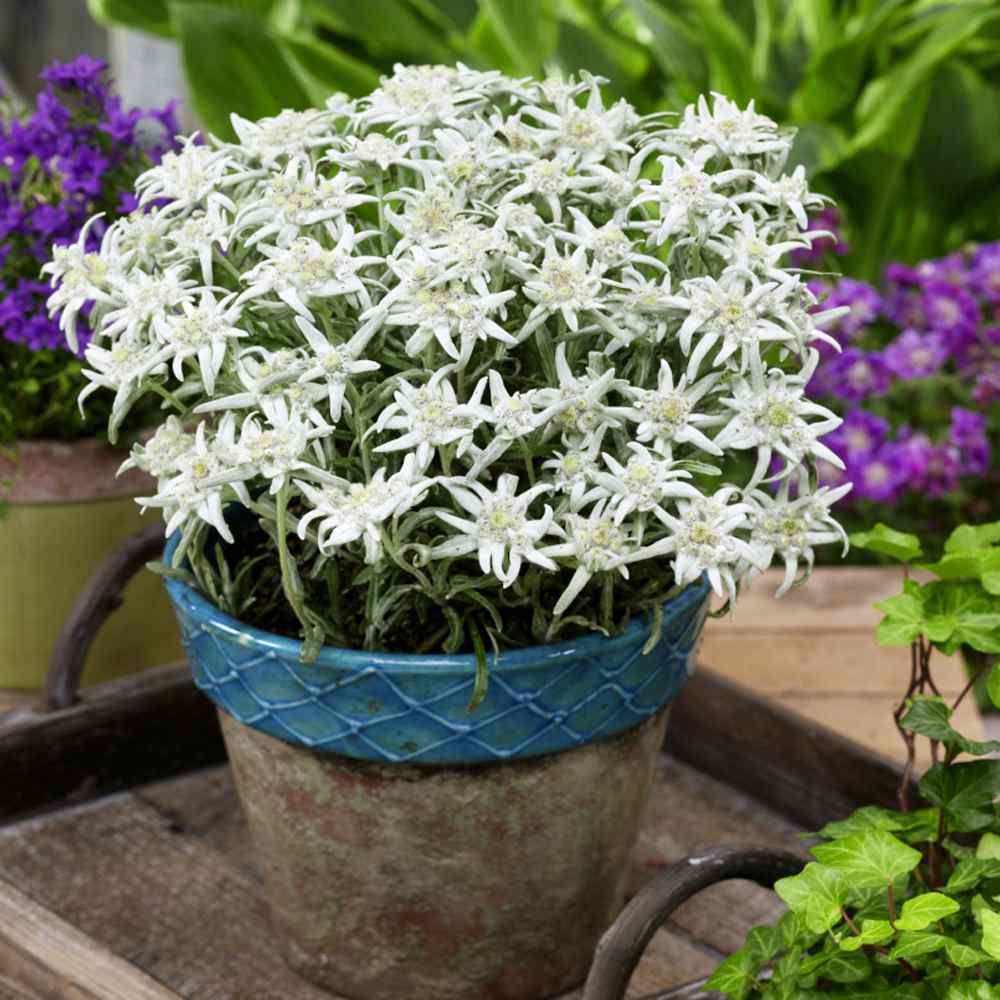
Key Features
- Classic white Edelweiss flowers with silvery, woolly foliage.
- Compact perennial suited to rock gardens, alpine beds, and containers.
- Distinctive star-like flower heads create a charming mountain-garden appearance.
- Prefers cool conditions, bright sunlight, and sharply drained soil.
- A unique choice for gardeners who enjoy unusual alpine flowers.
Growing Benefits
- Adds distinctive alpine character to rock and cottage-style gardens.
- Compact growth makes it suitable for smaller garden spaces.
- Silvery foliage provides attractive texture even beyond flowering.
- Works beautifully alongside other cool-loving alpine plants.
- Offers an interesting seed-growing project for patient gardeners.
Seed Specifications
Common Name: Edelweiss, Alpine Edelweiss
Botanical Name: Leontopodium alpinum
Plant Type: Herbaceous perennial alpine flower
Colors: White flowers with silvery-gray foliage
Height: About 6–12 inches
Sunlight: Full sun to light partial shade
Soil: Well-drained, gritty or rocky soil
Water: Moderate; avoid consistently wet soil
Germination Time: Approximately 14–28 days, sometimes longer
Sowing Depth: Surface sow; press seeds gently into the soil
Spacing: About 8–12 inches
Growing Zones: Generally USDA Zones 4–7
Flowering/Maturity: Typically flowers in summer after establishment
Uses: Rock gardens, alpine gardens, borders, containers, and specialty flower beds
Growing Tips
- Press seeds onto the soil surface rather than burying them deeply.
- Keep the seed-starting medium lightly moist but never waterlogged.
- Provide bright light and cool growing conditions for stronger seedlings.
- Transplant carefully because young alpine plants can be delicate.
Seed Storage
Store unused seeds in a cool, dry, dark location away from humidity and direct sunlight. Keep them in a sealed, moisture-resistant seed packet or container. Avoid storing seeds in warm or damp areas.
Unique Facts About Seeds
- Edelweiss is an iconic alpine plant associated with mountainous regions of Europe.
- Its botanical name, Leontopodium, refers to its distinctive paw-like flower appearance.
- The familiar white appearance comes partly from dense hairs covering the flower structures and foliage.
- Edelweiss naturally grows in rocky alpine environments where excellent drainage is important.