


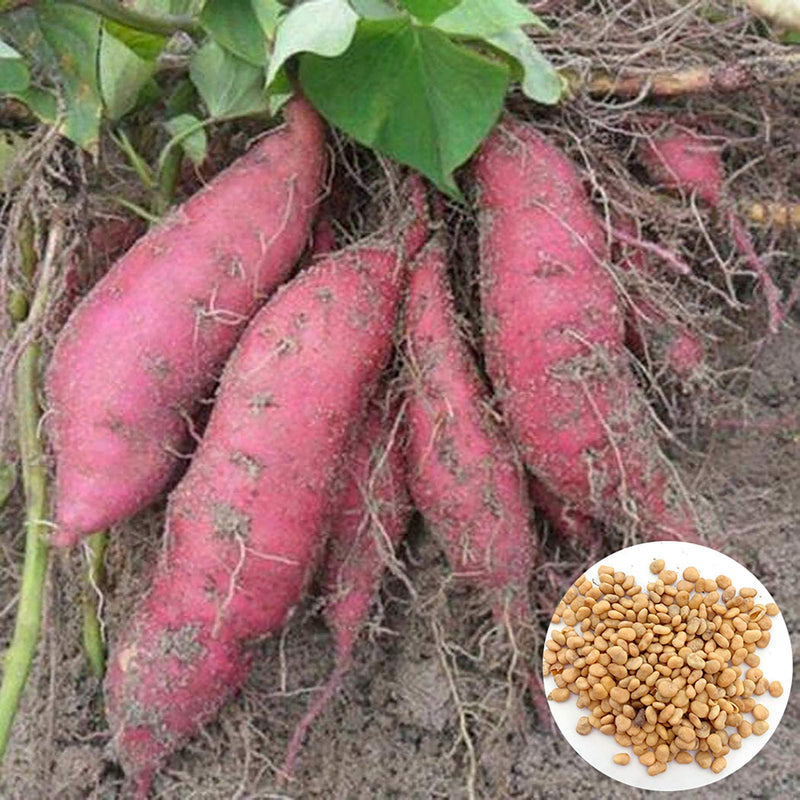
Key Features
- Sweet potato vegetable plant known for its edible, nutritious tuberous roots.
- Produces spreading vines with attractive green foliage for garden beds.
- Warm-season crop suited to sunny vegetable gardens and raised beds.
- Underground roots develop beneath the plant and can vary in size and shape.
- Versatile harvest suitable for roasting, baking, boiling, mashing, and cooking.
Growing Benefits
- Enjoy growing a popular warm-season vegetable in your home garden.
- Produces useful edible roots for a wide range of meals.
- Attractive trailing vines can provide lush green garden coverage.
- Performs well in sunny locations with warm soil.
- A rewarding crop for gardeners with a sufficiently long growing season.
Seed Specifications
- Common Name: Sweet Potato
- Botanical Name: Ipomoea batatas
- Plant Type: Warm-season perennial vine, commonly grown as an annual
- Colors: Green foliage; roots may develop cream, yellow, orange, pink, red, or purple tones depending on variety
- Height: Generally low-growing, with vines that can spread several feet
- Sunlight: Full sun
- Soil: Loose, fertile, well-draining sandy or loamy soil
- Water: Regular and consistent moisture, with reduced watering as harvest approaches
- Germination Time: Not applicable when planting established slips or plants
- Sowing Depth: Not applicable to established plants; slips are planted with roots covered and foliage above soil
- Spacing: Approximately twelve to eighteen inches between plants, with wider spacing for vigorous vines
- Growing Zones: Generally Zones eight through eleven as a perennial; commonly grown as an annual in cooler zones
- Flowering/Maturity: Roots commonly mature in about three to five months, depending on variety and growing conditions
- Uses: Baking, roasting, boiling, mashing, fries, soups, stews, and other culinary dishes
Four Growing Tips
- Plant after the danger of frost has passed and soil is warm.
- Choose a sunny location with loose soil for better root development.
- Keep plants consistently watered during active vine and root growth.
- Allow enough garden space for the vines to spread naturally.
Seed Storage
If you are growing sweet potatoes from slips or plants, seed storage is not applicable. For planting material, keep healthy slips in a cool, shaded location for short-term holding and protect them from drying out or extreme temperatures.
Unique Facts About Seeds
- Sweet potato belongs to the morning glory family, Convolvulaceae.
- Despite its name, sweet potato is botanically distinct from true potatoes.
- The edible portion is a storage root rather than a true tuber.
- Sweet potato vines can produce attractive funnel-shaped flowers under suitable conditions.