


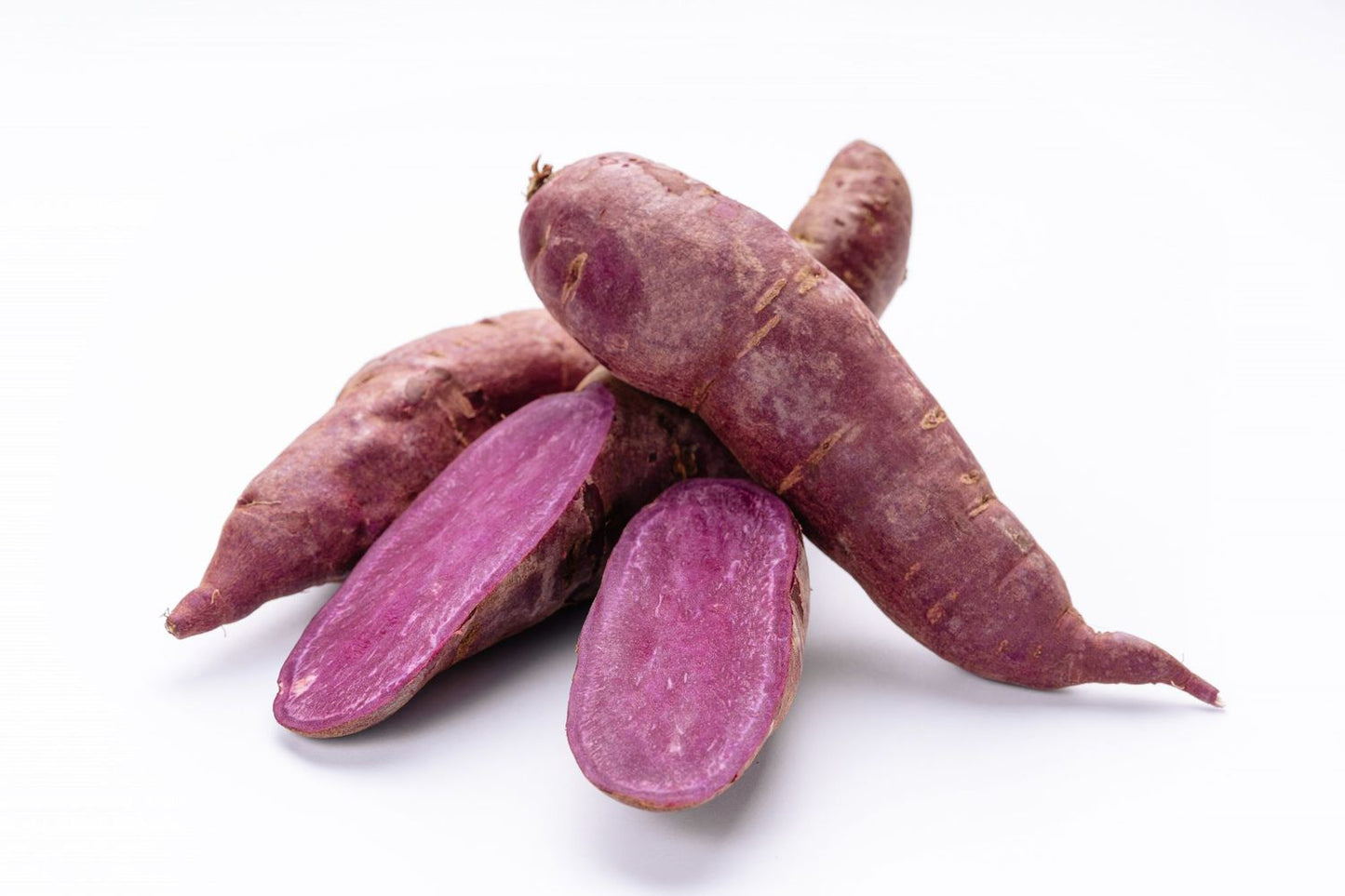
Key Features
- Produces sweet potato roots with distinctive purple-colored flesh.
- Warm-season vegetable with vigorous, spreading green vines.
- Adds striking color and visual interest to home vegetable gardens.
- Suitable for garden beds, raised beds, and warm-climate growing areas.
- Versatile roots can be baked, roasted, boiled, mashed, or used in desserts.
Growing Benefits
- Grow an unusual and visually appealing root vegetable at home.
- Adds variety and color to your vegetable garden harvest.
- Enjoy a rewarding warm-season gardening project.
- Useful for preparing colorful homemade meals and recipes.
- Provides an opportunity to explore less-common garden vegetable varieties.
Seed Specifications
- Common Name: Purple Sweet Potato
- Botanical Name: Ipomoea batatas
- Plant Type: Warm-season perennial grown as an annual vegetable
- Colors: Purple flesh with variety-dependent skin color and green foliage
- Height: Low-growing, spreading vines
- Sunlight: Full sun
- Soil: Loose, fertile, well-drained soil
- Water: Regular moisture with good drainage
- Germination Time: Several days to a few weeks under suitable conditions
- Sowing Depth: Shallow depth in a fine seed-starting medium
- Spacing: Provide generous spacing for spreading vines and underground roots
- Growing Zones: Best suited to warm USDA growing zones; grown as an annual in cooler climates
- Flowering/Maturity: May flower in warm conditions; roots require a long, warm growing season
- Uses: Baking, roasting, boiling, mashing, fries, soups, and colorful vegetable dishes
Four Growing Tips
- Select a sunny location with loose, well-drained soil.
- Keep the soil evenly moist while plants establish and roots develop.
- Allow plenty of room for vines to spread across the garden.
- Harvest carefully to minimize damage to the underground roots.
Seed Storage
Keep seeds in a cool, dry, dark location away from humidity and direct sunlight. Store them in an airtight container or sealed original packet until planting time.
Unique Facts About Seeds
- Purple sweet potatoes belong to the morning glory family, Convolvulaceae.
- Their purple flesh comes from naturally occurring anthocyanin pigments.
- Sweet potatoes are commonly propagated commercially using slips rather than true seeds.
- Plants grown from true seeds can show variation because sweet potato genetics can differ between seedlings.