


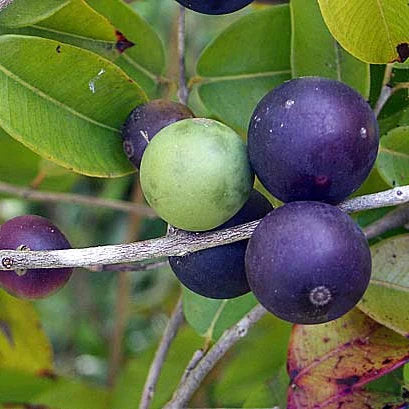
Key Features
-
Variety: Sabará, a traditional jabuticaba type native to Brazil.
-
Fruit Color: Produces dark purple to nearly black fruits when ripe.
-
Plant Characteristics: Evergreen tropical fruit tree with glossy green leaves and a rounded growth habit.
-
Garden Uses: Suitable for tropical gardens, home orchards, and spacious outdoor landscapes in warm climates.
-
Unique Feature: Fruits grow directly on the trunk and mature branches, creating a distinctive appearance.
Growing Benefits
-
Grow an unusual tropical fruit tree in a home garden.
-
Enjoy distinctive, grape-like fruits when the tree reaches maturity.
-
Add glossy evergreen foliage to a suitable warm-climate landscape.
-
Explore the rewarding process of growing a fruit tree from seed.
-
Create an attractive focal point with fruit-bearing branches and trunk growth.
Seed Specifications
-
Common Name: Sabará Jabuticaba, Brazilian Grape Tree
-
Botanical Name: Myrciaria cauliflora (also treated as Plinia cauliflora in botanical references)
-
Plant Type: Evergreen tropical fruit tree
-
Colors: Green foliage, pale flowers, and dark purple to nearly black ripe fruits.
-
Height: Can reach several metres when mature; final size depends on climate and growing conditions.
-
Sunlight: Full sun to partial shade; full sun supports stronger growth in suitable climates.
-
Soil: Rich, slightly acidic, moisture-retentive soil with good drainage.
-
Water: Keep the soil consistently moist, especially during establishment and dry weather.
-
Germination Time: Variable; fresh seeds may germinate within several weeks under warm, humid conditions.
-
Sowing Depth: Cover seeds lightly with a thin layer of moist growing medium.
-
Spacing: Allow several metres of room for a mature tree, adjusting for the cultivar and pruning plans.
-
Growing Zones: Generally suited to warm, frost-free climates; often grown in USDA zones 9a–11, depending on local conditions.
-
Flowering/Maturity: Trees grow slowly from seed and may take several years to flower and fruit.
-
Uses: Fresh fruit, juices, jams, jellies, home orchards, and ornamental tropical landscaping.
Growing Tips
-
Sow fresh seeds promptly because jabuticaba seeds lose viability when they dry out.
-
Maintain warm temperatures and evenly moist growing medium during germination.
-
Choose a sheltered location with good light and protection from frost.
-
Keep young trees consistently watered and avoid disturbing their delicate roots.
Seed Storage
Jabuticaba seeds are sensitive to drying and are best sown fresh. Avoid storing them in ordinary dry seed packets for extended periods. If immediate sowing is not possible, keep seeds briefly in a suitable, slightly moist medium and seek supplier-specific guidance. Refrigeration or prolonged storage may reduce viability, so prompt planting is recommended.
Unique Facts About Sabará Jabuticaba Seeds
-
Trunk-bearing fruit: Jabuticaba flowers and fruits develop directly on the trunk and older branches, a botanical feature known as cauliflory.
-
Brazilian origins: Jabuticaba trees are native to Brazil and are especially associated with Brazilian fruit-growing traditions.
-
Grape-like appearance: Ripe fruits have dark purple to nearly black skins and juicy, pale pulp.
-
Fresh seeds matter: Their sensitivity to drying makes prompt sowing important for successful propagation.