


Key Features
- Distinctive carnivorous plant with hinged traps designed to capture small insects.
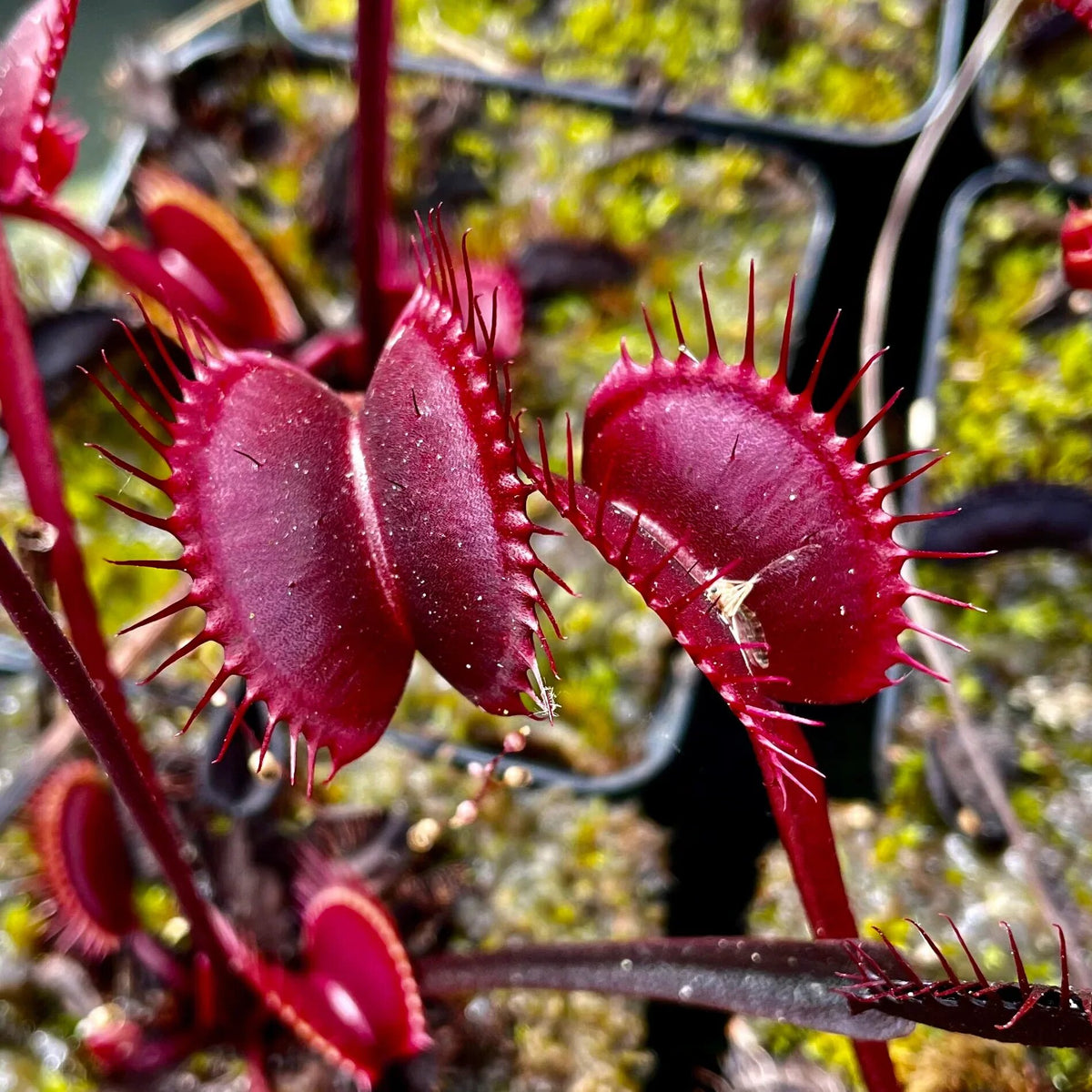
- Attractive green foliage can develop striking red to burgundy coloration under strong light.
- Compact, low-growing perennial suitable for containers, bog gardens, and carnivorous plant collections.
- Produces delicate white flowers on a tall flower stalk when mature.
- An unusual and educational plant choice for gardeners interested in carnivorous species.
Growing Benefits
- Adds an intriguing carnivorous feature to indoor or outdoor plant collections.
- Provides an engaging way to observe a unique natural feeding mechanism.
- Compact growth makes it suitable for small growing spaces and containers.
- Offers an interesting long-term gardening project when grown from seed.
- Can become a rewarding specimen with proper light, water, and soil conditions.
Seed Specifications
Common Name: Red Venus Fly Trap, Venus Flytrap
Botanical Name: Dionaea muscipula
Plant Type: Carnivorous herbaceous perennial
Colors: Green foliage with red to burgundy trap interiors; white flowers
Height: Approximately six to twelve inches when mature
Sunlight: Full sun to partial shade; bright direct light is preferred
Soil: Acidic, nutrient-poor, moist sphagnum-based or peat-and-sand growing medium
Water: Rainwater or distilled water; keep the growing medium consistently moist
Germination Time: Typically several weeks under suitable conditions
Sowing Depth: Surface sow; do not bury the seeds deeply
Spacing: Allow seedlings enough room to develop without overcrowding
Growing Zones: Generally suited to USDA Zones seven through ten outdoors; colder areas require winter protection
Flowering/Maturity: Mature plants produce white flowers in spring; plants grown from seed require several years to reach flowering maturity
Uses: Carnivorous plant collections, containers, bog gardens, educational gardens, and indoor growing
Growing Tips
- Sow the tiny seeds directly on the surface of a moist, acidic growing medium and avoid covering them.
- Provide strong light while protecting young seedlings from excessive heat and sudden environmental changes.
- Keep the growing medium consistently moist using rainwater or distilled water rather than ordinary tap water.
- Be patient with seedlings because Venus flytraps grow slowly and need several years to reach flowering maturity.
Seed Storage
For best viability, sow Venus flytrap seeds while they are fresh whenever possible. If storage is necessary, keep the seeds sealed in a cool, dry environment and protect them from heat and moisture. Fresh seed is generally preferred for successful propagation.
Unique Facts About Seeds
- Venus flytrap seeds can germinate without the prolonged dormancy associated with many temperate plants.
- The plant is native to a limited coastal region of North Carolina and northeastern South Carolina.
- Each trap contains sensitive trigger hairs that help the plant detect suitable prey.
- Mature plants produce small white flowers above the low-growing rosette.