


Key Features
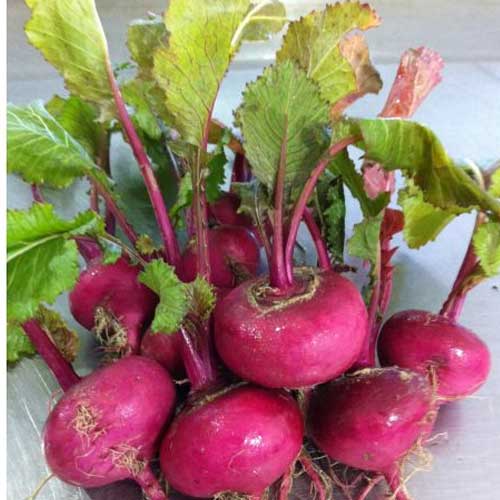
- Produces attractive red-skinned turnip roots with crisp, edible flesh.
- Cool-season vegetable suitable for home gardens, raised beds, and containers.
- Compact root crop with edible roots and nutritious leafy greens.
- Heirloom seed selection for gardeners interested in traditional vegetable varieties.
- Non-GMO garden seed selection for home vegetable growing.
Growing Benefits
- Enjoy freshly harvested turnips from your own home garden.
- Suitable for beginner gardeners and small-space vegetable gardens.
- Can provide both edible roots and tender greens.
- Performs well during cool growing conditions.
- Works nicely in succession planting for a steady harvest.
Seed Specifications
- Common Name: Red Turnip
- Botanical Name: Brassica rapa subsp. rapa
- Plant Type: Cool-season annual root vegetable
- Colors: Red to reddish-purple roots with light-colored flesh
- Height: Generally around twelve to eighteen inches, including foliage
- Sunlight: Full sun to partial shade
- Soil: Loose, fertile, well-draining soil rich in organic matter
- Water: Consistent moisture without waterlogging
- Germination Time: Approximately three to ten days under favorable conditions
- Sowing Depth: About one-quarter to one-half inch deep
- Spacing: Thin seedlings to roughly three to six inches apart
- Growing Zones: Generally suitable across USDA Zones two through eleven, depending on seasonal conditions
- Flowering/Maturity: Roots commonly mature in about thirty to sixty days, depending on variety and growing conditions
- Uses: Fresh eating, roasting, soups, stews, salads, pickling, and cooked greens
Growing Tips
- Sow seeds directly into loose soil because turnips develop best without root disturbance.
- Keep the seedbed evenly moist while seeds are germinating and seedlings are becoming established.
- Thin crowded seedlings early to encourage well-shaped roots and healthy foliage.
- Harvest roots while they are young and tender for the best eating quality.
Seed Storage
Store unused seeds in a cool, dry, dark place away from moisture and heat. Keep them sealed in an airtight container or original packet. Proper storage helps protect seed quality until the next planting season.
Unique Facts About Seeds
- Turnips belong to the mustard family, Brassicaceae, which also includes cabbage, broccoli, and radishes.
- Both the roots and leaves of turnip plants can be eaten, giving gardeners multiple harvest options.
- Turnips are cool-season crops and can tolerate light frost better than many warm-season vegetables.
- Turnip roots develop underground while their leafy tops grow above the soil surface.