


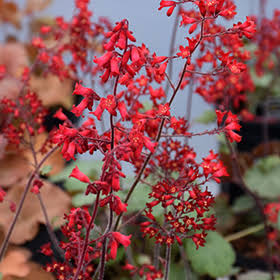
Grow Red Heuchera from seed for attractive foliage and delicate flowering spikes. This shade-friendly perennial is ideal for borders, woodland gardens, containers, rock gardens, and cottage landscapes where well-drained soil and gentle light create suitable growing conditions.
Key Features
- Produces attractive foliage with red-toned coloration depending on seed line.
- Develops delicate flower spikes above the foliage.
- Heirloom, non-GMO seed choice for ornamental perennial gardens.
- Ideal for borders, containers, rock gardens, and woodland-style spaces.
- Performs well in partial shade with moist, well-drained soil.
Growing Benefits
- Adds colorful foliage and texture to garden borders.
- Brings graceful vertical flower spikes to shaded spaces.
- Works beautifully in containers and small ornamental gardens.
- Complements hostas, ferns, and other shade-loving perennials.
- Provides long-lasting perennial interest when grown in suitable conditions.
Seed Specifications
- Common Name: Heuchera, Coral Bells
- Botanical Name: Heuchera spp.
- Plant Type: Herbaceous perennial
- Flower Color: Small flowers in white, pink, coral, or red tones depending on species
- Foliage Color: Red, burgundy, green, or mixed tones depending on seed line
- Flower Form: Small bell-shaped flowers arranged along slender flower stalks
- Foliage: Rounded or lobed leaves forming a basal clump
- Growth Habit: Compact, mounding
- Sunlight: Partial shade to filtered sun
- Soil: Humus-rich, loose, well-drained soil
- Water: Moderate; maintain consistent moisture without waterlogging
- Germination Time: Approximately 14–30 days under favorable conditions
- Sowing Depth: Surface sow; press seeds gently into the growing medium
- Spacing: Approximately 12–18 inches between established plants
- Growing Zones: Generally suited to USDA Zones 4–9, depending on species
- Flowering/Maturity: Usually flowers from late spring through summer after establishment
- Uses: Borders, woodland gardens, shade gardens, containers, rock gardens, cottage gardens, and mixed perennial beds
Growing Tips
- Surface sow the tiny seeds rather than burying them deeply.
- Provide bright filtered light during germination.
- Keep the growing medium consistently moist but well drained.
- Transplant young seedlings carefully after they develop several true leaves.
- Choose morning sun or partial shade in warmer climates.
Seed Storage
Store unused seeds in a cool, dry, dark location. Keep them sealed in an airtight container away from moisture, heat, and direct sunlight. Fresh seed is generally preferred for stronger germination potential.
Important Growing Note
Heuchera includes many species and cultivated selections, and seed-grown plants can vary significantly in foliage color, flower color, mature size, and growth habit. A seed-grown plant may not reproduce the exact characteristics of its parent plant. “Red” may refer primarily to foliage coloration rather than the flower color.
Unique Facts About Seeds
- Heuchera is commonly known as Coral Bells because of its small bell-shaped flowers.
- Heuchera belongs to the Saxifragaceae family.
- The foliage forms a low, attractive clump while flower stalks rise above the leaves.
- Many Heuchera varieties are valued primarily for their colorful ornamental foliage.
- Heuchera flowers can provide nectar for small pollinating insects.