


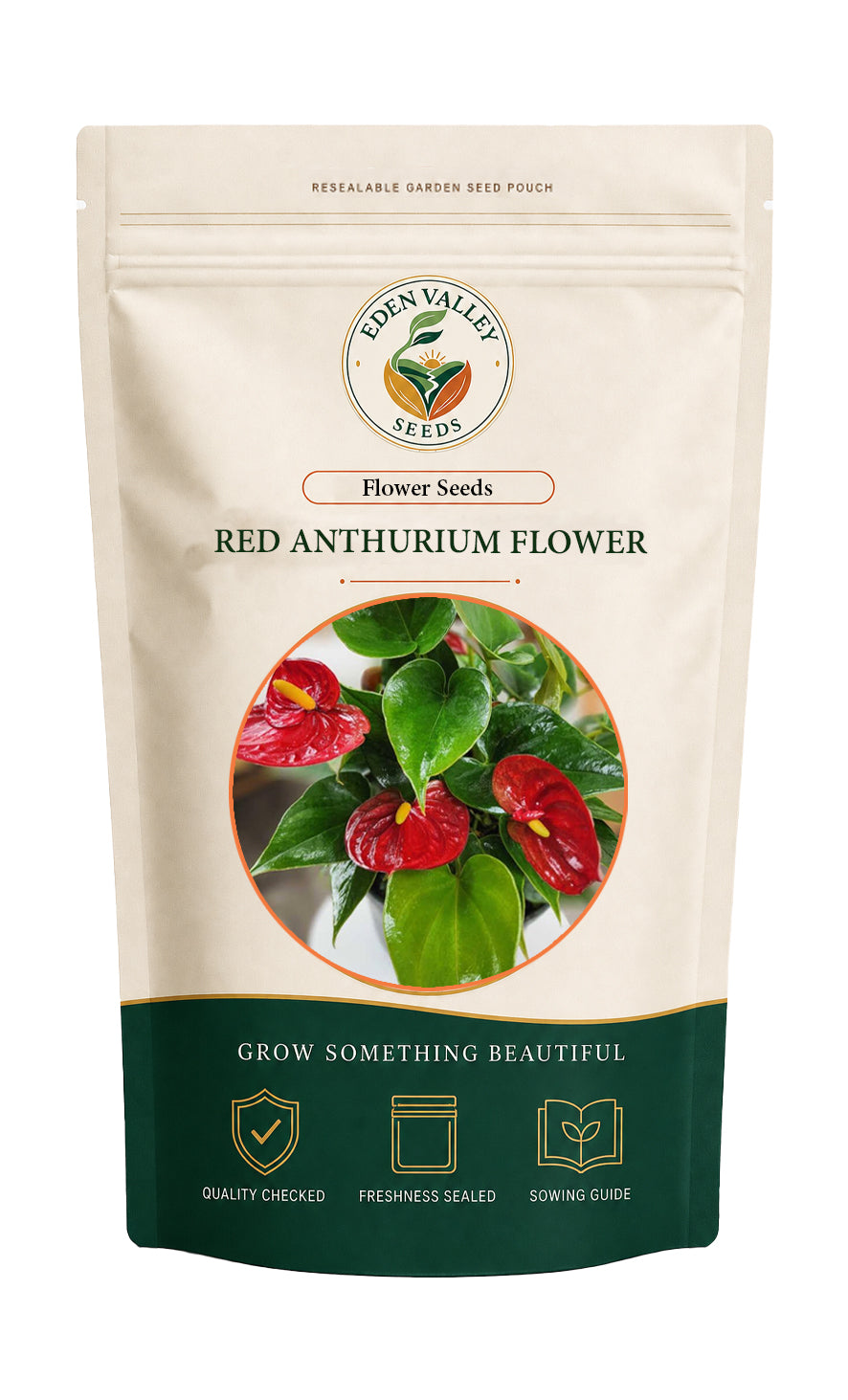

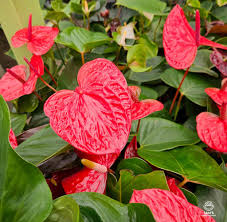
Grow red anthurium from seed for glossy green foliage and distinctive tropical blooms. A striking ornamental choice for containers, indoor gardens, patios, and warm-climate landscapes where bright filtered light and well-drained growing conditions can be provided.
Key Features
- Produces distinctive red ornamental blooms with glossy green foliage.
- Heirloom, non-GMO seed choice for tropical garden enthusiasts.
- Compact growth makes it suitable for containers and indoor spaces.
- Thrives in warm conditions with bright, filtered light.
- Prefers airy, moisture-retentive yet well-drained growing media.
Growing Benefits
- Adds exotic tropical character to indoor and outdoor garden spaces.
- Compact growth fits beautifully in containers and small garden areas.
- Glossy foliage provides attractive greenery between flowering periods.
- Red blooms create a bold focal point for plant displays.
- Well suited to gardeners who enjoy unusual tropical ornamentals.
Seed Specifications
- Common Name: Anthurium
- Botanical Name: Anthurium spp.
- Plant Type: Tropical perennial ornamental
- Flower Color: Red, depending on species and seed line
- Flower Form: Distinctive spathe surrounding a central spadix
- Foliage: Glossy green leaves
- Growth Habit: Compact to upright, depending on species
- Sunlight: Bright filtered light to partial shade
- Soil: Airy, porous, organic-rich, well-drained growing medium
- Water: Moderate; keep growing medium lightly and consistently moist without waterlogging
- Germination Time: Variable; commonly several weeks under favorable conditions
- Sowing Depth: Surface sow or press lightly into the growing medium
- Spacing: Provide sufficient room for seedlings to develop without crowding
- Growing Zones: Generally suited to USDA Zones 10–12 outdoors; grown indoors or protected elsewhere
- Flowering/Maturity: Seed-grown plants may require considerable time to reach flowering size
- Uses: Indoor gardens, tropical containers, patios, shaded garden areas, conservatories, and ornamental displays
Growing Tips
- Use a loose, airy seed-starting medium with excellent drainage.
- Provide warm temperatures and bright, indirect or filtered light.
- Keep the growing medium evenly moist but never saturated.
- Protect young seedlings from direct, intense afternoon sunlight.
- Be patient, as seed-grown anthuriums can take time to mature.
Seed Storage
Store unused seeds in a cool, dry, dark location. Keep them sealed in an airtight container away from moisture, heat, and direct sunlight. For best results, use fresh seed because anthurium seed viability can decline with storage.
Important Growing Note
Anthurium includes many species and cultivated forms, so growth habit, mature size, flowering time, and red coloration can vary from seed. Seed-grown plants may not reproduce the exact appearance of a parent plant. Anthuriums are tropical plants and require protection from frost and prolonged cold.
Unique Facts About Seeds
- Anthuriums are members of the Araceae family, which also includes peace lilies and philodendrons.
- The colorful spathe is a modified leaf rather than the true flower.
- Tiny flowers develop along the central structure called the spadix.
- Anthuriums are naturally associated with warm, humid tropical environments.
- Seed-grown plants can show natural variation in growth and flowering characteristics.