


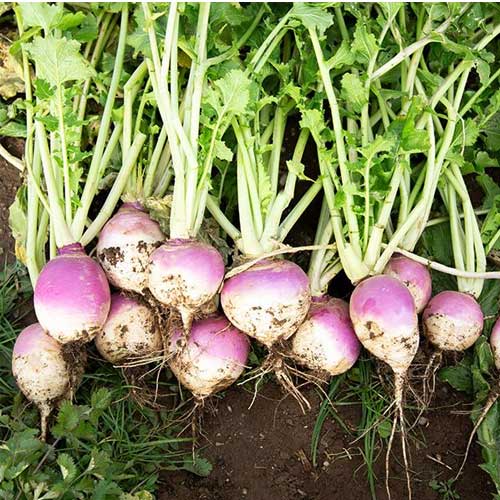
Key Features
- Produces rounded roots with attractive purple shoulders and creamy lower portions.
- Cool-season root vegetable with edible roots and nutritious leafy greens.
- Compact foliage makes rutabagas suitable for vegetable beds and home gardens.
- Performs well in fertile, well-drained soil with consistent moisture.
- Ideal for roasting, mashing, soups, stews, and other homemade dishes.
Growing Benefits
- Adds distinctive purple-and-cream roots to the vegetable garden.
- Provides a rewarding cool-season crop for home gardeners.
- Offers versatile roots suitable for many comforting recipes.
- Works well in garden beds, raised beds, and larger containers.
- Beginner-friendly when planted in suitable soil and cool conditions.
Seed Specifications
Common Name: Purple Rutabaga
Botanical Name: Brassica napus var. napobrassica
Plant Type: Cool-season biennial root vegetable, commonly grown as an annual
Colors: Purple shoulders with cream to yellowish roots; green foliage
Height: Approximately one to two feet
Sunlight: Full sun, with some tolerance for light partial shade
Soil: Fertile, loose, well-drained soil rich in organic matter
Water: Consistent moisture without waterlogged conditions
Germination Time: Approximately four to seven days under favorable conditions
Sowing Depth: About half an inch deep
Spacing: Thin seedlings to approximately six to eight inches apart
Growing Zones: Generally suitable for USDA Zones three through nine
Flowering/Maturity: Typically reaches harvest maturity in about ninety to one hundred days; flowering is uncommon during normal annual cultivation
Uses: Roasting, mashing, soups, stews, casseroles, and fresh leafy greens
Growing Tips
- Sow seeds when temperatures are cool for stronger, more consistent growth.
- Thin young seedlings early to give developing roots enough room.
- Keep the soil evenly moist, especially while roots are enlarging.
- Harvest roots when they reach a useful size and before prolonged hot weather.
Seed Storage
Store unused seeds in a cool, dry, dark location away from moisture and direct sunlight. Keep them in a tightly sealed seed packet or airtight container. Avoid areas with high humidity or temperature fluctuations.
Unique Facts About Seeds
- Rutabaga is a member of the Brassicaceae family, which also includes cabbage, broccoli, and turnips.
- Rutabaga is believed to have originated as a natural hybrid involving turnip and cabbage.
- The swollen root develops partly above the soil surface, where the purple coloring becomes visible.
- Rutabaga generally develops sweeter, milder flavor when grown during cool weather.