


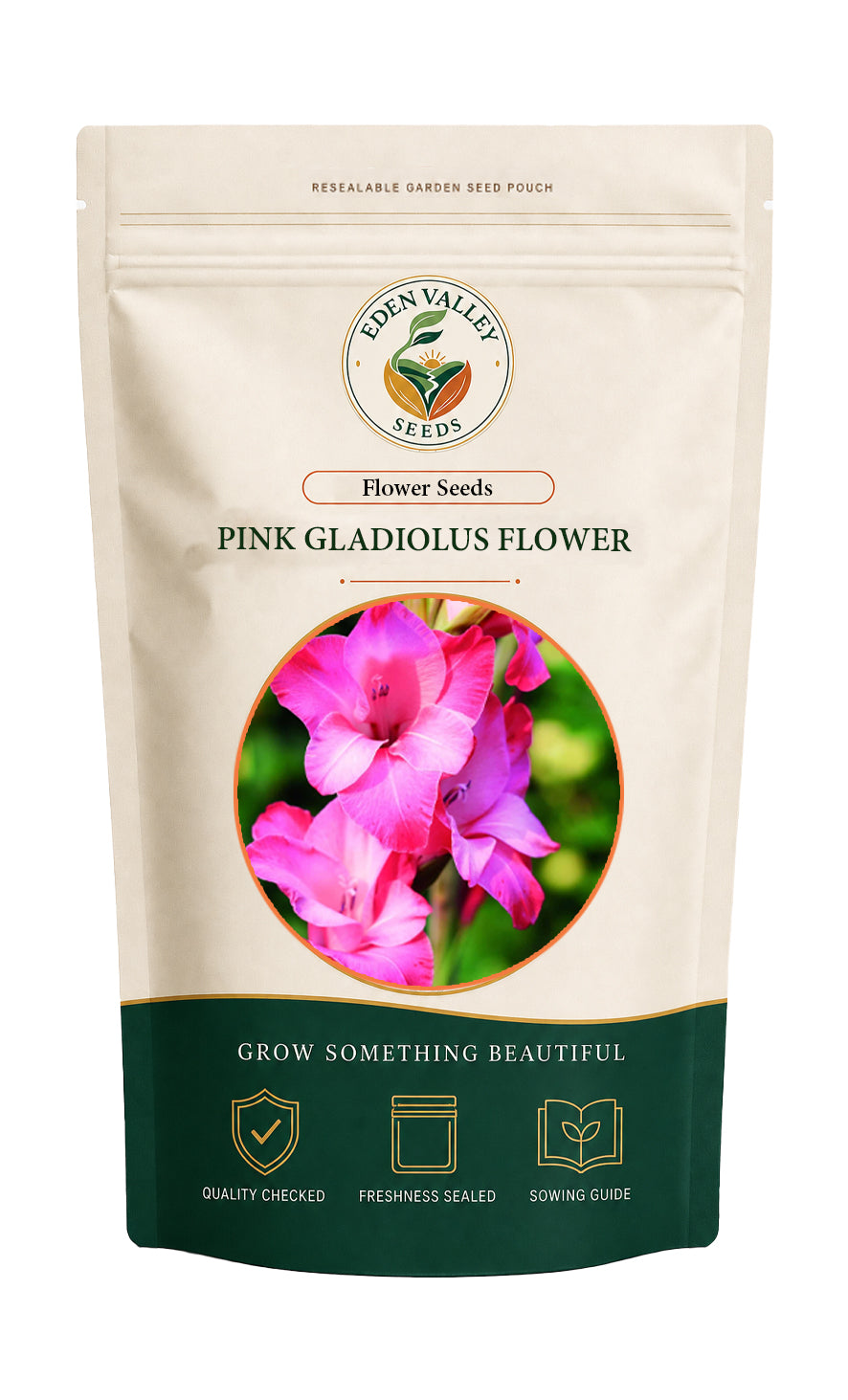

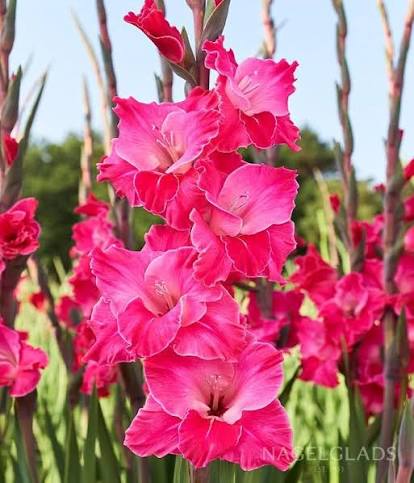
Grow Pink Gladiolus from heirloom non-GMO seeds for elegant pink blooms arranged along tall flower spikes. Ideal for borders, cottage gardens, flower beds, containers, cut flower gardens, and sunny ornamental displays.
Key Features
- Produces elegant pink flowers along tall upright spikes.
- Creates vertical interest with graceful sword-shaped green foliage.
- Heirloom, non-GMO seeds for ornamental garden growing.
- Ideal for borders, flower beds, cottage gardens, and containers.
- Performs best in full sun and well-drained soil.
- Excellent choice for seasonal cut flower displays.
Growing Benefits
- Adds graceful height and soft pink color to garden borders.
- Creates striking vertical accents in mixed flower beds.
- Provides attractive blooms for fresh cut flower arrangements.
- Suitable for sunny containers and cottage-style garden spaces.
- Combines elegant flowers with distinctive sword-shaped foliage.
Seed Specifications
- Common Name: Gladiolus, Sword Lily
- Botanical Name: Gladiolus spp.
- Plant Type: Herbaceous perennial, commonly grown from corms; seed-grown plants develop over multiple seasons
- Flower Color: Pink and related shades depending on variety
- Flower Shape: Funnel-shaped flowers arranged along upright spikes
- Foliage: Long, narrow, sword-shaped green leaves
- Growth Habit: Upright and clumping
- Sunlight: Full sun
- Soil: Fertile, loose, well-drained soil
- Water: Moderate; maintain consistent moisture during active growth
- Germination Time: Approximately 10–30 days under favorable conditions
- Sowing Depth: Approximately ¼–½ inch
- Spacing: Approximately 4–6 inches for seedlings; mature plants may require additional room
- Growing Zones: Varies by species; many garden gladiolus are grown as seasonal plants in colder zones
- Flowering: Generally summer after plants reach flowering maturity
- Uses: Borders, flower beds, cottage gardens, containers, cut flower gardens, and ornamental landscapes
Growing Tips
- Sow seeds in a well-drained seed-starting mix and provide bright light.
- Start seeds indoors for better control in regions with short growing seasons.
- Keep young seedlings evenly moist without waterlogging the soil.
- Provide full sun after plants are established.
- Support mature flower spikes if they become tall or top-heavy.
- Be patient because seed-grown gladiolus can require several growing seasons before flowering.
Seed Storage
Store unused seeds in a cool, dry, dark location. Keep them sealed in their original packet or an airtight container away from moisture, heat, and direct sunlight.
Important Growing Note
Gladiolus are commonly propagated from corms for faster flowering, while seed-grown plants develop more slowly and may take several seasons to reach flowering size. Flower color and plant characteristics can vary depending on the species or seed line.
Unique Facts
- Gladiolus is commonly called sword lily because of its long, sword-shaped leaves.
- Flowers are arranged along tall vertical spikes.
- Gladiolus belongs to the Iridaceae family.
- Many gladiolus varieties are popular as cut flowers because of their tall stems and sequentially opening blooms.
- Seed-grown plants generally require more time to flower than plants grown from mature corms.