


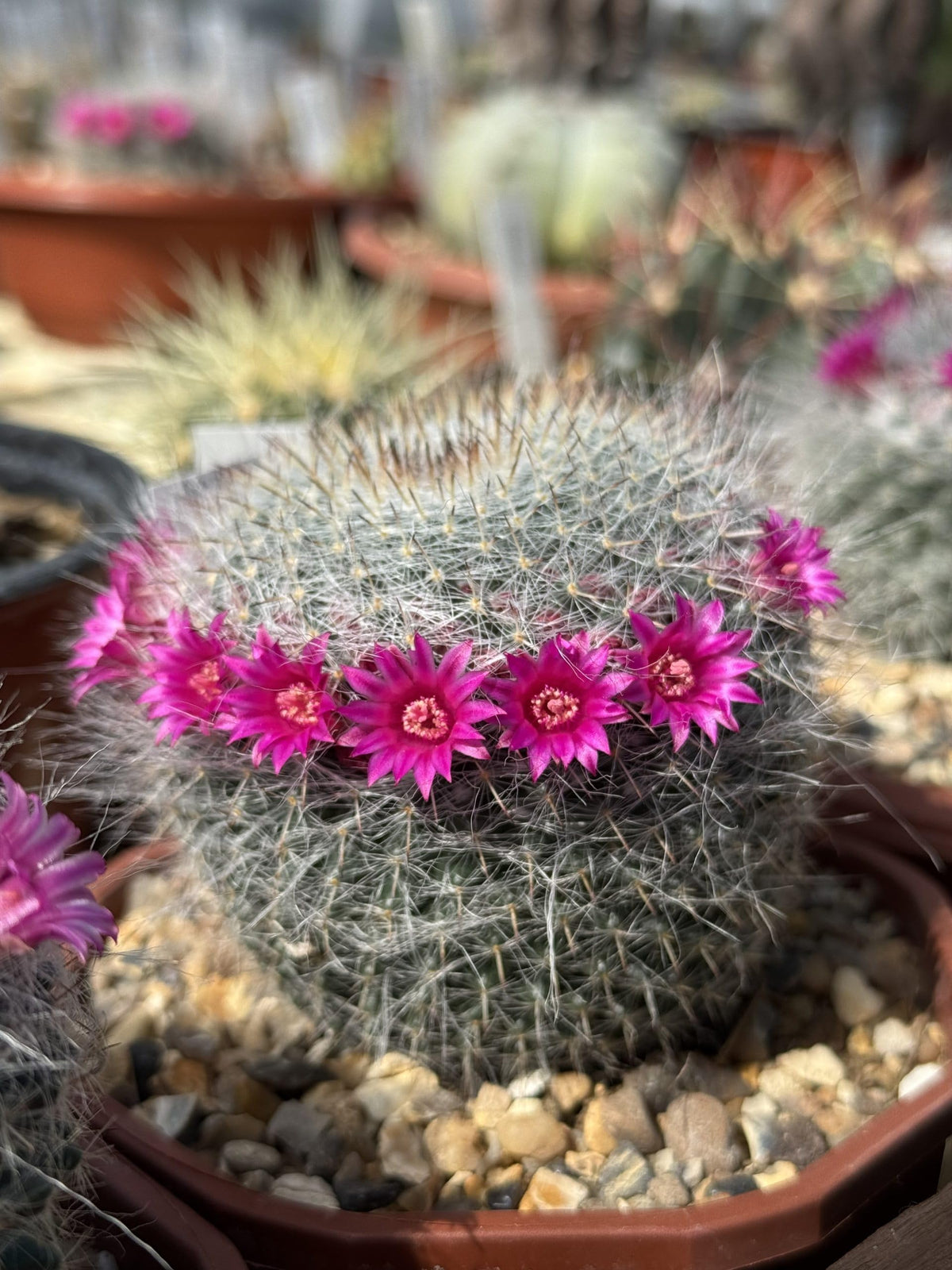
Grow Pink Mammillaria from heirloom non-GMO seeds for charming cactus forms accented by delicate pink flowers. A distinctive choice for sunny windowsills, rock gardens, succulent collections, containers, and warm, dry garden spaces.
Key Features
- Produces attractive pink flowers on distinctive Mammillaria cactus forms.
- Heirloom, non-GMO seed choice for cactus enthusiasts.
- Compact growth makes many types suitable for containers.
- Ideal for rock gardens, succulent collections, patios, and sunny windowsills.
- Prefers bright light and sharply drained growing medium.
- Offers unique texture, form, and seasonal floral interest.
Growing Benefits
- Adds delicate pink color to cactus collections.
- Creates striking contrast between flowers and textured cactus bodies.
- Fits beautifully into compact container and rock gardens.
- Provides an engaging growing project for succulent enthusiasts.
- Requires relatively little water once mature and established.
Seed Specifications
- Common Name: Mammillaria Cactus
- Botanical Name: Mammillaria spp.
- Plant Type: Perennial succulent cactus
- Flower Color: Pink to pinkish shades, depending on species
- Flower Shape: Small, star-shaped flowers often forming rings or clusters
- Foliage: Modified into tubercles and spines rather than conventional leaves
- Growth Habit: Generally compact, rounded, cylindrical, or clustering depending on species
- Height: Varies widely by species; many garden forms remain relatively compact
- Sunlight: Bright light to full sun, with gradual acclimation
- Soil: Very well-drained, gritty cactus or succulent medium
- Water: Low to moderate; allow the medium to dry between waterings
- Germination Time: Approximately 7–30 days under favorable conditions
- Sowing Depth: Surface sow; press seeds gently into the growing medium
- Spacing: Sow with enough space to reduce crowding; transplant after seedlings become established
- Growing Zones: Varies by species; many Mammillaria are suited to USDA Zones 9–11 outdoors and require protection in colder climates
- Flowering/Maturity: Flowering age varies by species; seed-grown plants may require several years to mature
- Uses: Cactus collections, succulent gardens, rock gardens, containers, patios, sunny windowsills, and warm-climate landscapes
Growing Tips
- Use a gritty, fast-draining cactus seed-starting medium.
- Surface sow the tiny seeds instead of burying them deeply.
- Provide bright filtered light during early seedling development.
- Reduce watering as seedlings mature and develop stronger cactus bodies.
Seed Storage
Store unused seeds in a cool, dry, dark location. Keep them sealed in their original packet or an airtight container away from moisture, heat, and direct sunlight. Avoid exposing seeds to prolonged humidity or high temperatures.
Important Growing Note
Mammillaria is a large and diverse cactus genus, so mature size, shape, flower color, hardiness, and growth rate vary by species. The “Pink” designation describes the intended flower color of the seed line, but seed-grown plants may show natural variation. Young cactus seedlings also require more consistent moisture than mature plants and should not be treated like fully established drought-tolerant cacti.
Unique Facts About Seeds
- Mammillaria is one of the largest genera within the cactus family.
- Many Mammillaria species produce flowers in a ring around the upper portion of the plant.
- Instead of traditional leaves, Mammillaria develops specialized tubercles covered with spines or hairs.
- Some species naturally form clusters of small offsets around the parent plant.
- Mature plants can tolerate dry conditions when grown in suitable, sharply drained soil.