



Key Features
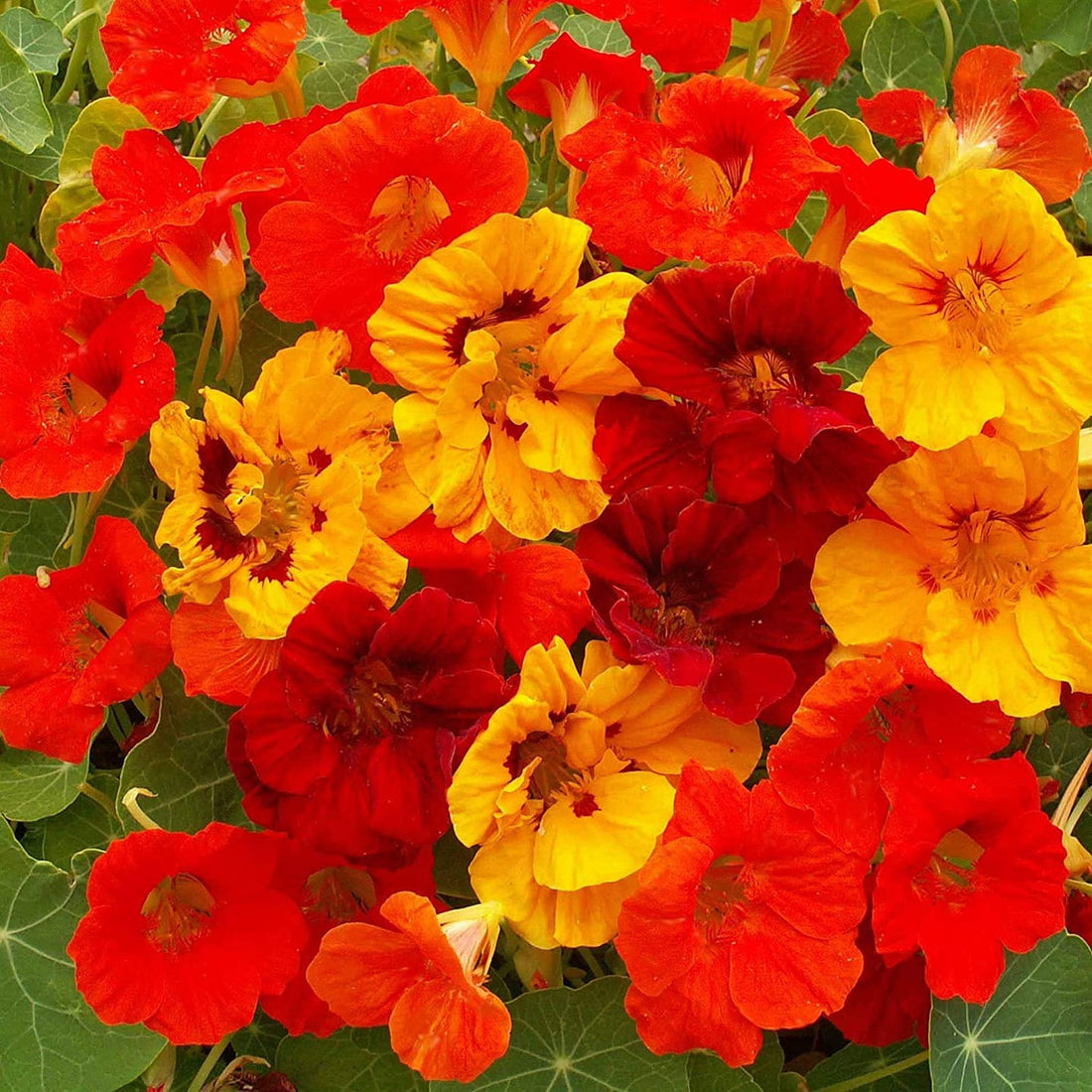
- Produces cheerful, brightly colored flowers above distinctive rounded green foliage.
- Easy-growing annual with compact, trailing, or climbing growth depending on variety.
- Ideal for cottage gardens, containers, hanging baskets, borders, and trellises.
- Performs best in full sun to partial shade with well-drained soil.
- Long-lasting seasonal blooms add vibrant color and visual interest to garden displays.
Growing Benefits
- Adds bold seasonal color to beds, borders, and containers.
- Trailing growth creates attractive displays in hanging baskets and raised planters.
- Climbing types can add vertical interest when grown with suitable support.
- Flowers can attract bees, butterflies, and other visiting pollinators.
- Simple direct sowing makes nasturtium a practical choice for beginner gardeners.
Seed Specifications
- Common Name: Nasturtium
- Botanical Name: Tropaeolum majus
- Plant Type: Annual flowering plant
- Colors: Yellow, orange, red, pink, and other shades depending on variety
- Height: Approximately twelve to eighteen inches; trailing types may spread several feet
- Sunlight: Full sun to partial shade
- Soil: Well-drained, moderately fertile soil
- Water: Moderate; allow the soil surface to dry slightly between waterings
- Germination Time: Approximately seven to fourteen days under favorable conditions
- Sowing Depth: Approximately one-half to one inch
- Spacing: Approximately eight to twelve inches
- Growing Zones: Grown as an annual in most climates; perennial in frost-free regions
- Flowering/Maturity: Generally flowers from late spring through fall, depending on climate and growing conditions
- Uses: Cottage gardens, containers, hanging baskets, borders, trellises, and ornamental beds
Growing Tips
- Soak large seeds in water for several hours before planting to help soften the seed coat.
- Sow directly in loose, well-drained soil once the danger of frost has passed.
- Avoid overly rich soil and excessive fertilizer, which can encourage foliage over flowers.
- Provide a trellis or support for climbing varieties as they grow.
Seed Storage
Store unused seeds in a cool, dry, dark location. Keep them sealed in their original packet or an airtight container away from moisture, heat, and direct sunlight.
Unique Facts About Seeds
- Nasturtium is scientifically known as Tropaeolum majus and belongs to the Tropaeolaceae family.
- Its rounded leaves have a distinctive shield-like shape and are carried on long leaf stalks.
- Nasturtiums can grow as compact plants, trailing vines, or climbers depending on the variety.
- The flowers have a characteristic nectar spur extending behind each bloom.