


Key Features
-
Plant Type: Perennial tuber-producing plant in the sunflower family.
-
Flower Color: Produces cheerful yellow, sunflower-like blooms.
-
Plant Characteristics: Tall-growing plant with broad green leaves and underground edible tubers.
-
Garden Uses: Suitable for vegetable gardens, edible landscapes, and larger garden spaces.
-
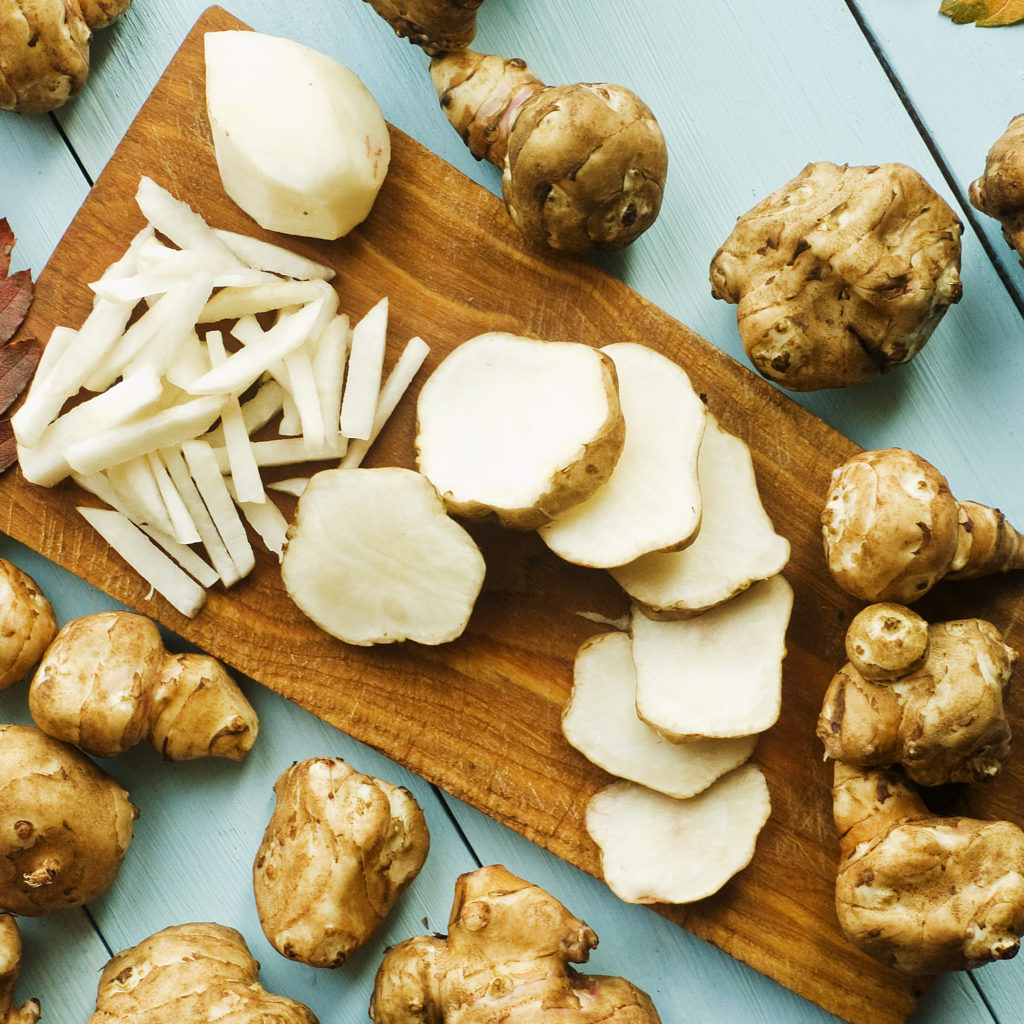
Unique Feature: Produces knobby underground tubers that can be harvested for cooking.
Growing Benefits
-
Enjoy growing an unusual edible crop in your home vegetable garden.
-
Harvest underground tubers for roasting, soups, and other homemade dishes.
-
Add tall greenery and bright yellow flowers to edible landscapes.
-
Grow a productive perennial crop in a suitable garden location.
-
Explore a traditional root vegetable with a distinctive, nutty flavor.
Seed Specifications
-
Common Name: Jerusalem Artichoke, Sunchoke, Sunroot
-
Botanical Name: Helianthus tuberosus
-
Plant Type: Herbaceous perennial
-
Colors: Yellow flowers, green foliage, and tubers with cream, tan, red, or purple skin, depending on the variety.
-
Height: Commonly reaches about five to ten feet under favorable conditions.
-
Sunlight: Full sun; partial sun may be tolerated.
-
Soil: Loose, fertile, well-drained soil.
-
Water: Moderate, consistent moisture, especially during establishment and tuber development.
-
Germination Time: Often around one to three weeks under suitable warm conditions; seed germination can vary.
-
Sowing Depth: Approximately half an inch deep.
-
Spacing: Space plants about twelve to twenty-four inches apart, allowing room for growth.
-
Growing Zones: Generally hardy across USDA zones three through nine, depending on conditions.
-
Flowering/Maturity: Flowers in late summer or autumn; tubers are commonly harvested in autumn after the plants begin to die back.
-
Uses: Edible tubers, home vegetable gardens, ornamental planting, and wildlife-friendly garden spaces.
Growing note: Jerusalem artichokes are most commonly propagated from tubers rather than botanical seeds. If your product is sold as seeds, confirm that the packet contains true seeds and not tuber pieces.
Growing Tips
-
Choose a sunny location with enough room for tall plants to spread.
-
Sow seeds in loose soil after the risk of severe frost has passed.
-
Water consistently during dry spells to support healthy root development.
-
Control spreading by harvesting remaining tubers and monitoring new shoots.
Seed Storage
Keep seeds in a cool, dry, dark place in a sealed, labeled container. Protect them from moisture, heat, and direct sunlight. Follow any specific storage instructions provided by your seed supplier.
Unique Facts About Jerusalem Artichoke Seeds
-
Sunflower family: Jerusalem artichoke belongs to the same botanical genus as the common sunflower.
-
Edible tubers: The underground tubers are the main food crop and have a mildly sweet, nutty flavor.
-
Inulin content: The tubers contain inulin, a type of fermentable dietary fiber.
-
Spreading growth: Small tuber pieces left in the soil can produce new plants, so careful harvesting helps manage its spread.