


Key Features
-
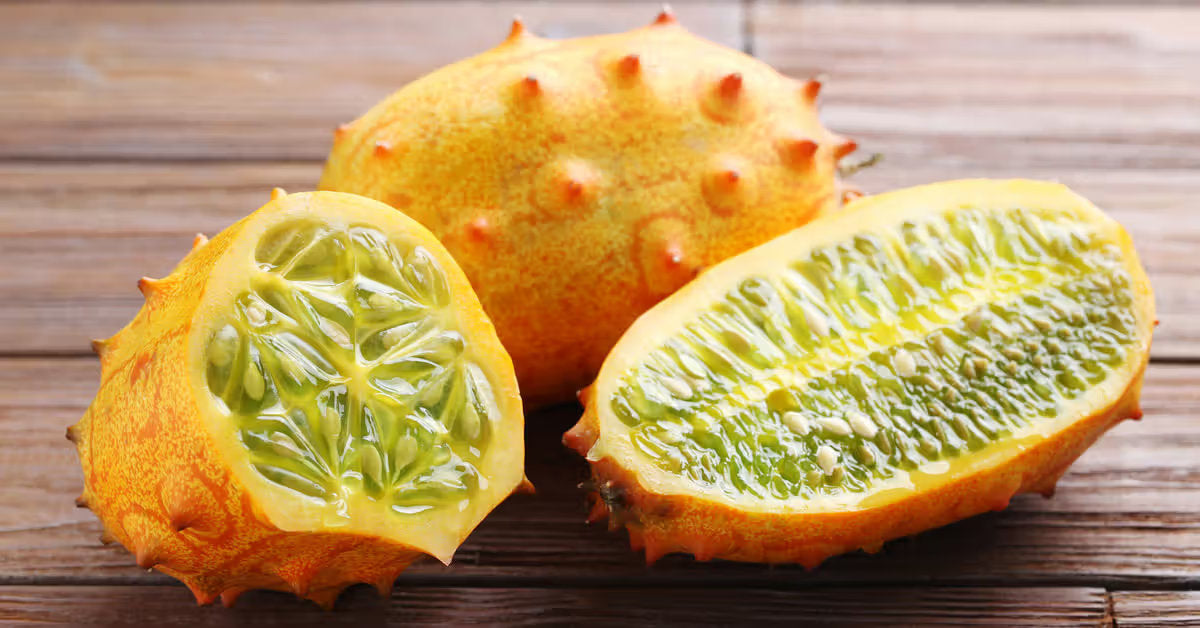
Unique Variety: Jelly melon, also known as horned cucumber or kiwano, is an unusual fruiting vine.
-
Distinctive Appearance: Produces oval fruits with prominent horn-like spines and a bright orange mature rind.
-
Vigorous Growth: A warm-season annual vine that spreads or climbs with support.
-
Edible Fruit: Mature fruits contain bright green, jelly-like flesh with a refreshing, mildly tangy flavor.
-
Garden Versatility: Suitable for vegetable gardens, trellises, and experimental edible gardens in warm climates.
Growing Benefits
-
Adds an unusual fruit variety to home vegetable gardens.
-
Provides an opportunity to explore growing less-common edible crops.
-
Produces visually striking fruits for seasonal garden displays.
-
Can grow vertically with suitable trellising to organize garden space.
-
Offers a distinctive ingredient for fruit salads, garnishes, and refreshing dishes.
Seed Specifications
-
Common Name: Jelly Melon, Horned Cucumber, Kiwano, African Horned Cucumber
-
Botanical Name: Cucumis metuliferus
-
Plant Type: Warm-season annual fruiting vine
-
Colors: Green developing fruits that mature to orange, with green jelly-like flesh
-
Height: Vine length commonly reaches several feet and may extend considerably farther with favorable growing conditions.
-
Sunlight: Full sun
-
Soil: Well-drained, fertile soil rich in organic matter
-
Water: Regular, consistent moisture without waterlogging
-
Germination Time: Usually around seven to fourteen days under warm, favorable conditions
-
Sowing Depth: Approximately half an inch deep
-
Spacing: Allow around eighteen to thirty-six inches between plants, with additional room for spreading vines.
-
Growing Zones: Best suited to warm growing seasons; generally grown as an annual outside frost-free tropical climates.
-
Flowering/Maturity: Flowers during warm weather; fruits commonly mature in approximately three to four months, depending on variety and conditions.
-
Uses: Home vegetable gardens, trellises, edible landscaping, fruit salads, and culinary garnishes.
Growing Tips
-
Sow seeds after frost danger has passed and the soil has warmed.
-
Choose a sunny location with fertile, well-drained soil.
-
Provide a sturdy trellis to support spreading vines and developing fruits.
-
Keep the soil evenly moist, especially during flowering and fruit development.
Seed Storage
Store unused seeds in a cool, dry, dark place in an airtight container. Keep them away from humidity, direct sunlight, and high temperatures. Label the container with the variety and storage date.
Unique Facts About Jelly Melon Seeds
-
African Origin: Jelly melon originated in sub-Saharan Africa, where it grows in warm conditions.
-
Spiny Exterior: Its distinctive orange fruit develops fleshy horns that give it the common name horned cucumber.
-
Jelly-Like Interior: The ripe fruit contains juicy green pulp surrounding numerous pale seeds.
-
Unusual Flavor: Its refreshing taste is often described as a mixture of cucumber, lime, and mild banana-like notes, although flavor varies with ripeness.