


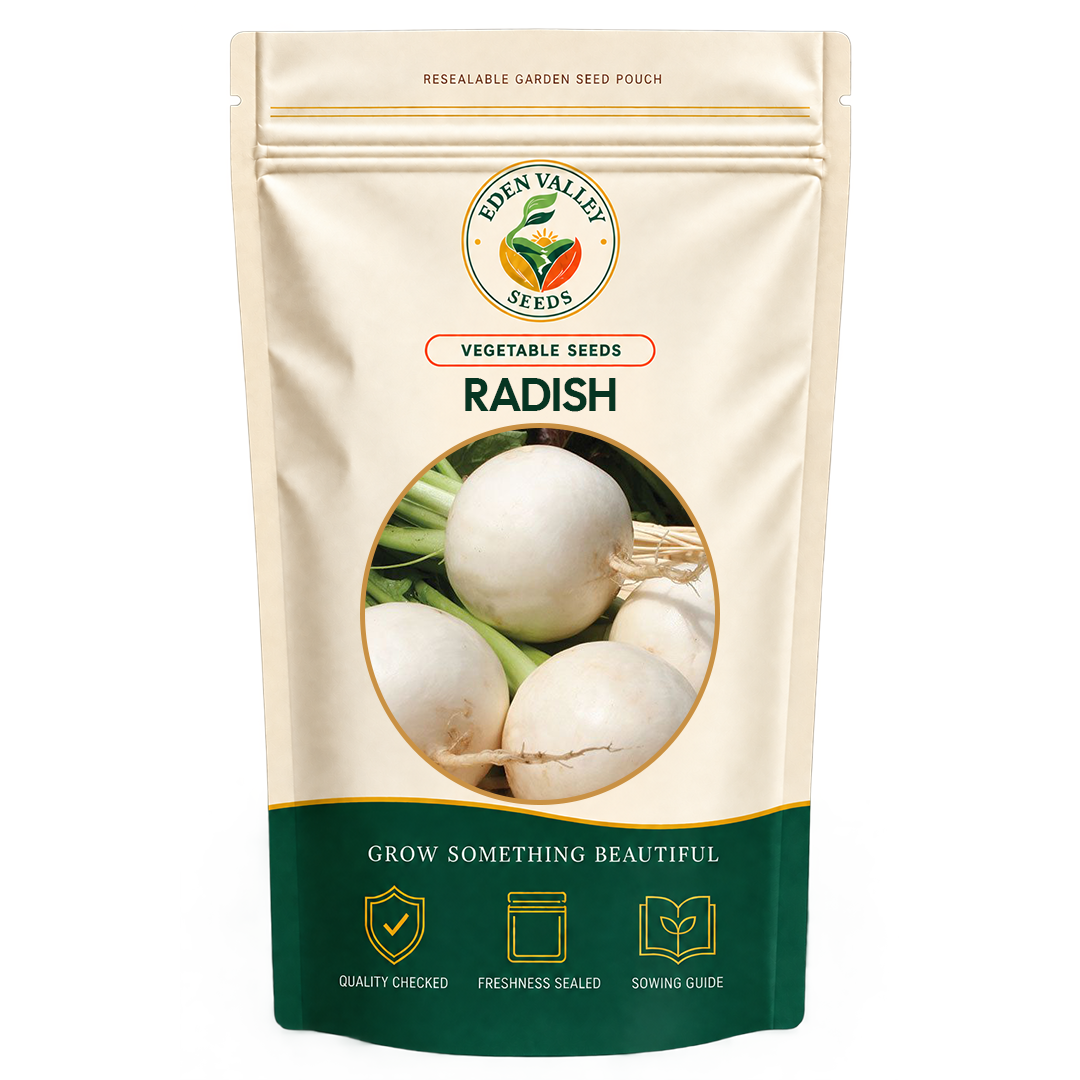
Key Features
- Produces distinctive gray-skinned radishes with crisp edible roots
- Cool-season vegetable with a fresh, mildly peppery flavor
- Fast-growing variety suitable for home vegetable gardens
- Ideal for garden beds, raised beds, and suitable containers
- Harvest young roots for tender texture and fresh flavor
Growing Benefits
- Adds an unusual radish color to your vegetable garden
- Easy-to-grow crop suitable for beginner gardeners
- Fast development provides an enjoyable gardening project
- Compact plants make efficient use of garden space
- Fresh roots can be enjoyed in salads, sandwiches, and cooking
Seed Specifications
- Common Name: Gray Radish
- Botanical Name: Raphanus sativus
- Plant Type: Annual root vegetable
- Colors: Gray to gray-brown outer skin with pale interior
- Height: About six to twelve inches, depending on growing conditions
- Sunlight: Full sun to partial shade
- Soil: Loose, fertile, well-drained soil
- Water: Keep soil evenly moist
- Germination Time: About three to ten days
- Sowing Depth: About one-quarter to one-half inch deep
- Spacing: Thin seedlings to about two to four inches apart
- Growing Zones: Generally adaptable across USDA Zones two through eleven when grown during suitable seasons
- Flowering/Maturity: Commonly ready for harvest within several weeks, depending on variety and conditions
- Uses: Salads, sandwiches, roasting, cooking, pickling, and fresh eating
Growing Tips
- Sow seeds directly because radishes develop best without root disturbance.
- Keep soil evenly moist to encourage smooth, well-formed roots.
- Thin seedlings early so developing radishes have enough room.
- Harvest promptly when roots reach a desirable size for best texture.
Seed Storage
Store Gray Radish seeds in a cool, dry, dark location. Keep them sealed in an airtight container and protect them from moisture, heat, and direct sunlight.
Unique Facts About Seeds
- Gray Radish belongs to the Brassicaceae family, alongside cabbage, broccoli, and mustard.
- Radishes are commonly grown as cool-season vegetables.
- The edible portion develops mainly below the soil surface.
- Radish greens are also edible and can be used in salads or cooked dishes.