



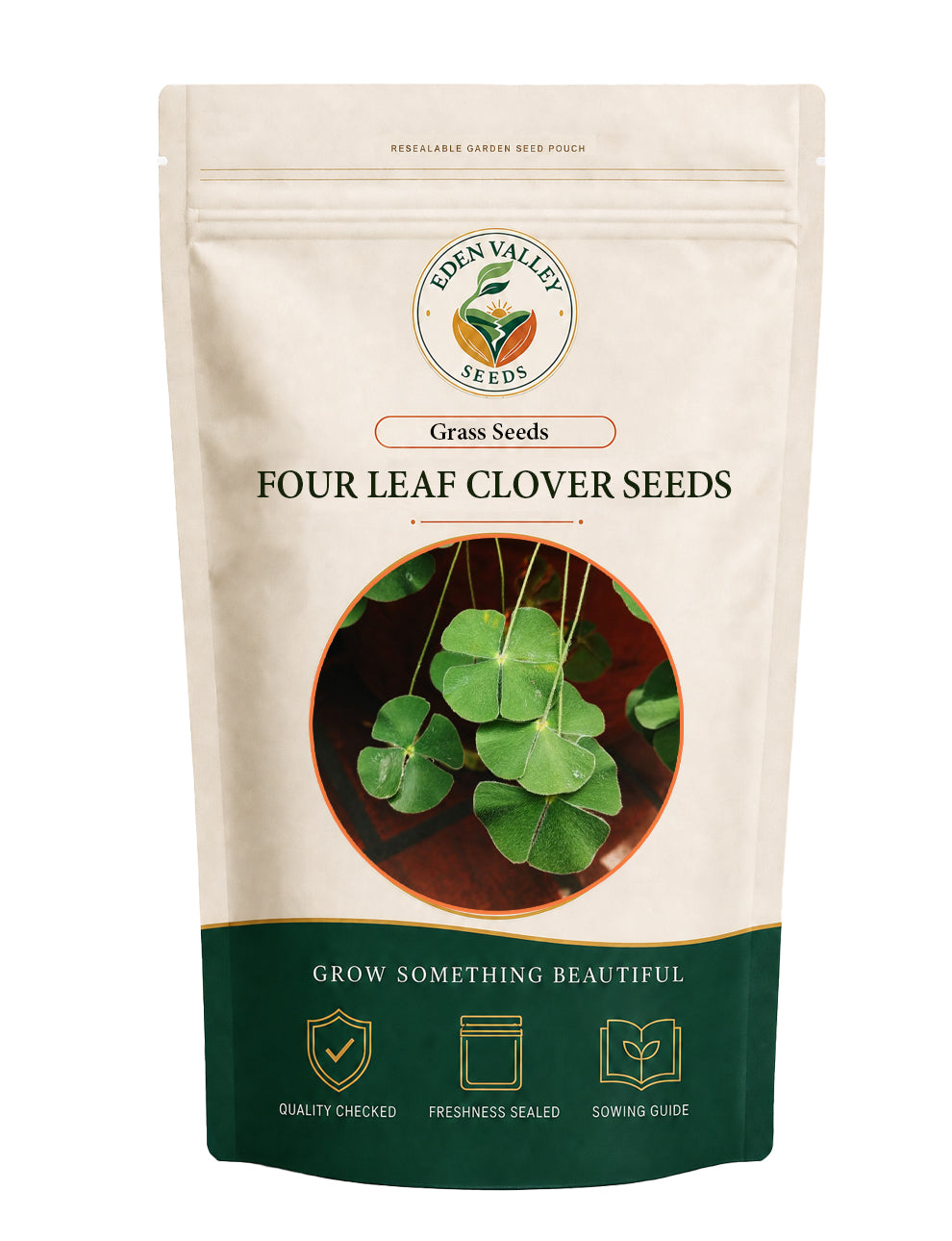

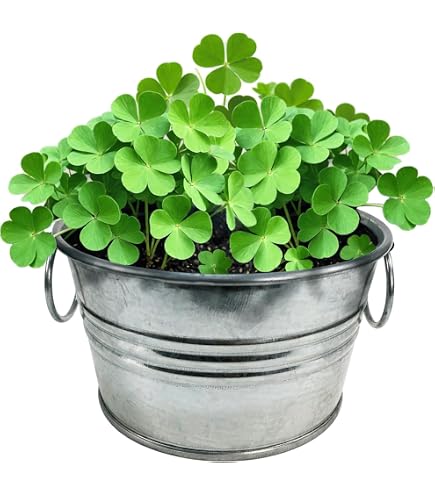
Key Features
- Attractive four-leaf clover variety with lush green foliage and distinctive leaf shapes
- Low-growing plant suitable for lawns, garden borders, containers, and ground cover
- Thrives in sunny to partially shaded locations with well-draining soil
- Adds a charming natural look to gardens, pathways, and outdoor spaces
- Easy-to-grow option for gardeners seeking an alternative ground-cover plant
Growing Benefits
- Adds attractive green coverage to garden spaces and landscapes
- Can be grown in containers, garden beds, and suitable lawn areas
- Compact growth makes it useful around pathways and borders
- Provides an interesting alternative to traditional grass or ground-cover plants
- Suitable for gardeners looking for a distinctive clover plant
Seed Specifications
Common Name: Four Leaf Clover, Lucky Clover
Botanical Name: Trifolium repens
Plant Type: Perennial herbaceous ground-cover plant
Colors: Green foliage; small white to pale pinkish-white flowers
Height: Generally low-growing, commonly around 10–20 cm
Sunlight: Full sun to partial shade
Soil: Well-drained, moderately fertile soil
Water: Moderate; keep soil evenly moist during establishment
Germination Time: Typically around 7–14 days under suitable conditions
Sowing Depth: About 0.5 cm or lightly covered with soil
Spacing: Allow approximately 10–15 cm between established plants
Growing Zones: Commonly grown across a wide range of temperate climates
Flowering/Maturity: Flowers generally appear during the growing season once plants are established
Uses: Ground cover, lawn areas, garden borders, containers, pathways, and ornamental landscaping
Growing Tips
- Sow seeds on lightly prepared, well-draining soil and press them gently into the surface.
- Keep the planting area consistently moist during germination without creating waterlogged conditions.
- Provide full sun to partial shade, with some afternoon shade helpful in hotter climates.
- Thin crowded seedlings after establishment to encourage healthier, more even growth.
Seed Storage
Store unused seeds in a cool, dry, and dark location. Keep them in a tightly sealed container or original packet away from moisture, heat, and direct sunlight. Avoid storing seeds in damp areas to help maintain their viability.
Unique Facts About Seeds
- Four-leaf clover is associated with the naturally occurring four-leaf form of white clover, Trifolium repens.
- White clover normally produces three leaflets, while four-leaf forms are much less common.
- Clover belongs to the legume family, Fabaceae.
- White clover can spread through creeping stems called stolons, helping it form a low-growing ground cover.