


Key Features
-
Unique Variety: Egyptian walking onion, a distinctive perennial onion grown for its edible parts.
-
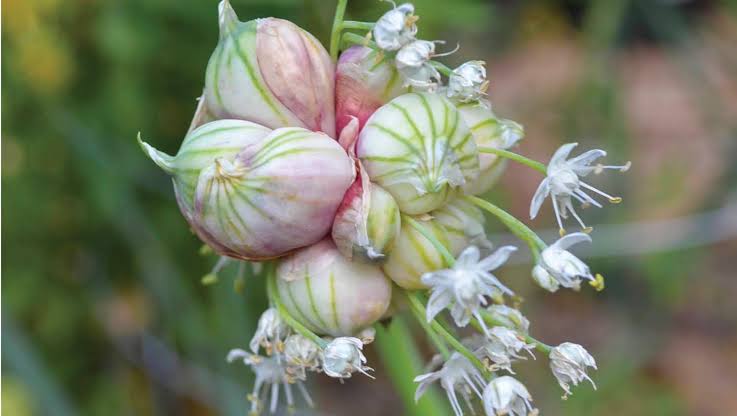
Plant Appearance: Produces green, upright leaves and clusters of small onion bulbs at the top of mature stalks.
-
Distinctive Growth Habit: Top-set bulbils become heavy and bend the stalks toward the ground, where they can root.
-
Garden Uses: Suitable for vegetable beds, edible landscapes, and perennial gardens.
-
Edible Harvest: Leaves, underground bulbs, and top-set bulbils can be used in cooking when correctly identified and grown for food.
Growing Benefits
-
Enjoy fresh onion greens for everyday cooking and seasonal meals.
-
Grow a perennial vegetable that can remain productive for years.
-
Expand your garden with an unusual and conversation-starting edible plant.
-
Allow top-set bulbils to establish new plants with minimal effort.
-
Harvest different edible parts for added variety in the kitchen.
Seed Specifications
-
Common Name: Egyptian Walking Onion, Tree Onion, Topsetting Onion
-
Botanical Name: Allium × proliferum (also commonly listed as Allium cepa var. proliferum)
-
Plant Type: Hardy perennial vegetable
-
Colors: Green foliage, with small bulbs that may develop reddish, purple, or brown papery skins.
-
Height: Commonly around two to three feet, depending on growing conditions.
-
Sunlight: Full sun to partial shade; full sun generally supports stronger growth.
-
Soil: Fertile, well-drained soil rich in organic matter.
-
Water: Moderate, consistent moisture; avoid waterlogged soil.
-
Germination Time: Variable; reliable germination information depends on whether the product contains true seeds or top-set bulbils.
-
Sowing Depth: For true seeds, sow shallowly according to the seed supplier's directions. Bulbils are planted differently.
-
Spacing: Allow several inches between plants, with wider spacing for larger clumps.
-
Growing Zones: Generally hardy across many temperate climates; local winter conditions and cultivar can affect survival.
-
Flowering/Maturity: Established plants produce top-set bulbils during the growing season; timing varies with climate and planting material.
-
Uses: Edible onion greens, small bulbs, top-set bulbils, perennial vegetable beds, and edible landscaping.
Growing Tips
-
Choose a sunny spot with fertile, well-drained soil.
-
Keep the soil evenly moist while young plants establish.
-
Remove weeds regularly so onion plants have less competition.
-
Allow top-set bulbils to mature if you want new plants to spread naturally.
Seed Storage
Keep true onion seeds in a cool, dry, dark place in an airtight container. Protect them from heat and moisture, and label the container with the variety and storage date. If your package contains bulbils rather than true seeds, store them in a cool, dry, well-ventilated place and plant them according to the supplier's directions.
Unique Facts About Egyptian Walking Onions
-
They can walk across the garden: Mature stalks bend under the weight of top-set bulbils, allowing them to root where they touch the soil.
-
They produce multiple edible parts: The leaves, underground bulbs, and aerial bulbils are commonly used in cooking.
-
They are perennial: Established plants can return over successive growing seasons in suitable conditions.
-
They are unusual onion growers: Unlike common onions grown mainly for a single underground bulb, walking onions produce clusters of small bulbs above ground.