


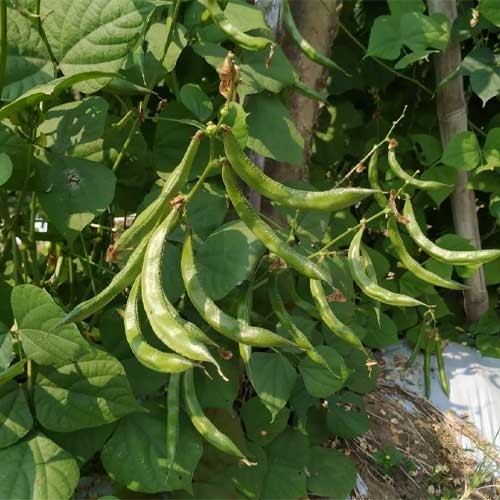
Key Features
- Vigorous warm-season climbing bean with attractive twining growth
- Produces pink, purple, or white pea-like flowers
- Develops distinctive flat bean pods, often purple depending on variety
- Excellent for trellises, fences, screens, and vertical garden spaces
- Adapted to warm conditions and performs well in full sun
Growing Benefits
- Adds attractive vertical interest to home gardens and landscapes
- Provides colorful flowers that enhance pollinator-friendly garden spaces
- Quickly covers sturdy trellises and other vertical supports
- Suitable for warm-season vegetable and ornamental garden designs
- Useful as a nitrogen-fixing legume and cover crop
Seed Specifications
Common Name: Dolichos Bean, Hyacinth Bean, Lablab Bean, Indian Bean
Botanical Name: Lablab purpureus
Plant Type: Warm-season annual climbing vine
Colors: Green foliage with pink, purple, or white flowers; pods may be purple or green depending on variety
Height: Commonly about ten to twenty-five feet when supported, depending on growing conditions
Sunlight: Full sun
Soil: Moist, fertile, well-drained soil; tolerates a range of soil textures
Water: Regular moisture during establishment and active growth; avoid waterlogged soil
Germination Time: Generally about one to two weeks under suitable warm conditions
Sowing Depth: About one-half to one inch deep
Spacing: Allow generous room between plants and provide strong vertical support
Growing Zones: Best suited to warm climates; commonly grown as a warm-season annual outside tropical regions
Flowering/Maturity: Flowers during the warm growing season, followed by developing bean pods
Uses: Trellises, fences, ornamental gardens, edible gardens, screening, pollinator gardens, and cover cropping
Growing Tips
- Soak seeds in warm water before planting to encourage quicker germination.
- Plant after frost danger has passed when the soil is warm.
- Provide a sturdy trellis or support before the vigorous vines begin climbing.
- Keep soil consistently moist during establishment while avoiding standing water.
Seed Storage
Store unused seeds in a cool, dry, dark location away from moisture and direct sunlight. Keep them in a sealed, moisture-resistant container and label the container with the seed variety and storage date.
Unique Facts About Dolichos Bean Seeds
- Dolichos bean is now generally classified botanically as Lablab purpureus, with Dolichos lablab recognized as an older name.
- The plant is a twining vine that can grow vigorously over sturdy trellises and fences.
- Flowers may be white, pink, or purple, while pods can develop attractive purple coloration in some varieties.
- Lablab is also valued as a nitrogen-fixing legume and has been used as a cover or green-manure crop.
Food Safety Note: Young immature pods are eaten in some cuisines when properly cooked. Mature dried seeds can contain cyanogenic compounds and should never be eaten raw; thorough boiling and appropriate preparation are essential.