


Key Features
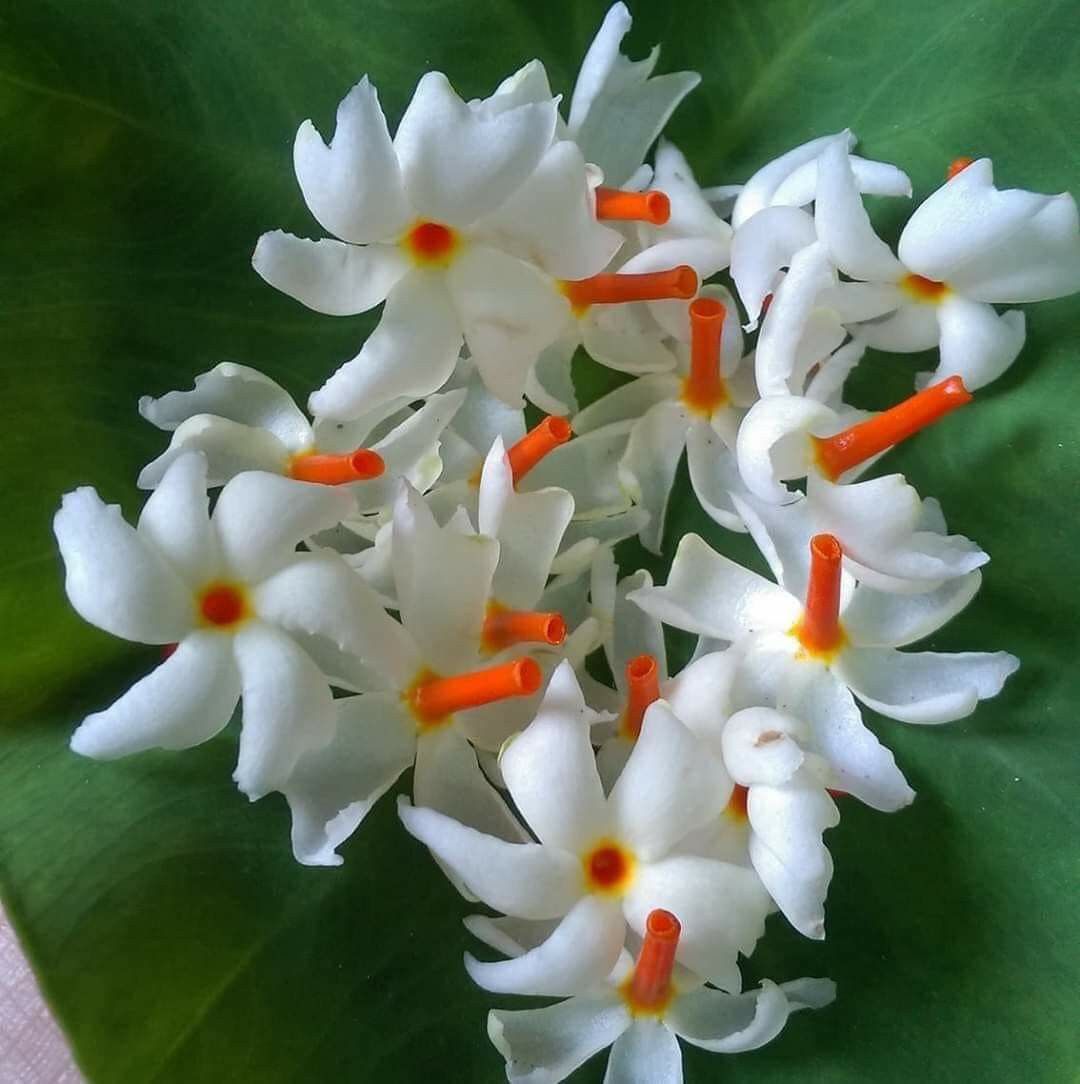
- Fragrant Flowers: Produces delicate white flowers with distinctive orange-red centers and a sweet nighttime fragrance.
- Night-Blooming Beauty: Flowers typically open in the evening and fade or drop by morning, creating a charming night-garden display.
- Shrub or Small Tree: Grows as a large shrub or small tree with attractive green foliage and a naturally graceful form.
- Garden Versatility: Suitable for gardens, landscapes, borders, patios, and other warm-climate growing spaces.
- Distinctive Coral Jasmine: Also known as Parijat, Harshingar, and Night-Flowering Jasmine, this species is widely cultivated as an ornamental plant.
Growing Benefits
- Adds highly fragrant evening blooms to outdoor spaces.
- Creates an attractive contrast between white petals and orange-red flower centers.
- Well suited to warm and tropical or subtropical growing conditions.
- Can be maintained as a shrub with regular pruning.
- Makes an appealing choice for fragrance gardens and nighttime landscapes.
Seed Specifications
- Common Name: Coral Jasmine, Night-Flowering Jasmine, Parijat, Harshingar
- Botanical Name: Nyctanthes arbor-tristis
- Plant Type: Large shrub or small flowering tree
- Colors: White flowers with orange-red centers; green foliage
- Height: Can reach approximately nine to ten meters when grown as a tree; pruning can maintain a smaller form.
- Sunlight: Full sun is preferred for strongest growth and flowering; light shade is tolerated.
- Soil: Fertile, well-drained soil; avoid poorly drained conditions.
- Water: Moderate; water thoroughly and allow the soil to dry somewhat between watering.
- Germination Time: Commonly several weeks, depending on seed freshness, pretreatment, temperature, and growing conditions.
- Sowing Depth: Sow shallowly, just below the surface.
- Spacing: Provide generous spacing to accommodate its shrub or small-tree growth habit.
- Growing Zones: Generally suited to warm climates; commonly grown in USDA Zones eight through eleven, with local climate suitability varying.
- Flowering/Maturity: Flowering commonly occurs from late summer into autumn in suitable climates; mature plants can flower seasonally.
- Uses: Ornamental gardens, fragrance gardens, borders, patios, landscapes, and night gardens.
Growing Tips
- Use a well-draining seed-starting mix because excess moisture can encourage seed and root problems.
- Give seedlings bright light and warm conditions after sowing to encourage healthy development.
- Keep the soil lightly moist but never waterlogged during germination.
- Transplant young plants carefully once they have developed a strong root system and several healthy leaves.
Seed Storage
Store unused seeds in a cool, dry, dark location inside a sealed, moisture-resistant container. Keep them away from humidity, direct sunlight, and excessive heat. Allow seeds to remain completely dry during storage.
Unique Facts About Seeds
- Coral Jasmine belongs to the Oleaceae family, the same botanical family that includes true jasmine relatives such as Jasminum.
- Its scientific name, Nyctanthes arbor-tristis, is associated with the meanings “night-flower” and “sorrowful tree.”
- Its flowers are unusual because they generally open at night and fall after flowering, often leaving fragrant blooms beneath the plant by morning.
- The fruit is a flat, brown capsule divided into sections, with each section containing a seed.