



Key Features
-
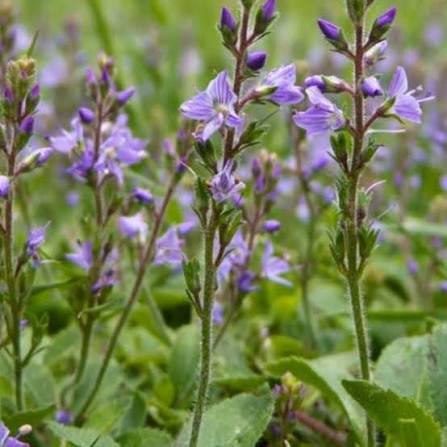
Delicate Blue Flowers: Produces small pale blue, lavender-blue, or occasionally whitish blossoms.
-
Low-Growing Perennial Habit: Develops creeping stems that form spreading patches.
-
Soft Green Foliage: Features small, oval leaves with finely toothed margins.
-
Woodland Garden Character: Complements naturalistic borders and lightly shaded planting areas.
-
Seasonal Flowering: Produces loose clusters of four-lobed flowers during late spring and summer.
Growing Benefits
-
Subtle Seasonal Color: Pale blue blossoms add gentle color to informal garden plantings.
-
Natural Groundcover Texture: Creeping stems create a low layer of greenery.
-
Partial Shade Adaptability: Suitable for locations receiving filtered sunlight.
-
Perennial Garden Interest: Established plants return in suitable growing conditions.
-
Botanical Diversity: Adds a distinctive flowering species to woodland-style collections.
Seed Specifications
-
Common Name: Common Speedwell, Heath Speedwell
-
Botanical Name: Veronica officinalis
-
Plant Family: Plantaginaceae
-
Plant Type: Ornamental Flowering Groundcover
-
Plant Classification: Herbaceous Perennial
-
Variety: Species Form; Cultivar Not Specified
-
Flower Color: Pale Blue, Lavender Blue, Occasionally Whitish
-
Flower Shape: Small, Four-Lobed Flowers
-
Flower Arrangement: Loose Axillary Racemes
-
Flower Size: Approximately 4–8 mm Across
-
Foliage Color: Medium Green
-
Leaf Shape: Oval to Elliptical
-
Leaf Margins: Finely Toothed
-
Leaf Arrangement: Opposite
-
Leaf Texture: Softly Hairy
-
Plant Height: Approximately 4–10 Inches
-
Plant Spread: Variable; Creeping Stems Form Expanding Patches
-
Growth Habit: Low-Growing, Creeping, Mat-Forming
-
Sunlight: Partial Shade to Full Sun
-
Soil: Sandy, Loamy, Stony, Well-Draining Soil
-
Soil pH: Slightly Acidic to Neutral Preferred
-
Water Requirements: Moderate During Establishment
-
Germination Time: Variable; Exact Seed-Lot Timing Not Verified
-
Germination Temperature: Cool to Moderate Spring Conditions
-
Seed Preparation: Follow Supplier-Specific Germination Guidance
-
Sowing Depth: Surface Sow or Cover Very Lightly
-
Plant Spacing: Approximately 8–12 Inches as an Initial Garden Guide
-
USDA Growing Zones: Species-Specific Range Not Reliably Confirmed
-
Planting Season: Spring or Autumn
-
Flowering Season: Spring to Early Summer
-
Maturity: Establishes Gradually During the Growing Season
-
Native Region: Europe and Southwestern Asia
-
Uses: Woodland-Style Gardens, Naturalistic Borders, Ornamental Groundcover, Botanical Collections
-
Seed Count Per Pack: Confirm Actual Quantity
-
Special Characteristics: Pale Blue Flowers, Hairy Creeping Stems, Opposite Leaves, Perennial Growth
Growing Tips
-
Choose Light Shade: Select a site with filtered sunlight or gentle morning sun.
-
Provide Good Drainage: Avoid permanently saturated or heavily compacted soil.
-
Maintain Moderate Moisture: Keep young plants evenly moist while roots establish.
-
Allow Creeping Growth: Provide room for stems to spread and root naturally at their nodes.
-
Control Unwanted Spread: Remove volunteer seedlings and trim stems extending beyond the intended planting area.
-
Monitor Seasonal Growth: Some foliage may die back during unfavorable conditions before regrowth.
Seed Storage
-
Cool Storage: Keep seeds in a cool location away from excessive heat.
-
Dry Conditions: Store thoroughly dried seeds in sealed, moisture-resistant containers.
-
Light Protection: Protect stored seeds from direct sunlight.
-
Proper Labeling: Record the botanical name, seed lot, and collection date.
-
Seed Rotation: Test older seed lots before larger planting projects.
Unique Facts About the Seeds
-
Four-Lobed Flowers: Common Speedwell produces tiny blossoms with four visible corolla lobes.
-
Rooting Creeping Stems: Horizontal stems can develop roots at nodes, helping the plant form spreading patches.
-
Opposite Hairy Leaves: Its paired leaves have finely toothed margins, an important identification feature.
-
Small Seed Capsules: After flowering, plants produce flattened, somewhat heart-shaped seed capsules.
-
Distinct Species Identity: Veronica officinalis is different from Veronica arvensis, another plant sometimes called Common Speedwell.