


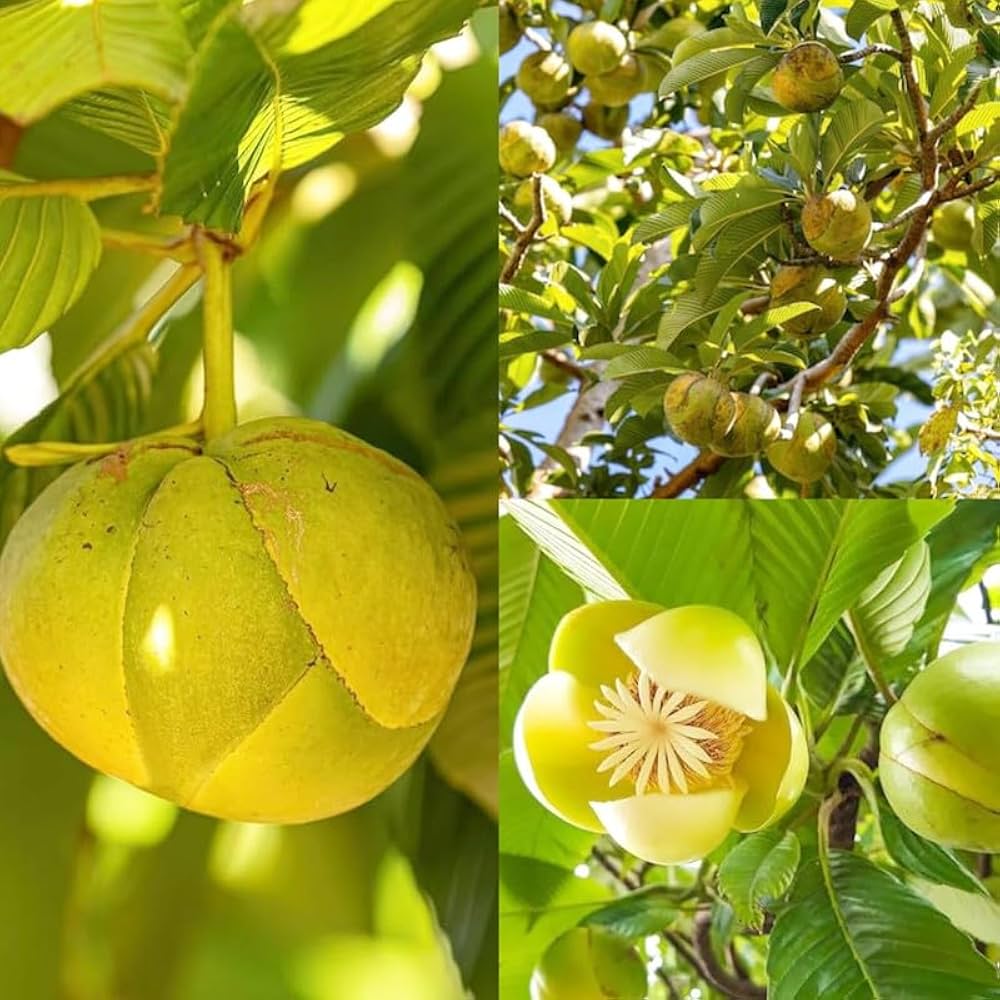
Key Features
-
Plant Variety: Chalta, also known as Elephant Apple, is a tropical evergreen tree.
-
Fruit Appearance: Produces rounded, yellowish-green fruits surrounded by thick, fleshy sepals.
-
Plant Characteristics: Features broad green leaves, spreading branches, and large white flowers.
-
Garden Uses: Suitable for tropical gardens, spacious home landscapes, and fruit-tree collections.
-
Distinctive Fruit: The tangy fruit is traditionally used in cooked dishes, curries, and preserves.
Growing Benefits
-
Adds a distinctive tropical fruit tree to suitable garden landscapes.
-
Provides attractive green foliage and large, ornamental white flowers.
-
Offers an opportunity to explore an underutilized South Asian fruit.
-
Can support wildlife interactions in suitable tropical garden environments.
-
Provides fruit for traditional culinary preparations when properly identified and ripe.
Seed Specifications
-
Common Name: Chalta, Elephant Apple, Chulta
-
Botanical Name: Dillenia indica L.
-
Plant Type: Tropical evergreen or semi-evergreen fruit tree
-
Colors: Green foliage, white flowers, and yellowish-green mature fruits.
-
Height: Can reach approximately thirty metres in favorable conditions, although size varies by climate and growing environment.
-
Sunlight: Full sun to light shade; performs best with warmth and adequate moisture.
-
Soil: Moist, fertile, well-drained soil with organic matter.
-
Water: Regular watering; prefers consistently moist soil and humid conditions.
-
Germination Time: Often around thirty to sixty days under suitable conditions, though results vary.
-
Sowing Depth: Sow fresh seeds shallowly and cover lightly with a thin layer of growing medium.
-
Spacing: Allow generous room for a mature tree; around five metres between trees is a regional planting recommendation.
-
Growing Zones: Best suited to warm tropical and subtropical climates; protect young plants from frost.
-
Flowering/Maturity: Flowers commonly appear during the warmer months, with fruit developing over subsequent months. Seed-grown trees may take several years to bear fruit.
-
Uses: Tropical landscaping, edible-fruit gardens, traditional culinary preparations, and ornamental planting.
Growing Tips
-
Sow fresh seeds promptly because prolonged storage may reduce their viability.
-
Maintain warm conditions and evenly moist soil during germination.
-
Choose a spacious planting site with sunlight and protection from frost.
-
Transplant young seedlings carefully during mild, moist weather to reduce transplant stress.
Seed Storage
Chalta seeds can lose viability during prolonged storage. For the best chance of germination, sow fresh seeds soon after extraction from ripe fruit. If immediate sowing is not possible, keep seeds in suitable conditions recommended by your seed supplier and avoid allowing them to dry out unless the supplier confirms that drying is appropriate.
Unique Facts About Chalta Seeds
-
Scientific identity: Elephant apple belongs to the Dilleniaceae family and is scientifically known as Dillenia indica.
-
Distinctive fruit structure: Its seeds are embedded within a firm, fibrous fruit structure surrounded by fleshy sepals.
-
Wildlife connection: Elephants and other animals can help disperse its seeds, while water can also carry them to new locations.
-
Traditional food plant: The fleshy outer parts of the fruit are used in regional dishes, including sour curries and preserves.