


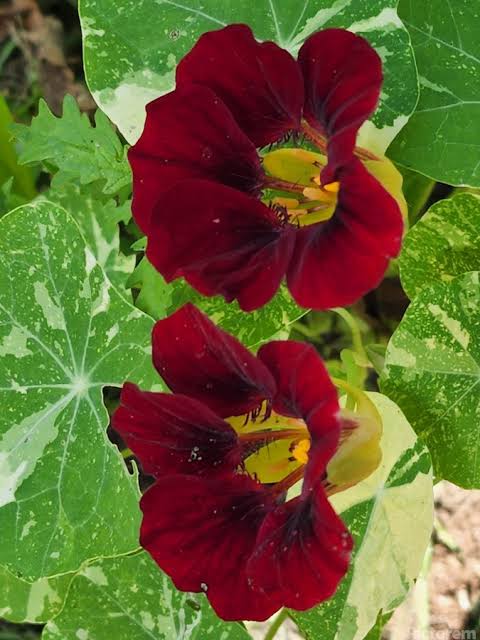
Grow Burgundy Nasturtium from heirloom non-GMO seeds for rich burgundy blooms and rounded green foliage. Ideal for cottage gardens, borders, containers, hanging baskets, raised beds, and colorful ornamental displays.
Key Features
- Produces richly colored burgundy to deep red flowers.
- Features rounded, attractive green foliage with a distinctive appearance.
- Heirloom, non-GMO seeds for home garden growing.
- Ideal for containers, hanging baskets, borders, raised beds, and cottage gardens.
- Performs well in full sun to partial shade.
- Provides colorful seasonal interest with a trailing or spreading growth habit.
Growing Benefits
- Adds deep burgundy color to garden beds and containers.
- Trailing varieties work especially well in hanging baskets and raised planters.
- Compact varieties can brighten patios, balconies, and small garden spaces.
- Flowers can attract bees and other beneficial pollinators.
- Leaves and flowers of culinary nasturtium varieties are edible and offer a peppery flavor.
Seed Specifications
- Common Name: Nasturtium, Garden Nasturtium
- Botanical Name: Tropaeolum majus
- Plant Type: Annual flowering plant
- Flower Color: Burgundy, deep red, or reddish shades
- Flower Shape: Five-petaled, funnel-shaped flowers
- Foliage: Rounded, shield-shaped green leaves
- Growth Habit: Trailing, spreading, or compact depending on variety
- Sunlight: Full sun to partial shade
- Soil: Moderately fertile, loose, well-drained soil
- Water: Moderate; maintain moisture during establishment
- Germination Time: Approximately 7–14 days under favorable conditions
- Sowing Depth: Approximately ½–1 inch
- Spacing: Approximately 8–12 inches
- Growing Zones: Generally grown as an annual in USDA Zones 2–11
- Flowering: Summer through fall, depending on climate and growing conditions
- Uses: Cottage gardens, containers, hanging baskets, borders, raised beds, edible gardens, and ornamental landscapes
Growing Tips
- Direct sow seeds outdoors after the danger of frost has passed.
- Soaking seeds briefly before sowing can help soften their hard seed coat.
- Choose a sunny location with well-drained soil.
- Avoid excessive nitrogen, which can produce abundant foliage with fewer flowers.
- Provide support or room to trail for climbing or spreading varieties.
- Harvest young leaves and flowers only when growing an edible variety intended for culinary use.
Seed Storage
Store unused seeds in a cool, dry, dark location. Keep them sealed in their original packet or an airtight container away from moisture, heat, and direct sunlight.
Important Growing Note
Nasturtium flower color can vary somewhat among seed-grown plants. Burgundy selections generally produce deep red to burgundy flowers, while exact shade may be influenced by genetics and growing conditions.
Unique Facts
- Nasturtium belongs to the Tropaeolaceae family.
- The rounded leaves have a distinctive shield-like shape.
- Nasturtium flowers are often visited by bees, hummingbirds, and other pollinators.
- The flowers and young leaves of culinary varieties have a peppery flavor and can be used as edible garnishes or salad ingredients.