


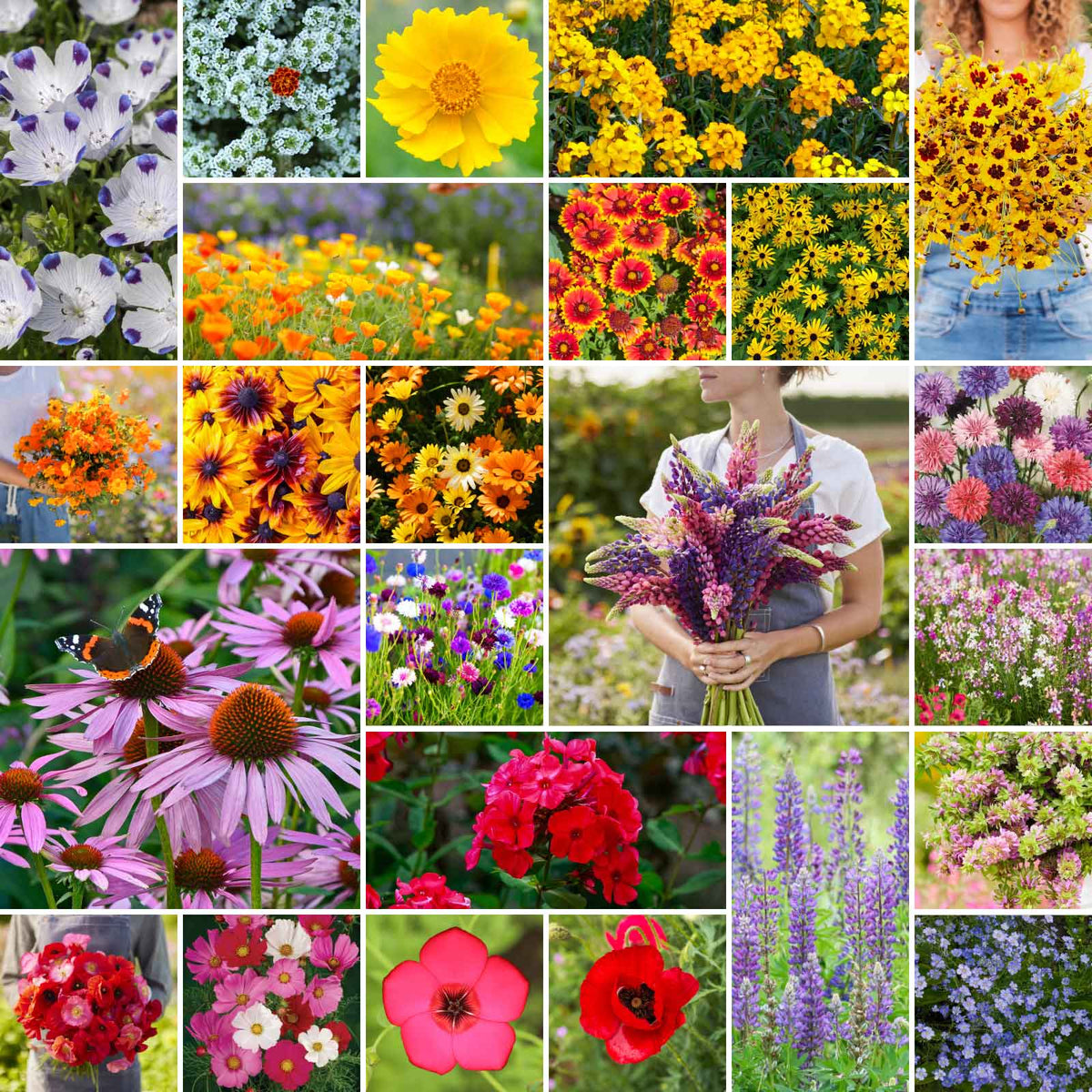
Key Features
- Diverse blend of flowering species suited to Southeast garden conditions
- Offers a natural mix of seasonal flower colors, shapes, and heights
- Creates attractive displays for meadows, borders, pollinator gardens, and open spaces
- Useful for covering larger planting areas with a varied wildflower appearance
- Provides a relaxed, natural alternative to formal single-variety flower beds
Growing Benefits
- Adds seasonal color and visual interest to outdoor spaces
- Creates a natural-looking flower display with varied plant forms
- Suitable for meadow-style landscapes and informal garden areas
- Helps make larger planting spaces more visually appealing
- Offers an enjoyable way to grow a diverse flower collection
Seed Specifications
Common Name: Southeast Wildflower Seed Mix
Botanical Name: Mixed wildflower species; composition varies by seed blend
Plant Type: Mixed annual and/or perennial flowering plants, depending on blend
Colors: Mixed seasonal colors, which may include white, yellow, pink, red, purple, and blue
Height: Varies according to the species included in the mixture
Sunlight: Full sun is generally preferred; some species may tolerate partial sun
Soil: Well-drained soil with moderate fertility; many wildflowers perform well in less-rich soils
Water: Keep the seedbed evenly moist during establishment; established plants generally need less supplemental water
Germination Time: Varies considerably by species, temperature, moisture, and growing conditions
Sowing Depth: Scatter seeds on prepared soil and press lightly into the surface; avoid deep burial
Spacing: Broadcast thinly across the prepared area rather than planting individual rows
Growing Zones: Suitable species vary within the Southeast region; check the blend composition for specific zone suitability
Flowering/Maturity: Flowering periods vary among species and may extend across different parts of the growing season
Uses: Wildflower meadows, garden borders, pollinator-friendly spaces, landscape areas, naturalized planting, and larger open spaces
Growing Tips
- Prepare a weed-free planting area before scattering the seed mix.
- Press seeds gently into the soil so they have good seed-to-soil contact.
- Keep the surface consistently moist while seedlings are becoming established.
- Avoid excessive fertilizer, which can encourage leafy growth over flowering.
Seed Storage
Store unused seeds in their original package or a sealed, moisture-resistant container. Keep them in a cool, dry, dark location away from heat and humidity. Avoid storing seeds where temperature and moisture fluctuate frequently.
Unique Facts About the Seed Mix
- Wildflower mixes can contain species with different germination and flowering requirements.
- Different species may emerge and bloom at different times, creating changing seasonal displays.
- Many wildflowers naturally thrive in open areas with adequate sunlight and good drainage.
- The exact appearance of a mixed seed planting depends on the species included, local conditions, and seasonal weather.