


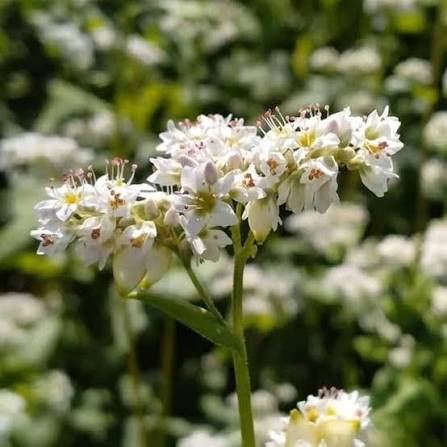
Grow buckwheat from heirloom non-GMO seeds for fast-growing green foliage and delicate white flowers. Ideal for home gardens, cover cropping, pollinator spaces, soil-building plantings, and seasonal garden improvement.
Key Features
- Fast-growing annual plant with attractive green foliage.
- Produces clusters of small white to pale pink flowers.
- Heirloom, non-GMO seed choice for home gardeners.
- Useful as a cover crop, green manure, and garden companion planting.
- Suitable for garden beds, open spaces, pollinator areas, and larger containers.
- Grows well in a range of moderately fertile, well-drained soils.
Growing Benefits
- Provides quick-growing ground cover for garden spaces.
- Flowers can attract bees and other beneficial pollinating insects.
- Can be incorporated into soil as green manure before seed production.
- Adds organic plant material to garden beds when used as a cover crop.
- Useful for gardeners seeking a versatile warm-season cover crop.
Seed Specifications
- Common Name: Buckwheat
- Botanical Name: Fagopyrum esculentum
- Plant Type: Warm-season annual
- Foliage: Green, triangular leaves
- Flower Color: White to pale pink
- Growth Habit: Upright, branching
- Sunlight: Full sun
- Soil: Moderately fertile, well-drained soil
- Water: Moderate; maintain moisture during establishment
- Germination Time: Approximately 3–7 days under favorable conditions
- Sowing Depth: Approximately ½–1 inch
- Spacing: Approximately 4–8 inches for cover crop use
- Maturity: Approximately 8–12 weeks depending on growing conditions and intended use
- Uses: Cover cropping, green manure, pollinator plantings, soil improvement, garden borders, and seed production
Growing Tips
- Sow after the danger of frost has passed and soil has warmed.
- Scatter seeds for cover cropping or sow in rows for more organized plantings.
- Cover seeds with a light layer of soil and keep the planting area evenly moist during germination.
- Avoid excessive nitrogen, which can encourage overly lush foliage.
- Mow or cut plants before mature seeds develop if using buckwheat as a cover crop.
- For pollinator use, allow plants to flower for an extended bloom period.
Unique Facts
- Buckwheat is not a true cereal grain; it is a broadleaf plant related to sorrel and rhubarb.
- Its small white flowers are attractive to bees and other pollinating insects.
- Buckwheat is commonly used as a short-season cover crop.
- The plant develops quickly, making it useful for temporary garden and soil-covering plantings.
Seed Storage
Store unused seeds in a cool, dry, dark location. Keep them sealed in their original packet or an airtight container away from moisture, heat, and direct sunlight.