


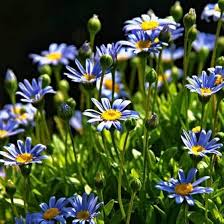
Grow Blue Felicia from heirloom non-GMO seeds for cheerful blue daisy-like flowers with bright centers. Ideal for borders, containers, cottage gardens, rock gardens, and sunny landscapes where extended seasonal color is desired.
Key Features
- Produces charming blue daisy-like flowers with contrasting centers.
- Heirloom, non-GMO flower seeds for home gardeners.
- Long-blooming ornamental suitable for sunny garden spaces.
- Ideal for borders, containers, rock gardens, cottage gardens, and patios.
- Compact, branching growth creates a colorful garden display.
- Flowers can attract bees, butterflies, and other beneficial insects.
Growing Benefits
- Adds vibrant blue color to flower beds and containers.
- Provides extended seasonal floral interest under favorable conditions.
- Compact growth makes it useful for smaller gardens and patio containers.
- Works well as edging or a colorful border plant.
- Supports pollinator-friendly garden designs.
Seed Specifications
- Common Name: Blue Felicia, Blue Daisy, Kingfisher Daisy
- Botanical Name: Felicia amelloides
- Plant Type: Tender perennial, commonly grown as an annual in cooler climates
- Flower Color: Blue to violet-blue
- Flower Shape: Daisy-like
- Foliage: Green, slightly fleshy leaves
- Growth Habit: Compact, branching, and mounding
- Sunlight: Full sun
- Soil: Fertile, loose, well-drained soil
- Water: Moderate; keep evenly moist during establishment
- Germination Time: Approximately 10–21 days under favorable conditions
- Sowing Depth: Approximately ⅛–¼ inch
- Spacing: Approximately 8–12 inches
- Growing Zones: Generally suited to USDA Zones 9–11 as a perennial; grown as an annual in cooler areas
- Flowering: Can bloom over an extended season in suitable climates
- Uses: Flower beds, borders, containers, rock gardens, cottage gardens, patios, and pollinator-friendly plantings
Growing Tips
- Choose a sunny location with well-drained soil.
- Sow seeds shallowly and cover them lightly with fine soil.
- Keep the soil evenly moist during germination and early growth.
- Avoid waterlogged soil, especially in containers.
- Remove faded flowers regularly to maintain a neat appearance and encourage continued blooming.
- Grow in containers if winter temperatures are too cold for outdoor perennial growth.
Growing Instructions
Planting Season: Sow outdoors after the danger of frost has passed. In cooler climates, start seeds indoors several weeks before the last frost date.
Sowing: Prepare loose, well-drained soil and sow seeds approximately ⅛–¼ inch deep. Cover lightly.
Depth: Plant approximately ⅛–¼ inch deep.
Spacing: Thin or transplant seedlings to approximately 8–12 inches apart.
Sunlight: Provide full sun for compact growth and abundant flowering.
Soil: Use fertile, loose, well-drained soil. Container-grown plants should be placed in pots with adequate drainage holes.
Watering: Keep soil evenly moist during germination and establishment. Once established, allow the upper soil surface to dry slightly between waterings.
Germination: Seeds generally germinate within approximately 10–21 days under favorable conditions.
Thinning: Thin seedlings after emergence to reduce crowding and encourage strong branching.
Fertilizing: Apply a balanced flower fertilizer according to soil needs during active growth. Avoid excessive nitrogen.
Care: Remove spent blooms regularly and keep weeds controlled around outdoor plants.
Flowering/Maturity: Blue Felicia can produce daisy-like flowers for an extended period when grown under suitable temperatures and sunlight.
Overwintering: In cooler regions, grow as an annual or move container plants indoors before freezing temperatures arrive.
Harvesting: Allow flowers to remain for garden display. If collecting seeds, allow flower heads to mature and dry before gathering.
Seed Storage
Store unused seeds in a cool, dry, dark location. Keep them sealed in their original packet or an airtight container away from moisture, heat, and direct sunlight.
Unique Facts
- Felicia amelloides is commonly known as blue daisy or kingfisher daisy.
- Its blue flowers contrast beautifully with yellow or golden centers.
- The plant is native to South Africa.
- Felicia is valued as a colorful ornamental for containers, borders, and pollinator-friendly gardens.