


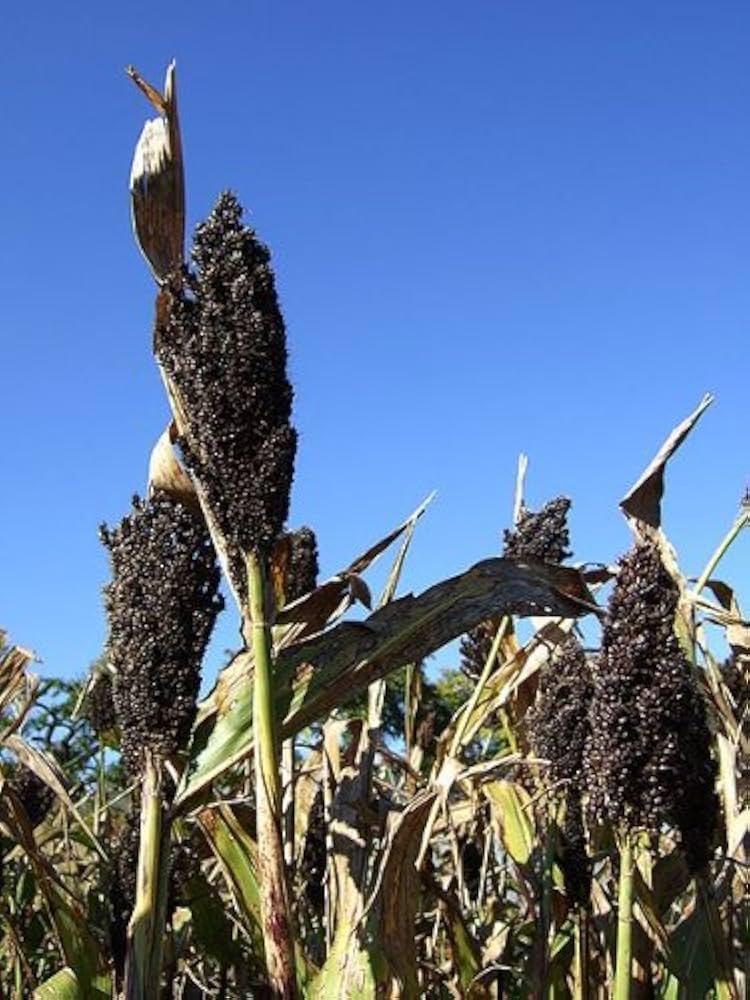
Key Features
- Produces distinctive dark to black-colored sorghum grains on upright plants
- Warm-season crop suited to sunny vegetable, grain, and ornamental gardens
- Tall, grass-like plants add texture, movement, and seasonal interest
- Useful for grain growing, decorative displays, and wildlife-friendly garden spaces
- Drought-tolerant once established, while performing best with consistent moisture
Growing Benefits
- Adds an unusual dark grain variety to your home garden collection
- Provides attractive seed heads for ornamental and dried arrangements
- Offers an interesting crop for gardeners exploring traditional grains
- Tall plants can create visual structure and vertical interest in garden beds
- Suitable for gardeners interested in growing versatile warm-season crops
Seed Specifications
- Common Name: Black Sorghum
- Botanical Name: Sorghum bicolor
- Plant Type: Warm-season annual grass
- Colors: Green foliage with dark brown to blackish grains
- Height: Commonly grows several feet tall, depending on variety and growing conditions
- Sunlight: Full sun
- Soil: Fertile, well-draining soil with good moisture retention
- Water: Moderate; keep evenly moist during establishment
- Germination Time: Typically about one to two weeks under favorable conditions
- Sowing Depth: About one inch deep
- Spacing: Allow adequate room between plants for mature growth
- Growing Zones: Generally suited to warm climates; grow after frost in cooler areas
- Flowering/Maturity: Produces flowering panicles followed by mature grain during the warm growing season
- Uses: Grain production, ornamental gardening, dried arrangements, and wildlife gardens
Growing Tips
- Sow after the danger of frost has passed when soil temperatures are warm.
- Choose a sunny location with fertile, well-draining soil for vigorous growth.
- Keep soil consistently moist during germination and early plant development.
- Provide adequate spacing so mature plants receive good airflow and sunlight.
Seed Storage
Store Black Sorghum Seeds in a cool, dry, and dark location. Keep seeds in an airtight container away from humidity, direct sunlight, and heat. Label the container with the seed variety and storage date.
Unique Facts About Seeds
- Black sorghum belongs to the species Sorghum bicolor, an important cereal crop grown around the world.
- Sorghum is a warm-season grass related to other cereal grains and has strong heat tolerance.
- Dark sorghum grains can contain naturally occurring pigments called phenolic compounds.
- Sorghum produces distinctive branched flower clusters, known botanically as panicles.