


Key Features
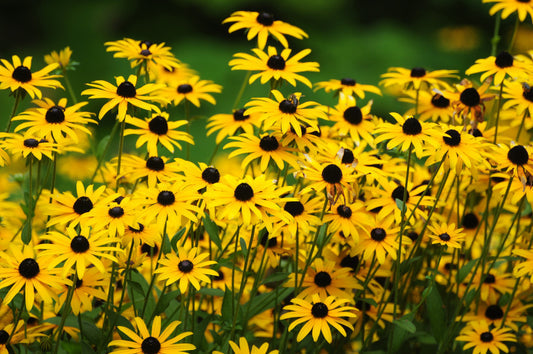
- Produces bright golden-yellow daisy-like flowers with distinctive dark brown centers.
- Upright, branching growth adds height and structure to garden displays.
- Ideal for cottage gardens, borders, wildflower gardens, containers, and pollinator spaces.
- Performs best in full sun with well-drained soil.
- Attractive blooms provide strong seasonal color and natural garden appeal.
Growing Benefits
- Adds cheerful yellow color to flower beds and borders.
- Attracts bees, butterflies, and other beneficial pollinators.
- Works beautifully in cottage, meadow, and wildflower-style gardens.
- Provides a striking contrast between golden petals and dark centers.
- Suitable for gardeners looking for a dependable, easy-to-grow flowering plant.
Seed Specifications
- Common Name: Black-Eyed Susan, Gloriosa Daisy
- Botanical Name: Rudbeckia hirta
- Plant Type: Short-lived perennial, often grown as an annual or biennial
- Colors: Golden yellow petals with dark brown centers
- Height: Approximately one to three feet
- Sunlight: Full sun
- Soil: Well-drained, moderately fertile soil
- Water: Moderate; somewhat drought tolerant once established
- Germination Time: Approximately seven to twenty-one days under favorable conditions
- Sowing Depth: Approximately one-eighth inch
- Spacing: Approximately twelve to eighteen inches
- Growing Zones: USDA Zones three through nine
- Flowering/Maturity: Generally flowers from summer into fall, depending on climate and planting time
- Uses: Cottage gardens, borders, wildflower gardens, pollinator gardens, containers, meadow plantings, and naturalized areas
Growing Tips
- Choose a sunny location with well-drained soil.
- Sow seeds shallowly and press them gently into the soil.
- Keep the soil lightly moist during germination and early growth.
- Remove faded flowers to encourage additional blooms or leave some seed heads for birds and natural reseeding.
Seed Storage
Store unused seeds in a cool, dry, dark location. Keep them in their original packet or an airtight container protected from moisture, heat, and direct sunlight.
Unique Facts About Seeds
- Black-Eyed Susan is scientifically known as Rudbeckia hirta and belongs to the daisy family, Asteraceae.
- The dark central cone gives the flower its familiar common name.
- The species is native to much of North America.
- Mature seed heads can provide food for seed-eating birds.