


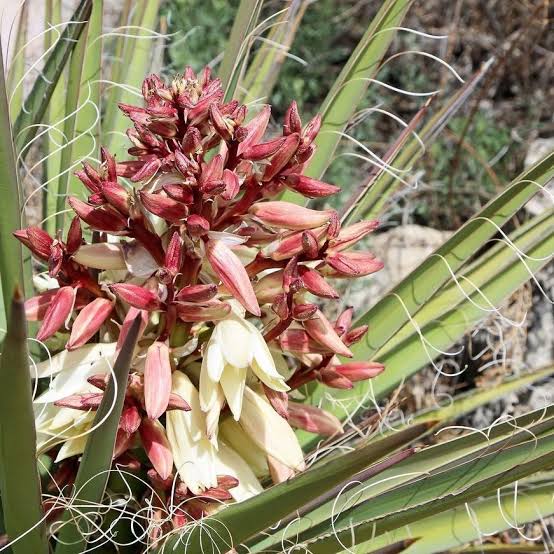


Key Features
-
Distinctive Desert Evergreen: Banana Yucca (Yucca baccata) is a hardy, drought-tolerant evergreen succulent native to the southwestern United States and northern Mexico. Its dramatic foliage adds architectural beauty to desert gardens, xeriscapes, and natural landscapes.
-
Bold Sword-Shaped Leaves: Produces thick, rigid, blue-green to gray-green leaves arranged in attractive rosettes. The leaves feature pointed tips and often develop curling fibers along their edges, creating a distinctive ornamental appearance.
-
Beautiful Creamy White Flowers: Mature plants produce impressive clusters of bell-shaped, creamy white flowers, sometimes displaying subtle purple or greenish markings. These blooms rise above the foliage and create an attractive seasonal display.
-
Unique Banana-Shaped Fruits: Banana Yucca receives its common name from its thick, fleshy, elongated fruits, which resemble small bananas. The fruits develop following successful pollination and contain numerous dark seeds.
-
Excellent Drought Tolerance: Once established, Banana Yucca tolerates dry conditions and poor soils, making it a practical choice for low-water landscapes, rock gardens, and desert-inspired planting designs.
Growing Benefits
-
Water-Wise Landscaping: Established Banana Yucca plants require relatively little supplemental irrigation, making them suitable for xeriscaping and drought-conscious garden designs.
-
Year-Round Ornamental Interest: Evergreen rosettes provide lasting structure, texture, and visual appeal throughout the year, even outside the flowering season.
-
Adaptable Desert Gardening: Grows successfully in sandy, gravelly, and rocky soils with excellent drainage, allowing gardeners to establish attractive plants in challenging dry landscapes.
-
Wildlife Garden Value: Flowers support specialized yucca moth pollinators and may attract other visiting insects, contributing to the ecological diversity of native desert landscapes.
-
Long-Lived Garden Plant: With suitable soil drainage and growing conditions, Banana Yucca can remain an attractive landscape specimen for many years.
Seed Specifications
-
Common Name: Banana Yucca, Datil Yucca, Fleshy-Fruited Yucca
-
Botanical Name: Yucca baccata
-
Plant Family: Asparagaceae
-
Type: Drought-Tolerant Evergreen Desert Plant
-
Plant Type: Perennial Evergreen Succulent
-
Variety: Species Form
-
Flower Colors: Creamy White, occasionally with Purple or Greenish Markings
-
Foliage Color: Blue-Green to Gray-Green
-
Fruit Color: Green, becoming yellowish or brownish as mature
-
Height: Approximately 2–4 feet for foliage; flower stalks may reach 4–8 feet
-
Spread: Approximately 3–6 feet, depending on age and growing conditions
-
Sunlight: Full Sun
-
Soil: Sandy, Gravelly, Rocky, Well-Draining Soil
-
Soil pH: Approximately 6.0–8.0
-
Water: Low Once Established
-
Germination Time: Approximately 2–8 weeks under favorable conditions; germination may be irregular
-
Germination Temperature: Approximately 70–85°F
-
Sowing Depth: Approximately ¼–½ inch
-
Plant Spacing: Approximately 3–6 feet
-
Growing Zones: Generally USDA Zones 5–10, depending on local conditions and winter drainage
-
Planting Season: Spring to Early Summer
-
Flowering Season: Spring to Early Summer, depending on climate and plant maturity
-
Growth Habit: Clump-Forming, Rosette-Forming Evergreen Perennial
-
Native Region: Southwestern United States and Northern Mexico
-
Uses: Xeriscaping, Rock Gardens, Desert Landscapes, Native Plant Gardens, and Drought-Tolerant Borders
-
Seed Count Per Pack: 100 pcs
-
Special Characteristics: Drought Tolerant, Evergreen, Architectural Foliage, Low Water Requirements
-
Safety Note: Leaves have sharp terminal points; position plants away from narrow pathways and children's play areas.
Growing Tips
-
Choose a Sunny Location: Plant Banana Yucca in an area receiving at least six to eight hours of direct sunlight daily. Full sun supports compact growth, healthy foliage, and strong long-term establishment.
-
Prioritize Excellent Drainage: Use sandy, rocky, or gravelly soil that drains quickly. Avoid heavy clay and areas where water collects, particularly during winter.
-
Water Sparingly After Establishment: Keep young plants lightly moist while roots develop, then gradually reduce irrigation. Established Banana Yucca plants are adapted to dry environments and can suffer from excessive watering.
-
Allow Plenty of Growing Space: Mature plants develop broad rosettes with rigid, pointed leaves. Provide adequate spacing and avoid planting close to walkways, doorways, or frequently used garden paths.
-
Avoid Excessive Fertilization: Banana Yucca naturally grows in relatively nutrient-poor soils. Heavy fertilizer applications are generally unnecessary and may encourage weak growth.
-
Be Patient With Seed-Grown Plants: Yucca seedlings grow relatively slowly, and plants may require several years to develop substantial rosettes or produce their first flowers.
Seed Storage
-
Cool Storage: Keep Banana Yucca seeds in a cool, stable environment away from direct sunlight and excessive heat.
-
Dry Conditions: Store thoroughly dried seeds in airtight containers or moisture-resistant packets to maintain seed quality.
-
Moisture Protection: Avoid condensation, high humidity, and damp storage conditions that may encourage fungal deterioration.
-
Seed Identification: Label seed packets with the botanical name, collection date, and storage information to maintain accurate records.
-
Long-Term Preservation: Store properly dried seeds under consistently cool conditions and test older seed lots for germination before large-scale sowing.
Unique Facts About the Seeds
-
Named for Its Distinctive Fruits: The botanical name baccata refers to the plant's fleshy, berry-like fruits, which are unusual compared with the dry capsules produced by many other yucca species.
-
Traditional Indigenous Uses: Banana Yucca has a long history of use among Indigenous peoples of the American Southwest. Its fruits, leaf fibers, and other plant materials have served various traditional purposes.
-
Specialized Yucca Moth Pollination: Yucca plants have a remarkable ecological relationship with specialized yucca moths. These moths pollinate flowers while using the developing fruits as part of their reproductive cycle.
-
Slow-Growing Desert Adaptation: Banana Yucca develops durable leaves and extensive roots that help it survive in dry, rocky environments with limited rainfall.
-
Naturally Dark Seeds: Mature Banana Yucca fruits contain flattened, dark seeds that can be collected and propagated to establish new plants.