



Key Features
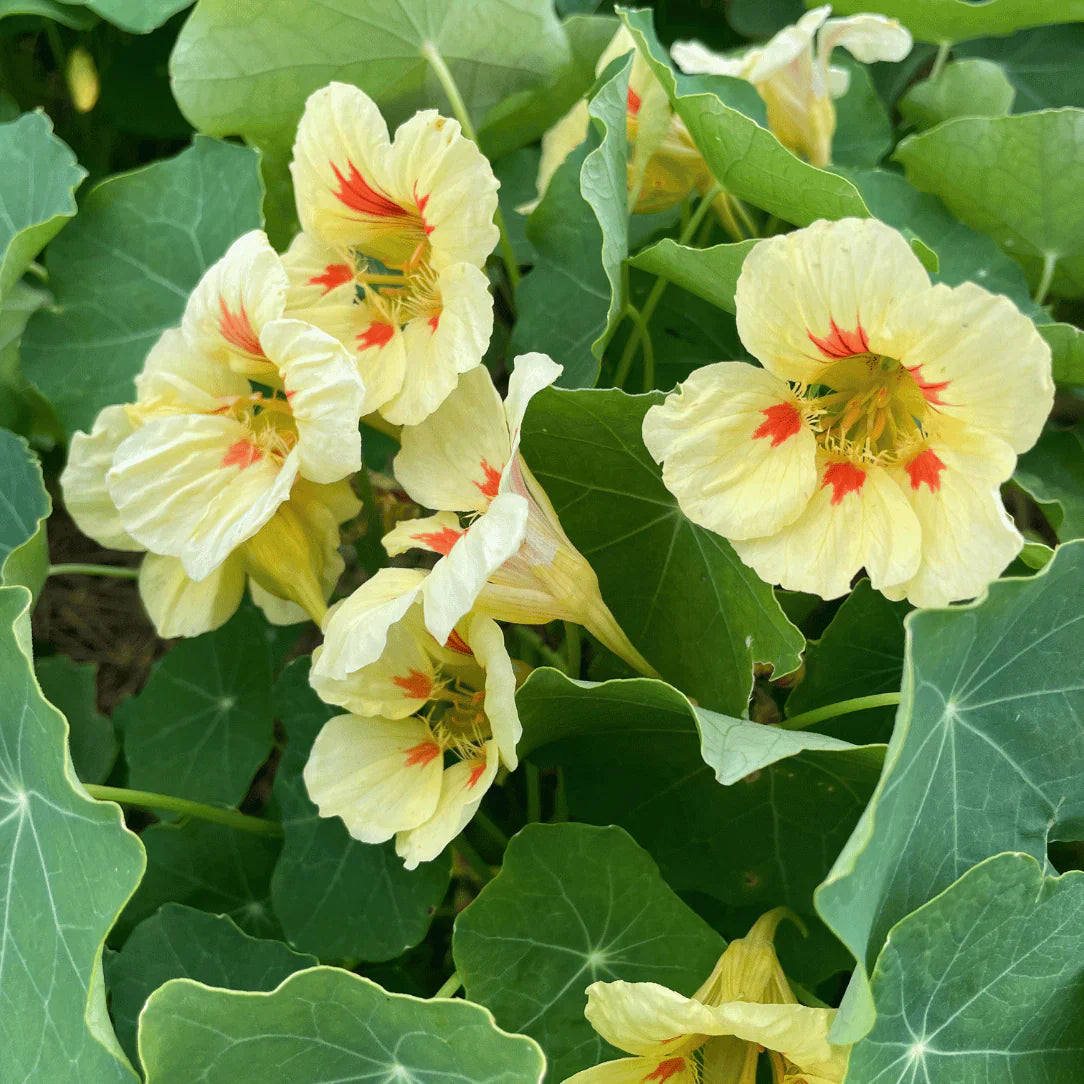
- Produces charming peach-yellow nasturtium flowers with a warm, sunny appearance.
- Compact, spreading plants are well suited to borders, beds, containers, and hanging baskets.
- Rounded green leaves add attractive foliage even between flowering periods.
- Long-lasting blooms bring cheerful color to cottage gardens and ornamental spaces.
- Flowers and young leaves are edible, offering a peppery flavor for culinary use.
Growing Benefits
- Adds soft, warm color to flower beds and garden borders.
- Easy-to-grow plants are suitable for beginner gardeners.
- Works beautifully in containers, window boxes, and hanging baskets.
- Edible flowers provide an attractive finishing touch for salads and dishes.
- Spreading growth creates a relaxed, informal cottage-garden appearance.
Seed Specifications
Common Name: Yellow Peach Nasturtium, Peach Nasturtium
Botanical Name: Tropaeolum majus
Plant Type: Annual flowering plant
Colors: Peachy yellow to soft yellow blooms
Height: Approximately twelve to eighteen inches
Sunlight: Full sun to partial shade
Soil: Well-drained, moderately fertile soil
Water: Moderate; allow soil to dry slightly between waterings
Germination Time: Approximately seven to fourteen days
Sowing Depth: About one-half inch deep
Spacing: Approximately eight to twelve inches apart
Growing Zones: Annual in most climates; perennial in frost-free areas
Flowering/Maturity: Generally blooms within several weeks after germination
Uses: Flower beds, borders, containers, hanging baskets, cottage gardens, edible flowers
Growing Tips
- Sow seeds directly outdoors because nasturtiums dislike unnecessary root disturbance.
- Choose a location with good sunlight and well-drained soil for healthy growth.
- Avoid overly rich soil, which can encourage leaves at the expense of flowers.
- Remove faded flowers regularly to encourage continued blooming.
Seed Storage
Store unused seeds in a cool, dry, dark location away from moisture and direct sunlight. Keep them in a sealed, labeled seed packet or airtight container. Avoid areas exposed to heat or humidity.
Unique Facts About Seeds
- Nasturtium seeds are relatively large, making them easy for beginners to handle and sow.
- Tropaeolum majus is commonly known as garden nasturtium or Indian cress.
- Nasturtium flowers and leaves are edible and have a pleasantly peppery flavor.
- The plant's rounded leaves can collect water droplets, creating an attractive garden display.