


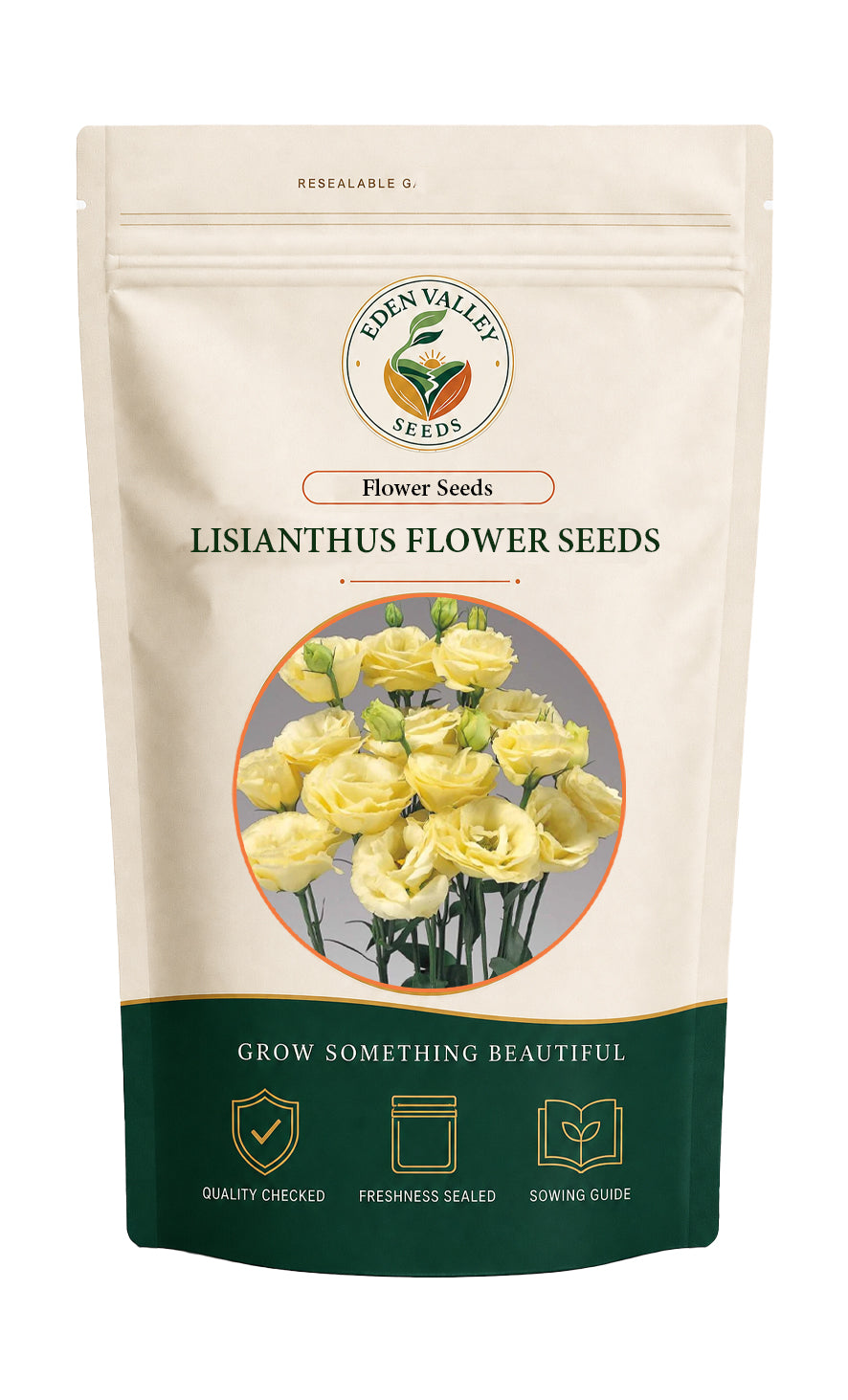


Key Features
- Produces elegant yellow, rose-like blooms with a refined garden appearance
- Lisianthus plants feature sturdy stems and attractive blue-green foliage
- Excellent for flower beds, borders, containers, cottage gardens, and cut flower displays
- Flowers have a long-lasting appearance that makes them popular for bouquets and arrangements
- Prefers bright sunlight, well-drained soil, and consistent moisture for healthy growth
Growing Benefits
- Adds warm yellow color and an elegant look to flower gardens
- Suitable for both ornamental beds and cut flower gardens
- Attractive blooms can provide beautiful material for bouquets and floral arrangements
- Compact growing habits make lisianthus suitable for containers and smaller garden spaces
- Provides a rewarding flowering display when grown under suitable conditions
Seed Specifications
Common Name: Yellow Lisianthus, Prairie Gentian, Texas Bluebell
Botanical Name: Eustoma grandiflorum
Plant Type: Herbaceous flowering perennial, commonly grown as an annual in cooler climates
Flower Color: Yellow
Height: Approximately eighteen to thirty-six inches
Sunlight: Full sun to partial shade
Soil: Fertile, well-drained soil with good organic matter
Water: Moderate and consistent moisture; avoid waterlogged soil
Germination Time: Approximately ten to fifteen days under suitable conditions
Sowing Depth: Surface sow or barely cover with fine soil, as light can aid germination
Spacing: Approximately six to twelve inches apart
Growing Zones: Generally perennial in USDA Zones eight through ten; grown as an annual in cooler areas
Flowering/Maturity: Typically blooms in summer, with timing depending on sowing date and growing conditions
Uses: Cut flowers, flower beds, borders, containers, cottage gardens, bouquets, and floral arrangements
Growing Tips
- Start seeds indoors well before the outdoor growing season because lisianthus develops slowly during its early stages.
- Press seeds gently onto moist growing medium rather than burying them deeply, and provide light during germination.
- Keep the growing medium evenly moist but never soggy to support healthy seedlings.
- Harden seedlings gradually before transplanting outdoors once conditions are suitable and the danger of frost has passed.
Seed Storage
Store unused seeds in a cool, dry, and dark location. Keep them in a sealed, moisture-resistant container away from heat and humidity. Avoid storing seeds in areas with frequent temperature changes.
Unique Facts About Seeds
- Lisianthus is botanically known as Eustoma grandiflorum and is also associated with the common name prairie gentian.
- Lisianthus seeds are very small and are often sold as pelleted seeds to make handling and sowing easier.
- The plant is prized as a cut flower because its attractive blooms can remain decorative for an extended period after cutting.
- Lisianthus naturally grows as a perennial in warmer climates but is commonly cultivated as an annual where winters are colder.