

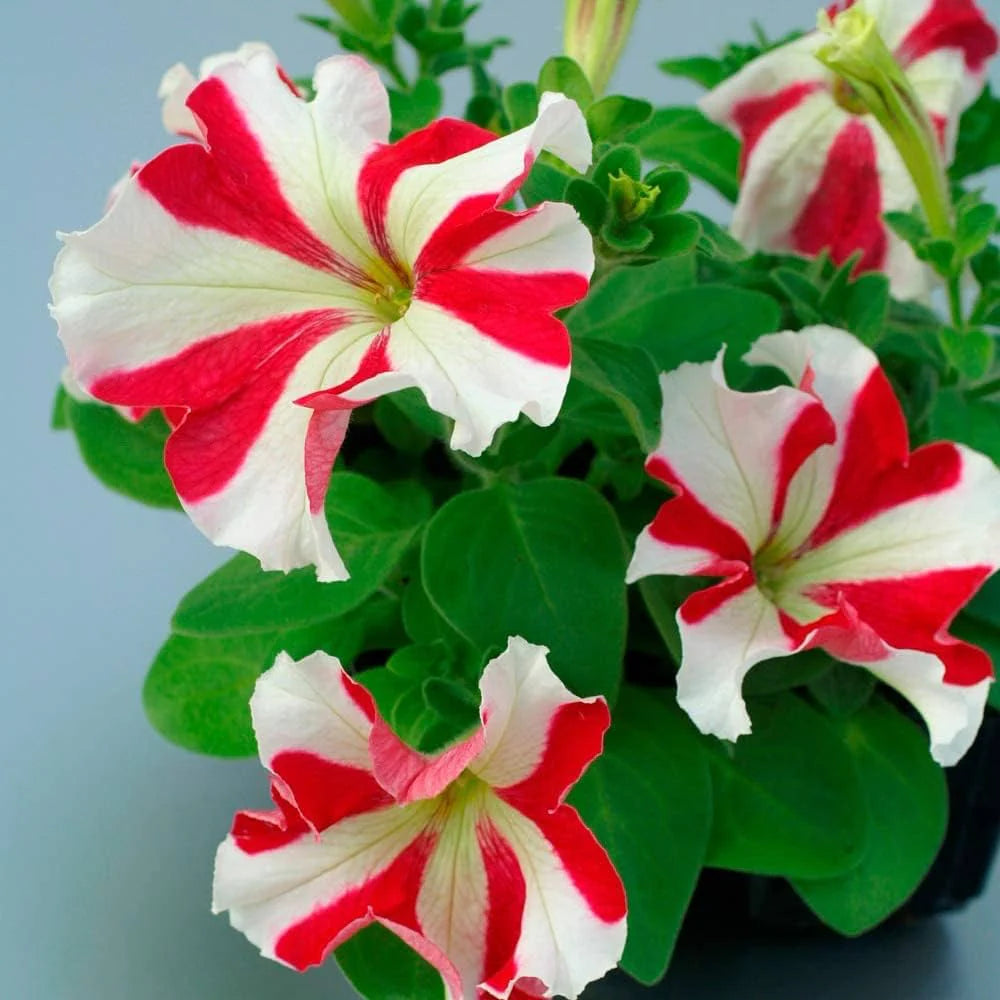
Grow White & Red Petunias from seed for charming blooms featuring a beautiful mix of white and red tones. A versatile choice for containers, hanging baskets, borders, window boxes, patios, and colorful seasonal displays.
Key Features
-
Produces attractive flowers in contrasting white and red shades.
-
Heirloom, non-GMO seed choice for colorful home gardens.
-
Ideal for containers, hanging baskets, borders, patios, and window boxes.
-
Spreading growth creates cheerful color throughout the growing season.
-
Performs best in bright sunlight and fertile, well-drained soil.
Growing Benefits
-
Color Contrast: Creates eye-catching displays with bright white and red blooms.
-
Container Charm: Adds lively color to pots, planters, and window boxes.
-
Hanging Beauty: Trailing varieties can spill gracefully from hanging baskets.
-
Garden Versatility: Works beautifully along borders, beds, patios, and entryways.
-
Seasonal Color: Provides abundant ornamental interest throughout suitable growing conditions.
Seed Specifications
-
Common Name: Petunia
-
Botanical Name: Petunia spp.
-
Plant Type: Tender perennial, commonly grown as an annual
-
Flower Colors: White and red
-
Flower Shape: Trumpet or funnel-shaped
-
Foliage Color: Green
-
Growth Habit: Mounding, spreading, or trailing depending on type
-
Sunlight: Full sun to partial shade
-
Soil: Fertile, well-drained soil
-
Water: Moderate; keep soil evenly moist without waterlogging
-
Germination Time: Approximately 5–15 days under favorable conditions
-
Sowing Depth: Surface sow; press seeds gently into the growing medium
-
Spacing: Approximately 8–12 inches depending on variety
-
Growing Zones: Commonly grown as an annual in USDA Zones 2–11; perennial in frost-free climates
-
Flowering/Maturity: Often begins flowering several weeks after transplanting under favorable conditions
-
Uses: Containers, hanging baskets, flower beds, borders, window boxes, patios, and cottage gardens
Growing Tips
-
Start seeds indoors several weeks before the last expected spring frost.
-
Press seeds onto the surface rather than burying them deeply.
-
Provide bright light and gentle warmth during germination.
-
Remove spent flowers regularly to help maintain a tidy, colorful display.
Seed Storage
Store unused seeds in a cool, dry, dark location. Keep them sealed in their original packet or an airtight container away from moisture, heat, and direct sunlight.
Important Growing Note
Petunia flower color and pattern can vary depending on the species, variety, and seed line. When grown from mixed or open-pollinated seed, individual plants may not produce identical white-and-red markings.
Unique Facts About Seeds
-
Petunias belong to the nightshade family, Solanaceae, which also includes tomatoes and peppers.
-
Their trumpet-shaped flowers are especially attractive in colorful summer displays.
-
Petunia seeds are tiny and generally need light exposure to support good germination.
-
Many petunias are grown as annuals in climates where winter temperatures are too cold for them to survive outdoors.
-
Their spreading and trailing forms make them especially popular for containers and hanging baskets.