


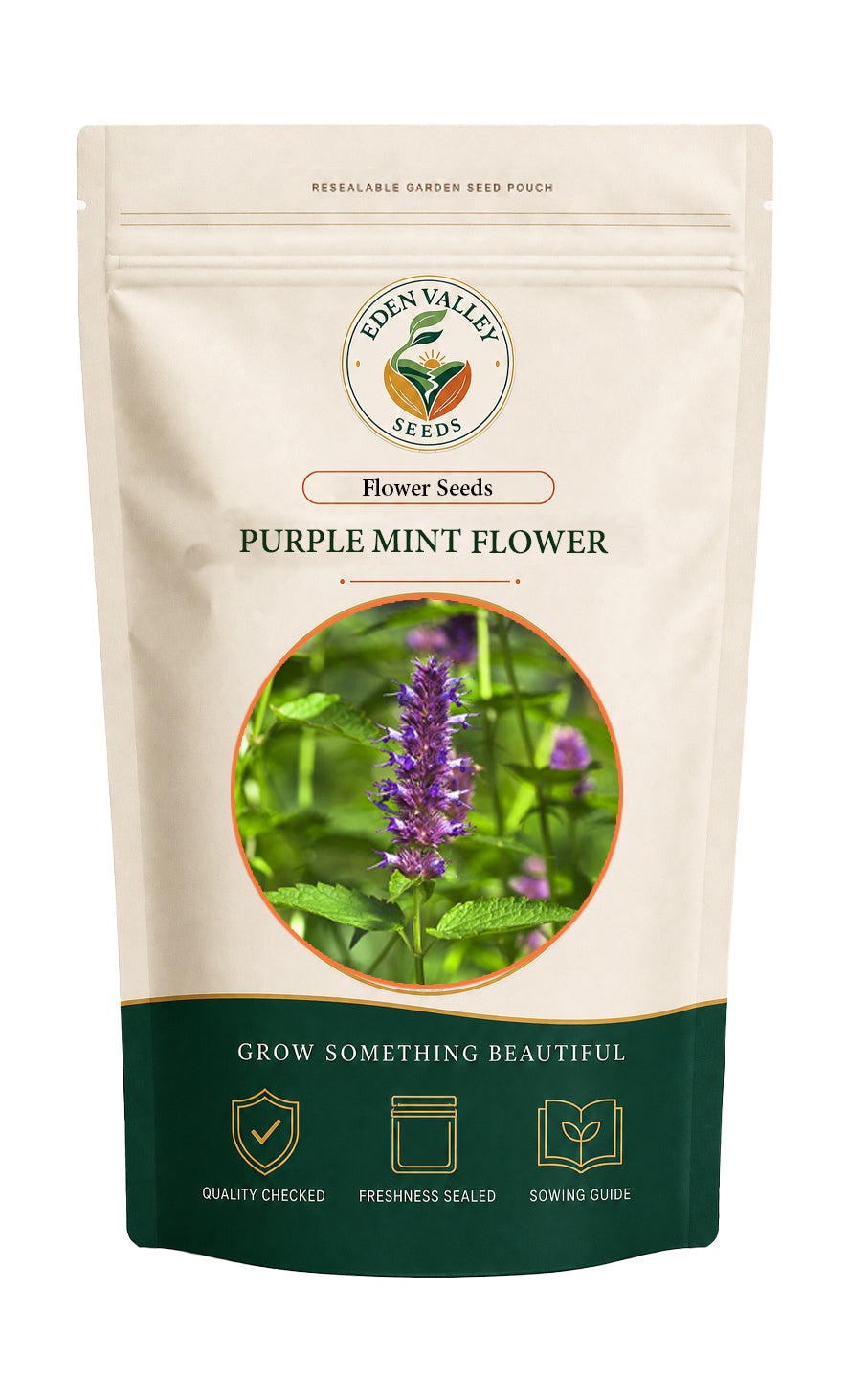


Grow Purple Mint from seed for fragrant foliage and delicate purple-toned flowers. A hardy herbaceous choice for herb gardens, containers, borders, pollinator spaces, and cottage-style landscapes where moisture, sunlight, and drainage suit the selected mint variety.
Key Features
- Produces fragrant green foliage with attractive purple-toned flowers.
- Heirloom, non-GMO seed choice for herb and flower gardens.
- Hardy growth makes mint a dependable garden perennial.
- Ideal for containers, herb beds, borders, and cottage gardens.
- Flowers can attract bees and other beneficial garden insects.
Growing Benefits
- Adds refreshing fragrance and colorful garden interest.
- Provides attractive foliage for herb and ornamental spaces.
- Purple-toned blooms complement cottage and pollinator gardens.
- Container growing helps keep vigorous mint growth manageable.
- Offers a versatile perennial addition to home gardens.
Seed Specifications
- Common Name: Mint
- Botanical Name: Mentha spp.
- Plant Type: Herbaceous perennial herb
- Flower Color: Purple, lavender, or pinkish-purple depending on species
- Flower Form: Small flowers arranged in spikes or whorled clusters
- Foliage: Green, aromatic leaves
- Growth Habit: Spreading and vigorous
- Sunlight: Full sun to partial shade
- Soil: Moist, fertile, well-drained soil
- Water: Regular; maintain consistent moisture without prolonged waterlogging
- Germination Time: Approximately 10–20 days under favorable conditions
- Sowing Depth: Surface sow or cover very lightly
- Spacing: Approximately 12–18 inches between plants; additional room may be needed for spreading types
- Growing Zones: Generally suited to USDA Zones 3–9, depending on species
- Flowering/Maturity: Typically flowers during summer after becoming established
- Uses: Herb gardens, containers, borders, cottage gardens, pollinator gardens, aromatic landscapes, and culinary herb spaces
Growing Tips
- Start seeds in a fine, well-drained seed-starting medium.
- Press seeds gently onto the surface because mint seeds are small.
- Keep the growing medium evenly moist during germination.
- Grow mint in containers to make vigorous spreading easier to manage.
- Provide morning sun and some afternoon shade in very hot climates.
Seed Storage
Store unused seeds in a cool, dry, dark location. Keep them sealed in their original packet or an airtight container away from moisture, heat, and direct sunlight.
Important Growing Note
Mentha is a large genus with many species and cultivated forms. Exact flower color, mature height, hardiness, fragrance, flavor, and growth habit can vary by seed line. Mint can spread aggressively once established, so container growing is often a practical choice for home gardens.
Unique Facts About Seeds
- Mint belongs to the Lamiaceae family, which also includes basil, oregano, rosemary, and sage.
- Mint stems can spread through underground runners called rhizomes.
- Small mint flowers are often visited by bees and other pollinating insects.
- Different mint species can have noticeably different fragrances and flavors.
- Regular harvesting can encourage fresh, leafy growth throughout the growing season.