


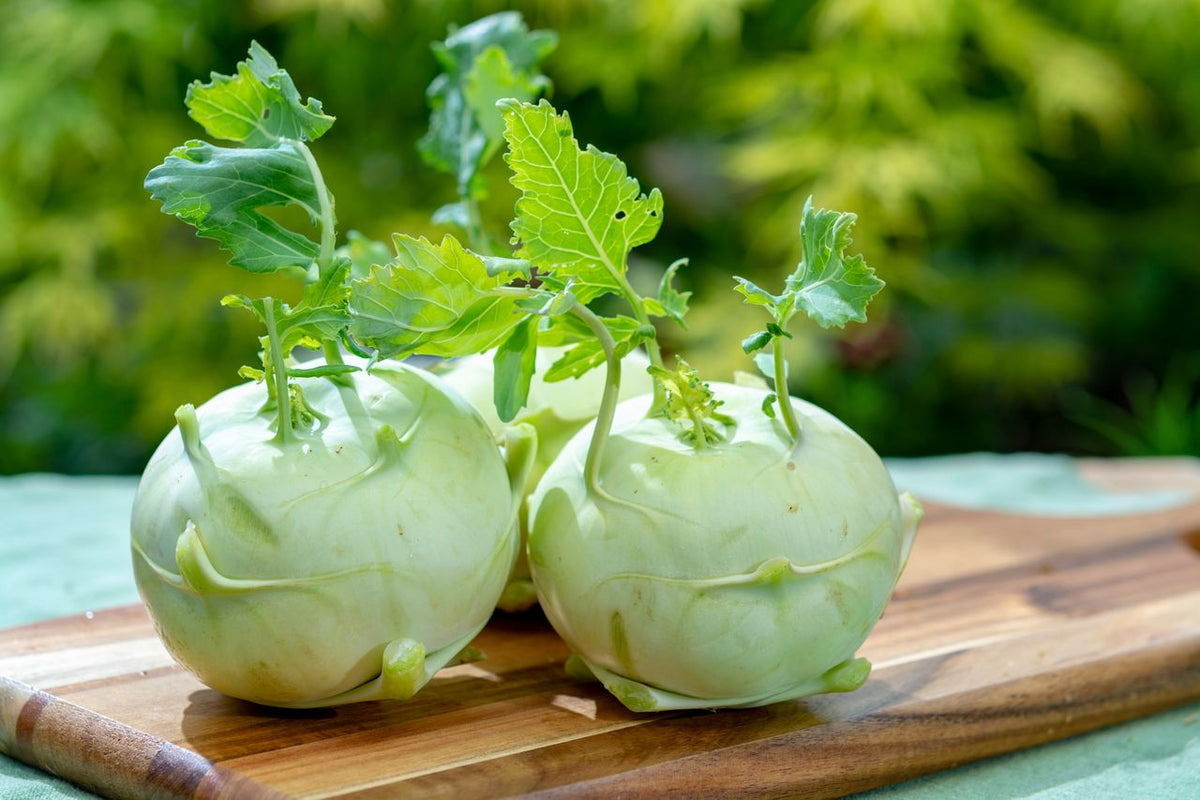
Key Features
- Noolkol, also known as kohlrabi, is a cool-season vegetable crop.
- Produces rounded, swollen stems that develop above the soil surface.
- Stem colors may range from pale green to purple depending on variety.
- Crisp stems can be used fresh, cooked, roasted, or added to salads.
- Compact plants are suitable for vegetable gardens and small growing spaces.
Growing Benefits
- Easy-to-grow vegetable for gardeners learning cool-season crops.
- Compact growth makes efficient use of available garden space.
- Fast-growing plants can provide an enjoyable harvest experience.
- Crisp edible stems add variety to homegrown vegetable gardens.
- Suitable for fresh meals, salads, soups, and cooked dishes.
Seed Specifications
- Common Name: Noolkol, Kohlrabi, German Turnip
- Botanical Name: Brassica oleracea var. gongylodes
- Plant Type: Cool-season biennial vegetable, commonly grown as an annual
- Colors: Green, pale green, or purple depending on variety
- Height: Approximately 25–40 cm
- Sunlight: Full sun
- Soil: Fertile, well-drained soil rich in organic matter
- Water: Consistent moisture without waterlogging
- Germination Time: Usually about 3–10 days under suitable conditions
- Sowing Depth: About 0.5–1 cm deep
- Spacing: About 15–30 cm between plants
- Growing Zones: Generally suitable across USDA Zones 3–10, depending on season
- Flowering/Maturity: Harvest commonly begins around 45–70 days after sowing, depending on variety
- Uses: Fresh eating, salads, soups, roasting, steaming, and stir-fries
Growing Tips
- Sow seeds in fertile, well-drained soil during cool growing weather.
- Keep the soil evenly moist while seeds are germinating.
- Thin young seedlings early so developing stems have enough space.
- Harvest when the swollen stems are still young and tender.
Seed Storage
Store unused seeds in a cool, dry, dark location. Keep them in a tightly sealed container away from moisture, heat, and direct sunlight. Label the container with the variety and storage date.
Unique Facts About Noolkol Seeds
- Noolkol is commonly known as kohlrabi, a member of the cabbage family.
- The edible swollen stem develops above ground rather than forming a traditional root.
- Kohlrabi is closely related to cabbage, broccoli, kale, and cauliflower.
- Both the swollen stem and young leaves can be eaten.