


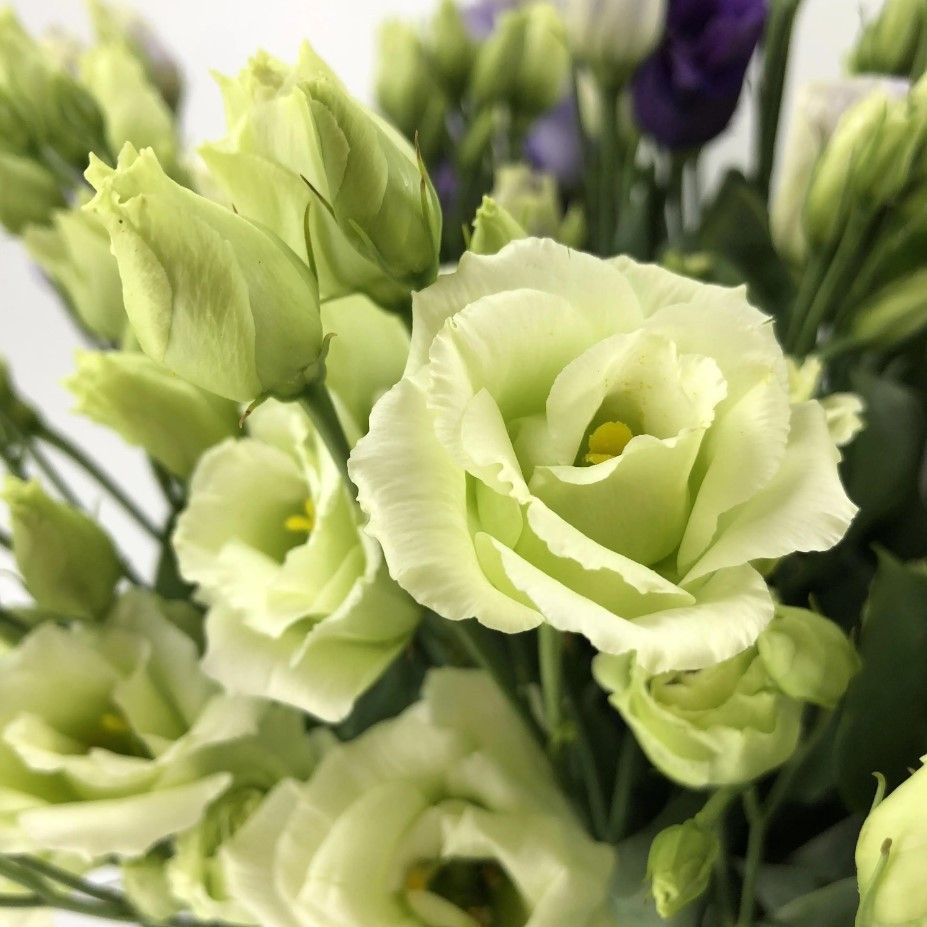
Grow light green lisianthus from seed for refined, rose-like flowers and graceful stems. A beautiful choice for cutting gardens, cottage borders, containers, and ornamental displays, bringing a fresh, sophisticated look to the summer garden.
Key Features
- Produces elegant blooms with soft light green coloring.
- Features graceful stems and refined, rose-like flower forms.
- Excellent choice for home cutting gardens and floral arrangements.
- Ideal for borders, containers, cottage gardens, and ornamental beds.
- Prefers full sun with fertile, well-drained soil.
Growing Benefits
- Adds fresh, understated color to summer flower displays.
- Provides attractive stems for home-grown floral arrangements.
- Creates an elegant focal point in cottage gardens.
- Fits beautifully into containers and small cutting gardens.
- Offers a rewarding project for patient flower growers.
Seed Specifications
- Common Name: Lisianthus, Prairie Gentian
- Botanical Name: Eustoma grandiflorum (syn. Eustoma russellianum)
- Plant Type: Herbaceous perennial, commonly grown as an annual
- Flower Color: Light green; exact shade may vary by seed line
- Flower Shape: Rose-like, cup-shaped, single or double depending on variety
- Foliage: Blue-green to medium green, smooth, slightly fleshy leaves
- Growth Habit: Upright and branching
- Height: Approximately twelve to thirty-six inches
- Sunlight: Full sun to partial shade
- Soil: Fertile, well-drained, moderately rich soil
- Water: Moderate; maintain consistent moisture without waterlogging
- Germination Time: Approximately ten to twenty-one days under favorable conditions
- Sowing Depth: Surface sow; seeds need light to germinate well
- Spacing: Approximately six to twelve inches
- Growing Zones: Generally USDA Zones eight through ten as a perennial; commonly grown as an annual in cooler climates
- Flowering/Maturity: Often blooms in summer, with timing influenced by sowing date and growing conditions
- Uses: Cutting gardens, flower borders, containers, cottage gardens, bouquets, and ornamental displays
Growing Tips
Lisianthus rewards an early start and steady, gentle care.
- Start seeds early because lisianthus develops slowly from seed.
- Surface sow the tiny seeds and avoid covering them deeply.
- Provide bright light and consistent moisture during germination.
- Give mature plants good airflow to support strong, upright stems.
Seed Storage
Store unused seeds in a cool, dry, dark location. Keep them sealed in an airtight container away from moisture, heat, and direct sunlight. Because lisianthus seeds are very small, handle packets carefully to avoid losing seed.
Important Growing Note
Lisianthus is known for being relatively slow to grow from seed. The tiny seeds are generally surface sown because they require light for germination. Light green flower color can vary among seed-grown plants, and seed-grown flowers may differ in shade, form, and petal arrangement from the parent plant.
Unique Facts About Seeds
Discover why lisianthus is treasured by flower gardeners and arrangers.
- Lisianthus is also known as prairie gentian and Texas bluebell.
- Its flowers can resemble small roses, making it a popular cut flower.
- Lisianthus plants can produce multiple buds along upright stems.
- The species naturally occurs in parts of the southern United States, Mexico, and northern South America.