


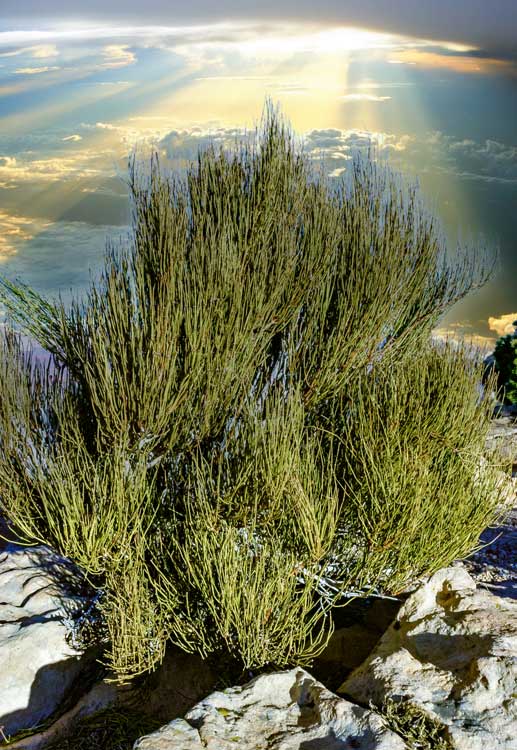
Key Features
- Evergreen, drought-tolerant plant with slender green, jointed stems
- Naturally understated appearance suited to xeric and rock gardens
- Produces small, inconspicuous flowers followed by decorative seed-bearing structures
- Adaptable to well-drained, sandy or gravelly garden soils
- Useful for desert landscapes, rockeries, borders, and low-water gardens
Growing Benefits
- Adds distinctive evergreen structure to dry and sunny landscapes
- Well suited to gardeners exploring drought-tolerant plant varieties
- Works naturally in rock gardens and xeriscape-style plantings
- Offers an unusual botanical form for diverse garden collections
- Can complement other plants adapted to lean, well-drained soils
Seed Specifications
- Common Name: Ephedra, Mormon Tea, Jointfir
- Botanical Name: Ephedra species
- Plant Type: Evergreen shrub or woody perennial, depending on species
- Colors: Green stems with small, inconspicuous flowers; some species develop reddish or yellowish reproductive structures
- Height: Varies considerably by species and growing conditions
- Sunlight: Full sun to bright, open light
- Soil: Sandy, gravelly, lean, sharply drained soil
- Water: Low to moderate once established; avoid consistently wet soil
- Germination Time: Variable and often slow or uneven
- Sowing Depth: Shallow sowing, with only a light covering of growing medium
- Spacing: Allow generous space according to the mature size of the selected species
- Growing Zones: Species-dependent; many Ephedra species are suited to dry, warm or temperate regions
- Flowering/Maturity: Small, inconspicuous flowers appear before or around seed-bearing structures; maturity varies by species
- Uses: Xeriscaping, rock gardens, desert-style landscapes, borders, specimen planting, and botanical collections
Growing Tips
- Choose a sunny planting location with excellent drainage and good air circulation.
- Use a light, gritty seed-starting medium rather than heavy, moisture-retentive soil.
- Keep the seed-starting medium lightly moist while avoiding waterlogged conditions.
- Handle young seedlings carefully when transplanting because early growth can be delicate.
Seed Storage
Store unused seeds in a cool, dry, dark location inside a sealed, moisture-resistant container. Protect them from humidity, heat, and direct sunlight. Label the container with the plant name and storage date.
Unique Facts About Ephedra Seeds
- Ephedra belongs to a very old lineage of seed-producing plants known as gnetophytes.
- Its slender, jointed green stems can carry out much of the plant's photosynthetic activity.
- Different Ephedra species are adapted to arid and semi-arid environments around the world.
- Many species have greatly reduced leaves, an adaptation associated with dry habitats.