


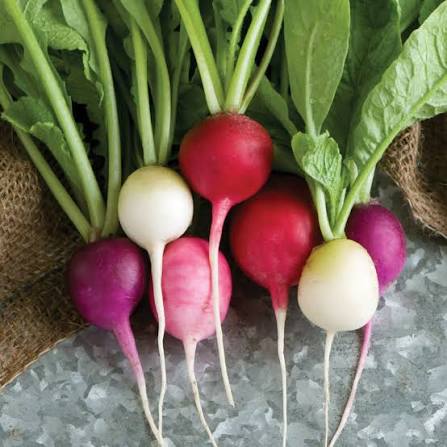
Key Features
- Attractive round radishes in shades of white, pink, red, purple, and bi-color tones.
- Fast-growing cool-season root vegetable suited to home vegetable gardens.
- Compact plants are ideal for garden beds, raised beds, containers, and small spaces.
- Crisp roots add colorful appeal to fresh salads, vegetable dishes, and garnishes.
- Succession sowing can provide a steady supply of young, tender radishes.
Growing Benefits
- Easy-to-grow vegetable suitable for beginner gardeners.
- Compact growth makes it useful for limited garden spaces.
- Quick maturity allows gardeners to enjoy fresh roots relatively soon.
- Colorful roots bring variety and visual interest to the vegetable garden.
- Cool-season growth makes it useful for spring and fall planting.
Seed Specifications
- Common Name: Easter Egg Radish
- Botanical Name: Raphanus sativus
- Plant Type: Annual root vegetable; Colors: White, pink, red, purple, and bi-color shades; Height: About six to twelve inches
- Sunlight: Full sun to partial shade; Soil: Loose, fertile, well-draining soil; Water: Consistent moisture without waterlogging
- Germination Time: Usually about three to ten days; Sowing Depth: About one-quarter to one-half inch; Spacing: Thin seedlings to about two to three inches apart
- Growing Zones: Generally suitable for cool-season growing across USDA Zones three through ten; Maturity: Commonly about twenty-five to thirty-five days, depending on conditions; Uses: Fresh eating, salads, garnishes, vegetable dishes, and container gardening
Growing Tips
- Sow seeds directly into loose soil because radishes generally dislike root disturbance.
- Thin crowded seedlings early to encourage well-shaped roots and better air circulation.
- Keep the soil evenly moist while roots are developing for tender, crisp radishes.
- Make succession sowings during suitable cool weather for a more continuous harvest.
Seed Storage
Store unused seeds in a cool, dry, dark place away from moisture and heat. Keep them sealed in an airtight container or original packet. Avoid storing seeds in areas with frequent temperature changes.
Unique Facts About Seeds
- Easter Egg Radish is known for producing a colorful mixture of root shades rather than a single color.
- Radishes are members of the Brassicaceae family, which also includes cabbage, broccoli, and turnips.
- Radishes develop their edible swollen roots mainly below the soil surface.
- Cool temperatures generally favor good-quality radish roots, while excessive heat can encourage bolting and tougher roots.