


Key Features
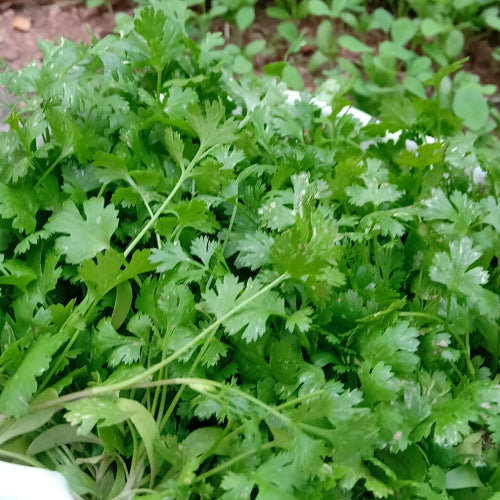
- Popular Culinary Herb: Produces fresh, aromatic foliage commonly known as cilantro.
- Fresh Green Leaves: Features delicate, bright green foliage with a distinctive citrusy herbal aroma.
- Attractive Flowers: Mature plants produce small white to pale pink flowers followed by aromatic seeds.
- Kitchen Garden Favorite: Great for curries, chutneys, salads, soups, sauces, garnishes, and pickling.
- Dual-Purpose Herb: Harvest young leaves fresh or allow plants to mature for flavorful coriander seeds.
Growing Benefits
- Provides fresh cilantro leaves for everyday cooking.
- Suitable for garden beds, containers, and kitchen herb gardens.
- Offers both flavorful foliage and mature coriander seeds.
- Easy to grow from seed in suitable conditions.
- Adds attractive foliage and delicate flowers to herb gardens.
Seed Specifications
- Common Name: Coriander, Cilantro
- Botanical Name: Coriandrum sativum
- Plant Type: Annual herb
- Colors: Green foliage, white to pale pink flowers, tan-brown mature seeds
- Height: About one to two feet
- Sunlight: Full sun to partial shade
- Soil: Fertile, loose, well-drained soil
- Water: Moderate and consistent moisture
- Germination Time: Approximately one to three weeks
- Sowing Depth: About one-quarter to one-half inch
- Spacing: Approximately three to six inches apart
- Growing Zones: Grown as an annual across a wide range of USDA zones
- Flowering/Maturity: Leaves mature for harvesting before flowering; seeds develop after flowering
- Uses: Cilantro, curries, chutneys, salads, soups, sauces, garnishes, pickles, and spice blends
Growing Tips
- Direct sow seeds in their final location to avoid disturbing the developing taproot.
- Keep soil evenly moist while seeds germinate and seedlings establish.
- Provide afternoon shade during very hot weather to help delay flowering.
- Sow batches at intervals for a more continuous supply of fresh leaves.
Seed Storage
Keep unused coriander seeds in a cool, dry, dark location. Store them in an airtight container or sealed packet away from humidity, heat, and direct sunlight.
Unique Facts About Seeds
- Coriander and cilantro are names commonly used for different harvested parts of the same plant.
- The botanical name of coriander is Coriandrum sativum.
- Coriander belongs to the Apiaceae family, which also includes parsley, carrot, celery, and dill.
- After flowering, the plant develops dry fruits commonly harvested and used as coriander spice.