


Key Features
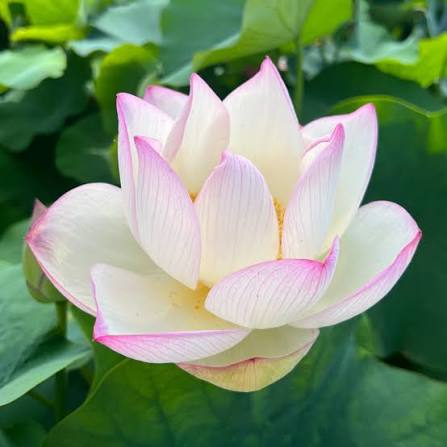
- Distinctive Chawan Basu lotus with elegant ivory-white flowers edged in pink.
- Medium-sized aquatic lotus suited to ponds, tubs, and water gardens.
- Large rounded leaves rise above the water for a classic lotus appearance.
- Full-sun growth encourages strong foliage and seasonal flowering.
- Produces attractive lotus seed pods that add ornamental interest after blooming.
Growing Benefits
- Adds graceful vertical form and color to aquatic garden spaces.
- Suitable for dedicated lotus containers and small to medium water features.
- Provides attractive foliage even when flowers are not in bloom.
- Creates a classic water-garden display with distinctive lotus character.
- Offers an interesting growing project for gardeners who enjoy aquatic plants.
Seed Specifications
Common Name: Chawan Basu Lotus, Bowl Lotus, Sacred Lotus
Botanical Name: Nelumbo nucifera ‘Chawan Basu’
Plant Type: Aquatic perennial lotus
Colors: Ivory-white flowers with pink edges and veining; blue-green foliage
Height: Approximately two to three feet under suitable growing conditions
Sunlight: Full sun
Soil: Heavy clay loam or suitable aquatic planting soil
Water: Shallow, still water with the growing medium kept consistently wet
Germination Time: Variable; depends on seed freshness, scarification, warmth, and growing conditions
Sowing Depth: Begin with the seed shallowly positioned in warm water or moist growing medium; avoid burying deeply
Spacing: Allow generous room for developing leaves and rhizomes; container-grown plants should not be crowded
Growing Zones: Commonly grown across a broad range of temperate and warm climates; winter protection may be needed in colder locations
Flowering/Maturity: Seasonal summer flowering; seed-grown plants may require more time to reach flowering size
Uses: Water gardens, lotus bowls, ornamental ponds, patio tubs, aquatic displays, and specimen planting
The Chawan Basu cultivar is documented as a medium-sized lotus with pink-edged ivory flowers, while the species is a rhizomatous aquatic perennial suited to pond margins and shallow water.
Growing Tips
- Scarify the hard seed coat carefully before planting to help water reach the seed.
- Keep newly started seeds warm, bright, and continuously moist without allowing them to dry.
- Move young seedlings carefully into a larger aquatic container as roots and leaves develop.
- Introduce fertilizer only after active growth is established and follow an aquatic-plant fertilizer label.
Seed Storage
Keep unused lotus seeds completely dry in a cool, dark, well-ventilated place. Store them in an airtight container away from heat and moisture. Avoid storing seeds where condensation or high humidity can develop. Lotus seeds have exceptionally hard seed coats and can retain viability for very long periods under suitable dry-storage conditions.
Unique Facts About the Seeds
- Lotus seeds have an unusually hard outer covering that protects the embryo from moisture loss.
- Scientific research has demonstrated exceptional longevity in lotus seeds; an ancient lotus seed was successfully germinated after being radiocarbon dated to more than a millennium.
- The botanical fruits of lotus are technically nutlets enclosed within a distinctive seed head.
- The lotus leaf has water-repellent surface properties known as the lotus effect, which help water droplets roll away while carrying surface particles with them.