


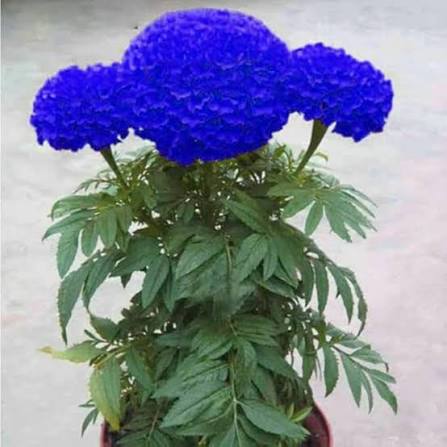
Key Features
- Unique blue-labeled marigold seed offering for gardeners seeking an unusual flower selection.
- Warm-season annual with attractive green foliage and a branching growth habit.
- Marigolds are commonly grown for yellow, orange, white, and maroon-toned flowers.
- Suitable for flower beds, borders, containers, cottage gardens, and decorative plantings.
- Performs best in full sun and well-drained soil.
Growing Benefits
- Adds seasonal color and texture to home garden spaces.
- Easy-care growth makes marigolds suitable for beginner gardeners.
- Adaptable to beds, borders, containers, and mixed flower displays.
- Full-sun requirements make them useful for bright outdoor locations.
- Regular removal of faded flowers helps maintain a tidy garden appearance.
Seed Specifications
- Common Name: Marigold
- Botanical Name: Tagetes spp.
- Plant Type: Warm-season annual flowering plant
- Colors: Marigold colors vary by cultivar and commonly include yellow, gold, orange, white, and maroon; true blue is not a natural Tagetes flower color.
- Height: Varies by species and cultivar
- Sunlight: Full sun
- Soil: Fertile, well-drained garden soil
- Water: Moderate; keep soil evenly moist while avoiding waterlogging
- Germination Time: Generally several days under favorable conditions
- Sowing Depth: Approximately one-quarter inch
- Spacing: Varies according to the mature size of the variety
- Growing Zones: Commonly grown as a warm-season annual across USDA zones
- Flowering/Maturity: Flowers develop during the warm growing season, with timing varying by variety and conditions
- Uses: Flower beds, borders, containers, landscaping, cottage gardens, and cut-flower displays
Growing Tips
- Select a sunny location with good air circulation.
- Cover seeds lightly with fine soil after sowing.
- Keep the soil consistently moist during germination without making it soggy.
- Remove faded flowers regularly to keep plants neat and encourage continued blooming.
Seed Storage
Store unused seeds in a cool, dry, dark place. Keep the seed packet inside an airtight container away from moisture, heat, and direct sunlight. Make sure seeds are completely dry before long-term storage.
Unique Facts About Seeds
- Marigolds belong to the Tagetes genus in the daisy family, Asteraceae.
- Common garden marigolds include African marigold, French marigold, and signet marigold types.
- Marigolds are native to the Americas and are now widely cultivated around the world.
- Natural Tagetes flowers are known for warm shades such as yellow, orange, gold, white, and maroon rather than true blue.